
Listen to Episode 50 on PodBean, Spotify, YouTube, or wherever you find your podcasts.
This episode, we’re exploring the largest “island” in the world. We’re discussing the long geologic history of how this landmass came to be the way it is now, and what fascinating ecosystems have come and gone along the way. Join us on a trip Down Under, to Australia.
In the news
Two species of peccary identified at the Gray Fossil Site, TN.
Newly analyzed ichthyosaur specimen reveals signs of counter shading and blubber.
Fungus remains have been identified at the (you guessed it!) Gray Fossil Site, TN.
An opalized dinosaur jaw described from Australia.
Australia
Australia is both a country and a continent. As a continent it includes Australia the country and the islands of Tasmania and New Guinea. It is centered on the Indo-Australian tectonic plate which includes the subcontinent of India and reaches to the edge of Antarctica. It is the smallest continent and sixth largest country in the world. It is also the flattest and lowest land mass on Earth, its flattest points characterized by an extremely dry and arid environment with slow-flowing rivers and salt rich lakes.
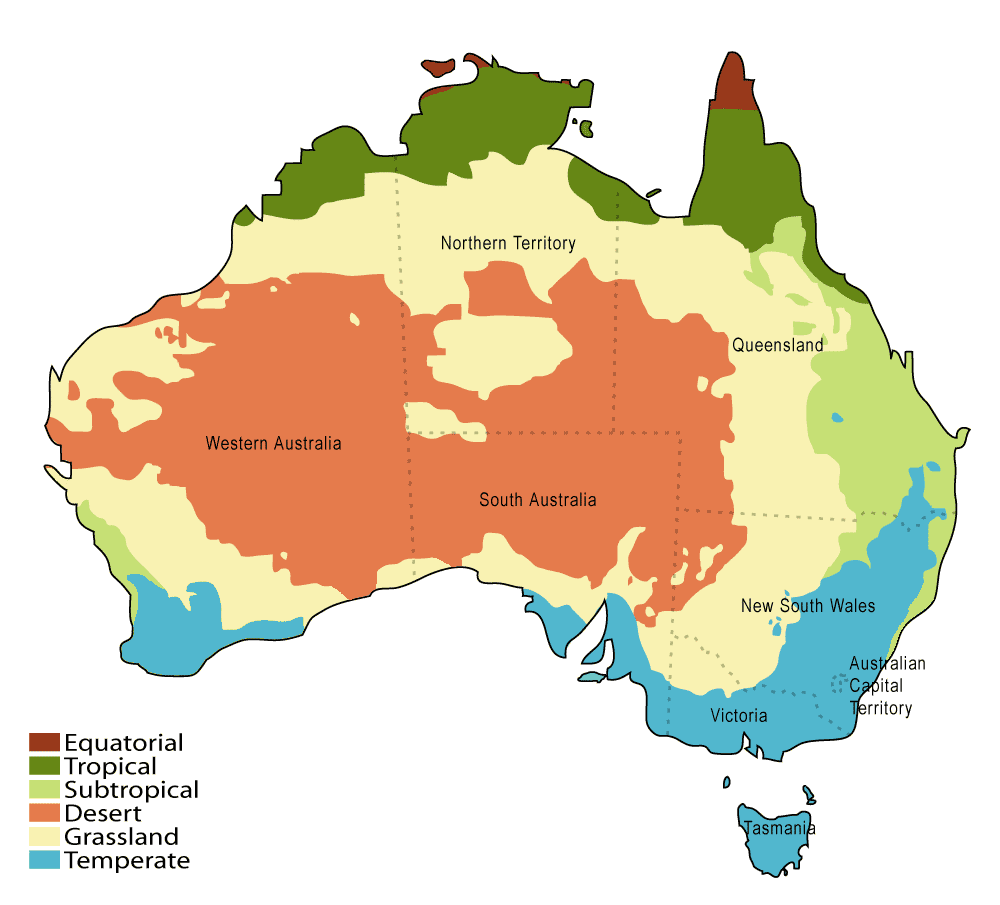
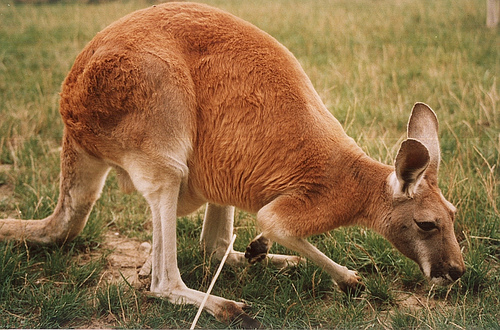
The only things stranger than the land are its inhabitants. The majority of taxa found there are endemic to Australia, meaning they are found nowhere else. Most notably, placental mammals (the dominant mammal group in the rest of the world) have been out-competed by marsupials and monotremes there.
An Old Continent
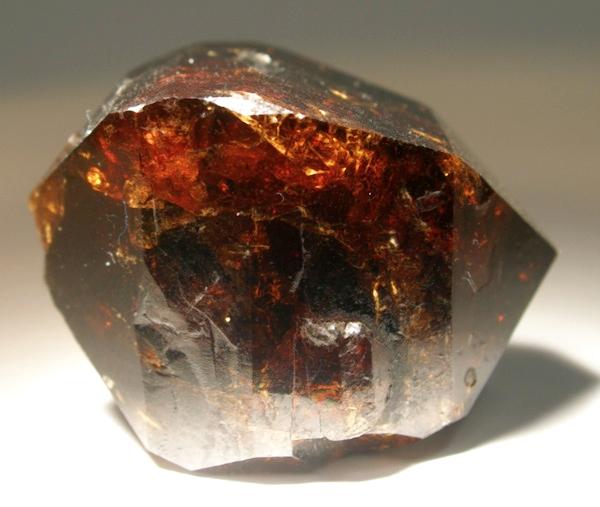
Australia is also home to the oldest dated materials in the world. Zircon crystals found in Western Australia have been radiometrically dated to 4.374 billion years (+6 million years). This places them just 160 million years after the formation of the solar system.
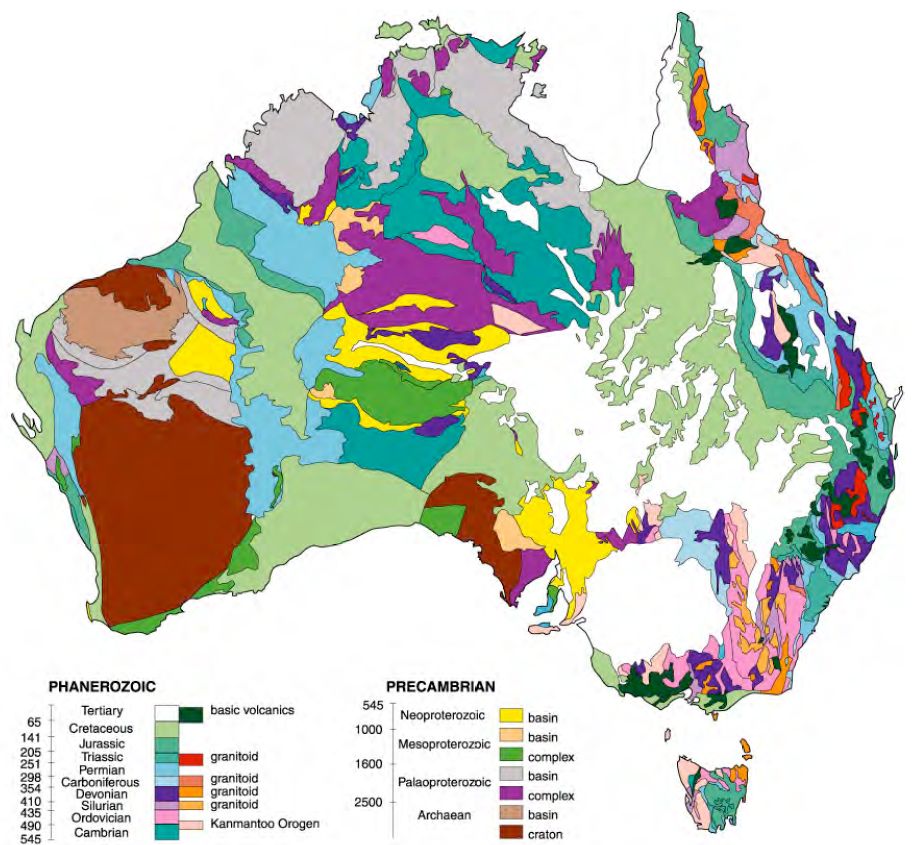
Over the next 4 billion years, the sections of Australia formed roughly from east to west, gradually constructing the landmass we know today. But it didn’t look quite like this until much more recently.
A Trip Through Gondwana
Australia first starts to take shape when it is crushed together in the super-continent Rodinia, just over 1 billion years ago. When Rodinia broke up, between 830 to 745 million years ago, Australia was a part of the eastern chunk which included what would eventually be India and Antarctica. By the Cambrian, starting just before 500 million years ago, Africa and South America join this landmass to form the famous southern supercontinent of Gondwana.

Throughout the Paleozoic Era, Australia is covered by a long history of shallow seas, and as they start to receded, the continent sees some of the earliest land-dwelling vertebrates and plants. The first amphibians in Australia are known from track-ways in the southeast of the country.
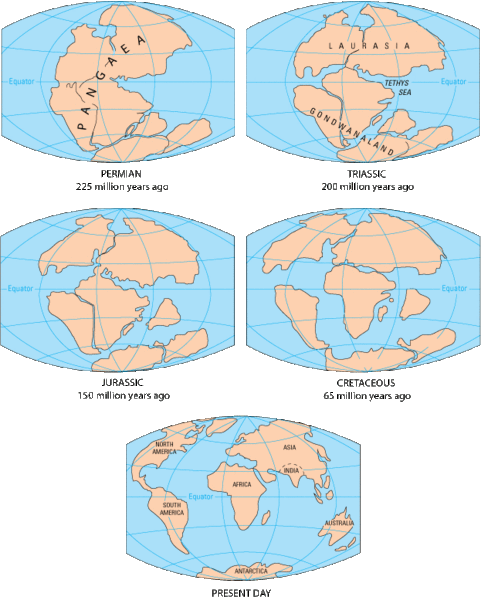
Toward the end of the Era, Gondwana joins up with the northern landmasses of Laurussia and Siberia, and Australia finds itself at the southeastern tip of the new super-continent of Pangaea.
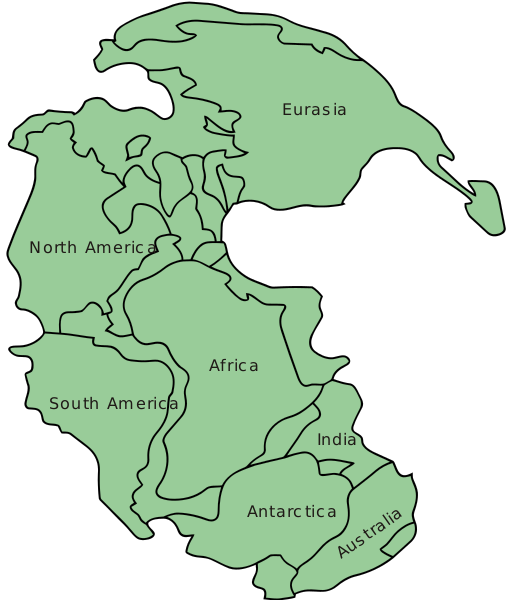
Throughout the Mesozoic Era, as the world warms and Australia shifts to the north, the island-continent becomes more temperate and lush. This trend more or less continues in the Cenozoic Era as the continents gradually pull apart, eventually leaving Australia isolated by the Eocene, around 40 million years ago, and takes on the warm and dry climate we know today.
To this day Australia continues to move north-east at about 7 cm/year, a rather quick pace for a continent.
Fossil Australia
The fossil record in Australia is full of oddities.
Very few dinosaurs have been identified there, fewer than 20 species so far. We don’t see horned dinosaurs or hadrosaurs, but we do find a diverse array of sauropods, armored ankylosaurs, and small bipedal ornithopods, as well as a few predatory theropods.
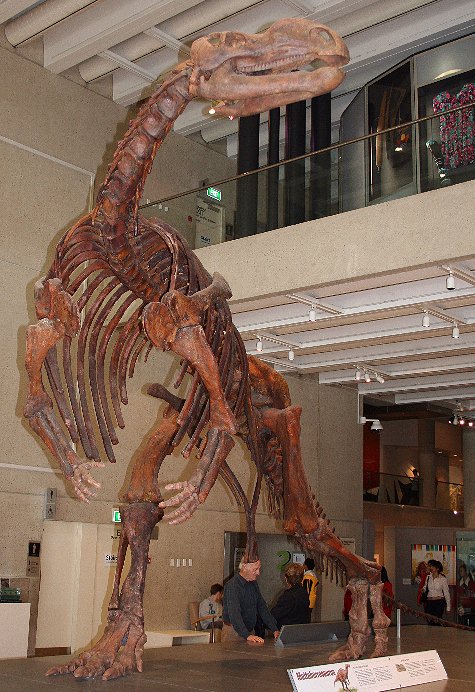
The most well-preserved dinosaur is the famous Muttaburrasaurus, an iguanpdontid that grew to 8 meters long.
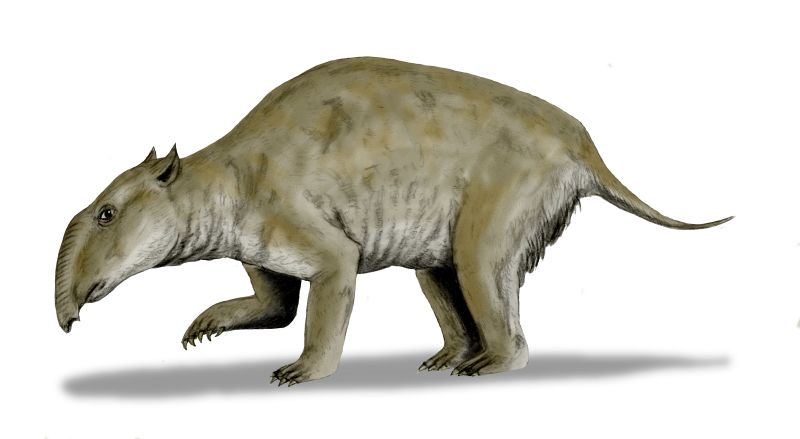
Australia is famous for marsupials today, but these mammals actually appear to have originated in North America, traveling across the Gondwanan continents and only hitting it big in Australia fairly recently. Starting in the Miocene, we see the development of some of Australia’s famous marsupial megafauna, including such stars as Diprotodon, Thylacoleo, Megalania, Wonambi, Quinkana, Dromornis, and Genyornis. Many of these are now known from the Naracoorte Caves in South Australia.
The earliest monotremes in Australia are known from way back in the Cretaceous. Currently the oldest monotreme is Steropodon galmani.

The history and geology of Australia is incredibly complex. This is but a glimpse. If you’d like an even more snapshot look here’s a poster of Australia through time that might help.
—
If you enjoyed this topic and want more like it, check out these related episodes:
- Episode 96 – Marsupials
- Episode 32 – Naracoorte Caves, Australia
- Episode 4 – Island Evolution
- Episode 36 – Reefs
We also invite you to follow us on Twitter, Facebook, or Instagram, buy merch at our Zazzle store, join our Discord server, or consider supporting us with a one-time PayPal donation or on Patreon to get bonus recordings and other goodies!
Please feel free to contact us with comments, questions, or topic suggestions, and to rate and review us on iTunes!


 The Common Descent Podcast
Leave a comment