
Listen to Episode 173 on PodBean, YouTube, Spotify, or wherever you listen to your favorite podcasts!
Devouring and digesting plants is no easy task, so it’s amazing how many groups of animal life have evolved that very habit, and even more amazing how integral these organisms are to ecosystems on Earth. This episode, we discuss the history and evolution of Herbivores (Plant-Eaters).
In the news
This fossil vampire squid could ink and glow
This Jurassic fish appears to have choked to death on an ammonite shell
Early reptile is an ancient cousin of dinosaurs and pterosaurs
“The Coliseum” is Alaska’s biggest dinosaur tracksite
Plant-Eating
The term herbivore means “plant-eater,” but there’s a lot of variety within this seemingly simple concept. Herbivores can specialize on certain types of plants (e.g. grass, shrubs, algae), certain parts of plants (e.g. leaves, fruit, seeds, wood), or certain habitats (e.g. forests, grasslands, reefs). Herbivory, in its many varied forms, has evolved over and over again among the many lineages of animal life.
The term is typically reserved for animals, though there are many other organisms that feed on plants, including bacteria, fungi, and even other plants.

Top left: A deer eating leaves. Image by John Benson, CC BY 2.0
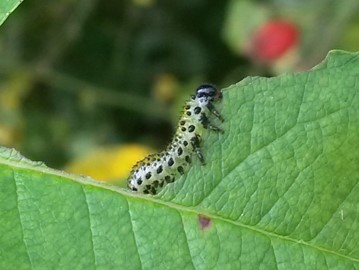
Top right: Sawfly larva eating a leaf. Image by Daniel Mietchen, CC0
Bottom left: Tracks in algae left by feeding snails. Image by Chiswick Chap, CC BY-SA 3.0
Bottom right: A group of herbivorous fish. Image by PoojaRathod, CC BY-SA 4.0
Eating plants isn’t easy. Plant tissues are tough and difficult to digest – in fact, animals can’t even produce the enzymes needed to efficiently break down plant material. Herbivorous animals tend to converge on similar adaptations: digestive tracts with lots of room for microbes that can take apart those plant tissues (think the extra-large stomach of a cow or intestines of a horse), and mouthparts that can get the process started (like the piercing or cutting mandibles of many insects or the grinding teeth of many mammals).
A History of Herbivory
The first herbivores lived in the oceans, feeding on algae and other photosynthesizing microbes. During the Paleozoic, these plant-eaters likely included snails, worms, and fish, but herbivory doesn’t seem to have been a major trend in those early ecosystems. It wasn’t until much later that specialized marine herbivores like urchins, manatees, and certain groups of fish became major components of ocean habitats.
On land, it’s a different story. Evidence of herbivory – including bite marks on ancient plants and spores inside fossil guts and feces – goes back to the Silurian Period, and quickly becomes a big deal. By the Carboniferous, there are many groups of herbivorous arthropods, including insects and myriapods, and by the Permian, they had been joined by a variety of vertebrates, including early reptiles and synapsids.
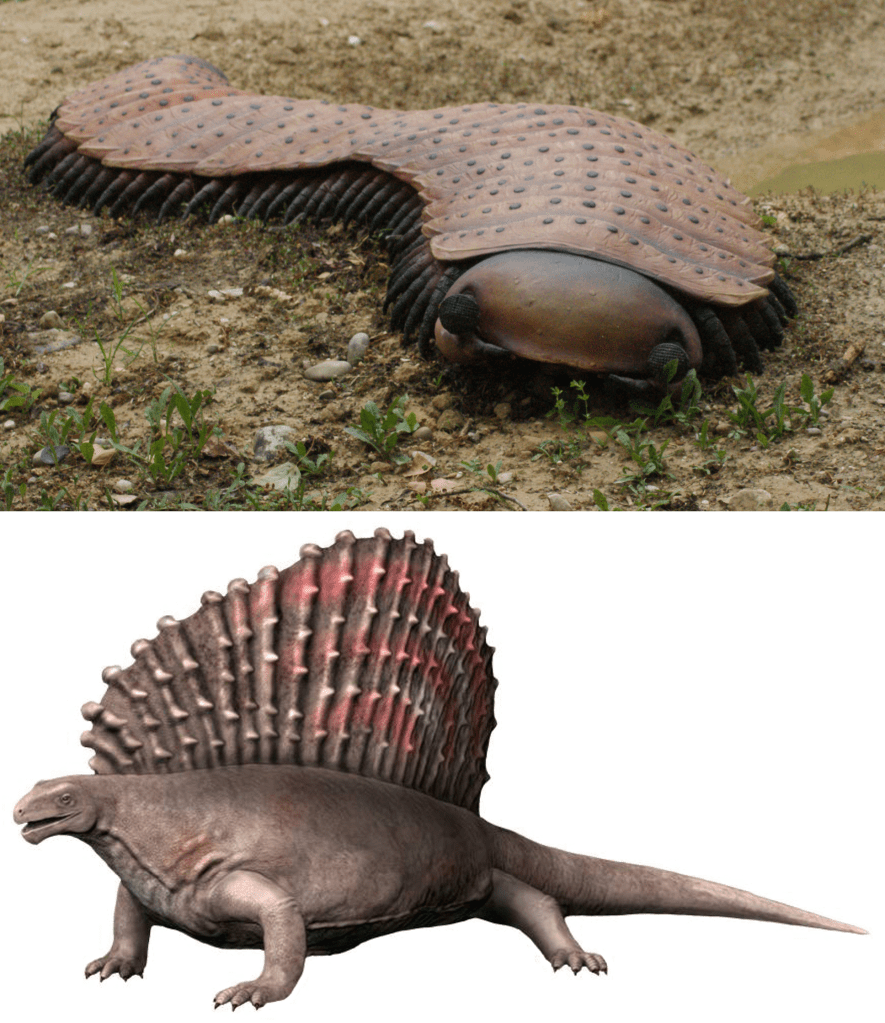
Top: The giant myriapod Arthropleura. Image by Spencer Wright, CC BY 2.0
Bottom: The early synapsid Edaphosaurus. Image by Nobu Tamura, CC BY-SA 4.0
Herbivores are a major component of modern ecosystems. By digesting plant material, they make the energy and nutrients of plants available for predators and scavengers, and they also change the shape of their habitats by destroying certain plants while spreading the seeds and pollen of others. By the Late Paleozoic Era, with many groups of invertebrate and vertebrate herbivores on land, the ecosystem structure we’re familiar with today took hold for the first time.
Since that time, herbivory has appeared again and again, often associated with similar convergent features. Many mammals and ornithischian dinosaurs evolved batteries of teeth for grinding up plant material; many groups of insects have evolved piercing mouthparts for sucking up plant fluids; several lineages of herbivorous theropod dinosaurs evolved beaks; multiple groups of fish have evolved expanded abdomens for housing plant-digesting microbes; several groups of carnivoran mammals have evolved powerful jaws as they developed the habit of eating more plant material. And those are just a few examples.
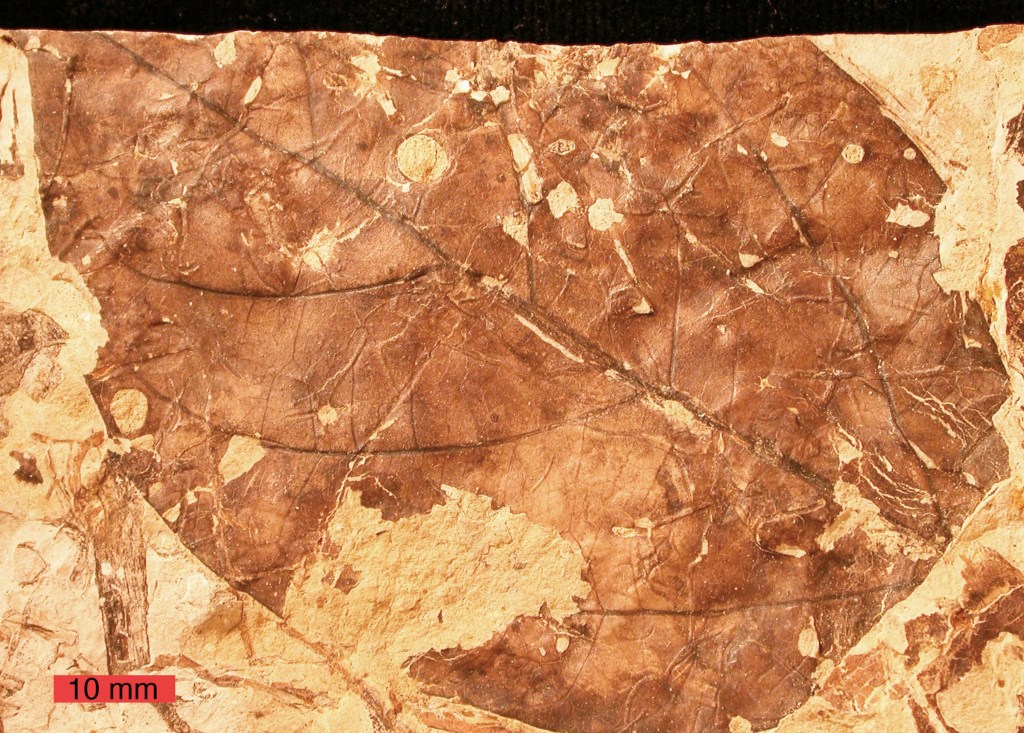
Image by Wilson44691, Public Domain
Learn More
Scientists Discover One of the Earliest Mammal Ancestors That Ate Its Veggies
Herbivorous dinosaurs differed in how they ate their food
Convergent evolution of herbivory in theropod dinosaurs
Herbivory in the marine realm (technical, open access)
Origins and early evolution of herbivory in tetrapods (technical, paywall)
Convergent evolution of herbivorous carnivoran skulls (technical, open access)
__
If you enjoyed this topic and want more like it, check out these related episodes:
- Episode 88 – Evolution of Teeth
- Episode 105 – Carnivorous Plants
- Episode 134 – Sanguivores (Blood-Eaters)
We also invite you to follow us on Twitter, Facebook, or Instagram, buy merch at our Zazzle store, join our Discord server, or consider supporting us with a one-time PayPal donation or on Patreon to get bonus recordings and other goodies!
Please feel free to contact us with comments, questions, or topic suggestions, and to rate and review us on iTunes.
 The Common Descent Podcast
.jpg)


Leave a comment