
Listen to Episode 188 on PodBean, YouTube, Spotify, or wherever you listen to your favorite podcasts!
Animals eating members of their own species is a surprisingly common behavior, and one that shows up in a wide variety of circumstances. In this episode, we discuss the diverse and often misunderstood subject of Cannibalism.
In the news
An unusual enantiornithine bird has odd wings and a toothless beak
A new large river dolphin from the ancient Amazon
Mid-Cretaceous deposits in Alaska provide insights into a changing world
Ancient amphibian named after Kermit the frog
BE AWARE: This page contains images of animals being eaten. Some images are a bit gross.
A Familiar Taste
Cannibalism describes the behavior of an animal eating another member of its own species. Often, this behavior is portrayed as rare and abnormal, but in reality, cannibalism is extremely widespread and common in nature. Many species are occasional cannibals, some turn to cannibalism as a common survival strategy, and some species even rely on cannibalism during certain parts of their life cycle.
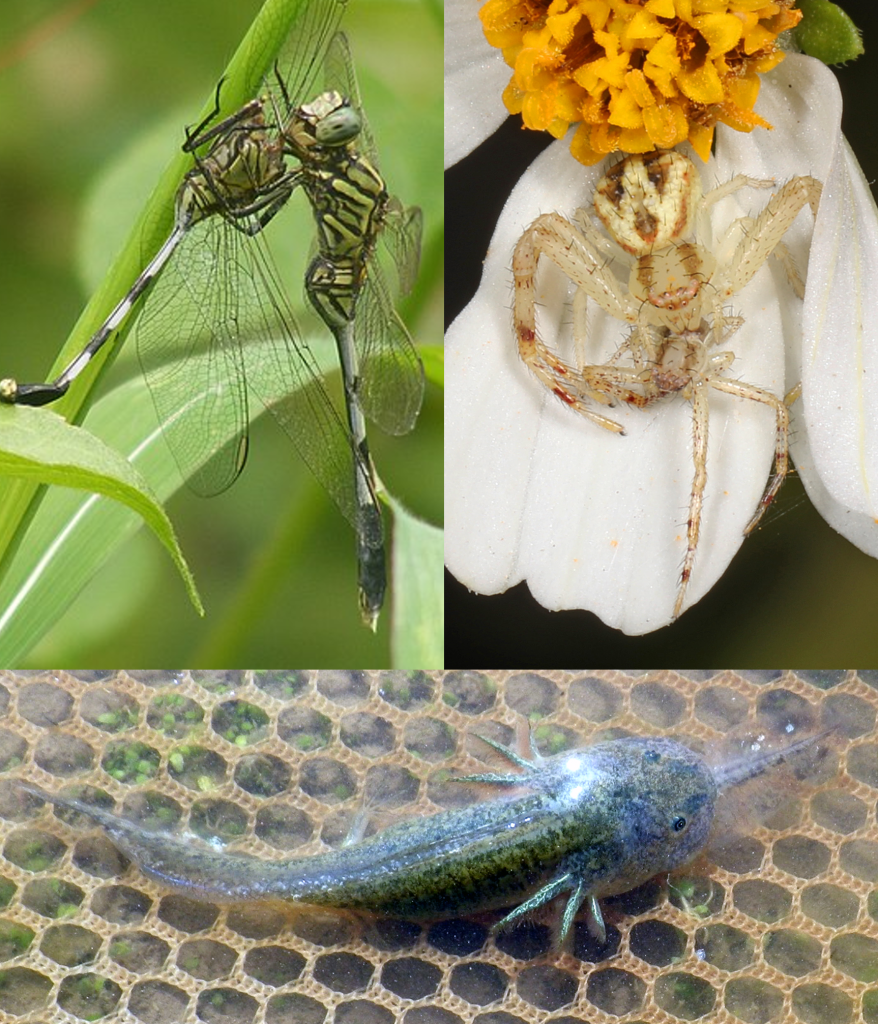
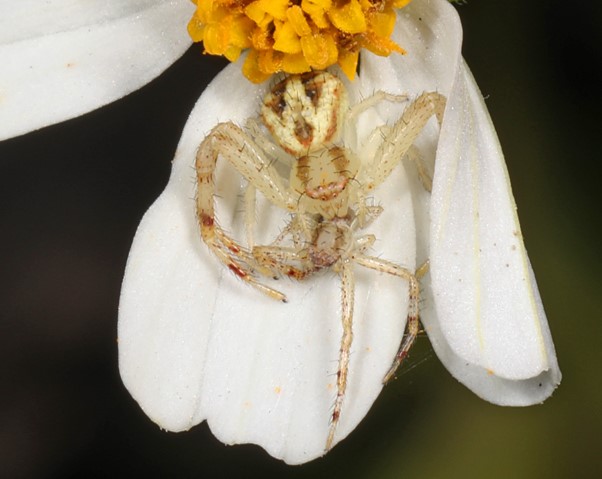
Top right: Crab spider cannibalism. Image by Judy Gallagher, CC BY 2.0
Bottom: California tiger salamander larva, cannibal morph (with another larva’s tail sticking out of its mouth!). Image from California Department of Fish and Wildlife, CC BY 2.0
Cannibalism comes in many forms. Many predatory species will hunt and eat members of their own species in situations where other food is scarce or where their own species is particularly abundant. Some species, especially certain varieties of insects and amphibian larvae, have ‘cannibal morphs’ – individuals which are distinctly adapted for eating others of their own species. Cannibalism in cases like this can be beneficial from the perspective of natural selection, allowing certain individuals to obtain the nutrients they need to grow quickly while at the same time reducing competition.
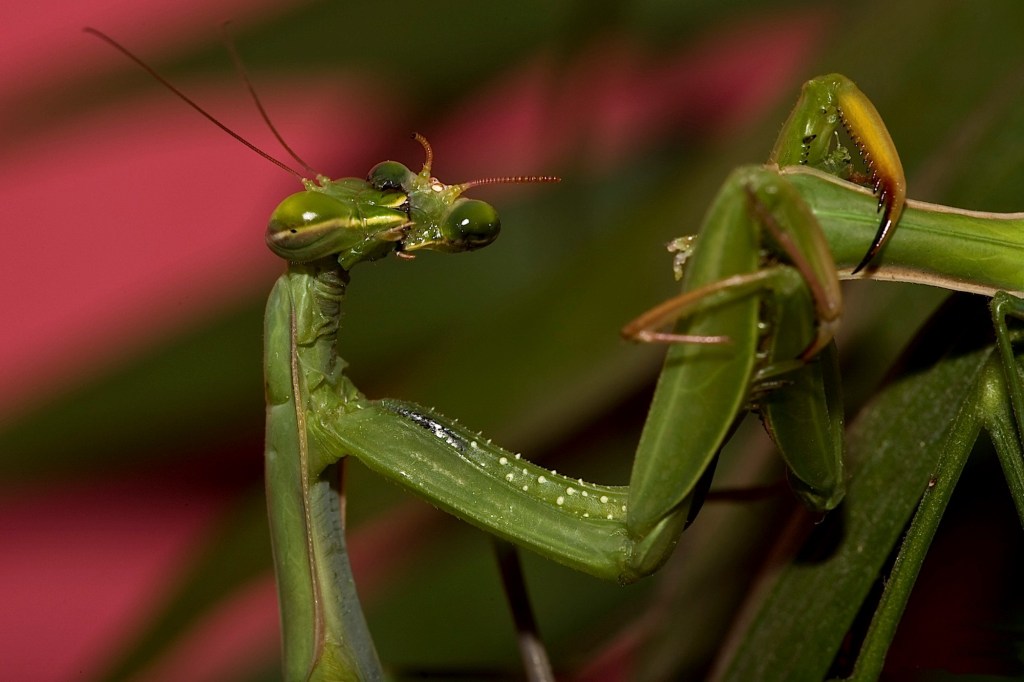
Cannibalism is also commonly associated with reproduction, often as a means to provide extra nutrition to developing offspring. Many arthropods perform sexual cannibalism, where a female might devour a male during or after mating. Some species of fish and salamanders are known to perform intrauterine cannibalism: the developing embryos eat the other embryos within the same clutch. In other species, newly born offspring feed on their parents as a first meal (parental cannibalism).
In some species, cannibalism is so prevalent that these animals have actually evolved certain anatomy or behaviors to avoid being eaten by their fellows! This is seen, for example, in cane toads and desert locusts.
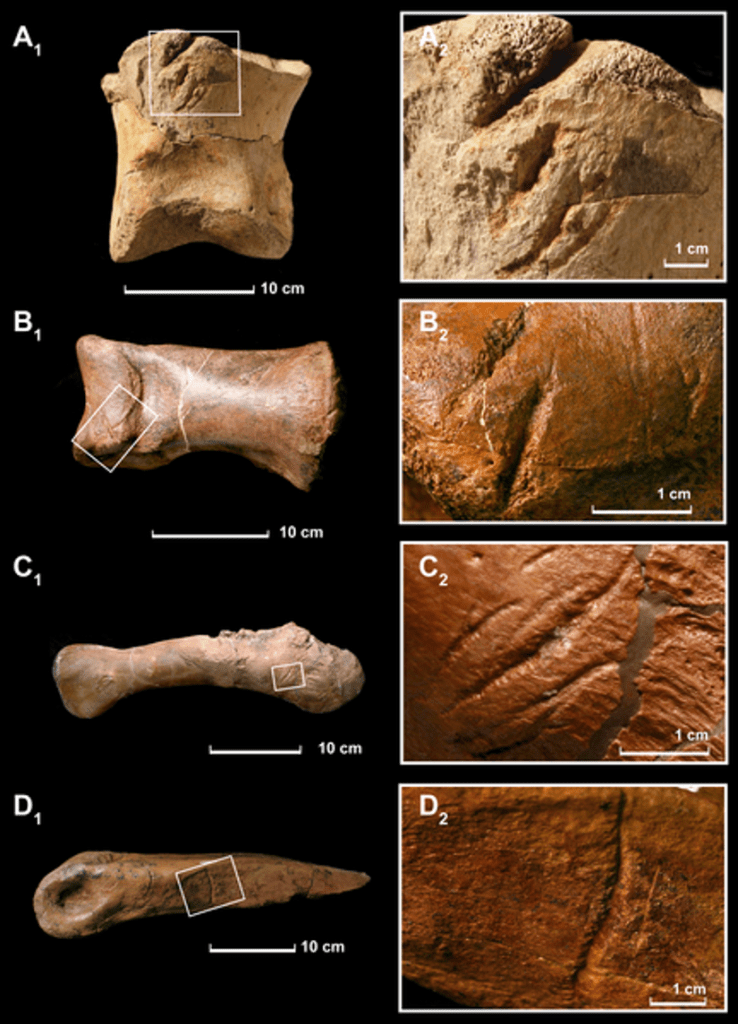
Cannibalism can be difficult to detect in the fossil record, but there are some potential examples. Numerous fossils are known of certain fish and reptiles with smaller members of their own species preserved within their gut cavities. There are also several cases of dinosaur bones with bite marks on them that were likely left by the same species. Perhaps the most famous case of dinosaur cannibalism turned out to be a mistake – tiny bones inside a Coelophysis skeleton were originally identified as smaller Coelophysis but later revealed to be a different sort of reptile altogether.
Learn More
Cannibalism, overview (technical)
Coelophysis isn’t a cannibal after all (non-technical)
(and here’s the scientific study – technical, open access)
Carnivorous Dinosaurs Like Allosaurus Were Cannibals (non-technical)
(and here’s the scientific study – technical, open access)
Sexual Cannibalism as a Manifestation of Sexual Conflict (technical)
Cannibalism and Infectious Disease (technical, paywall)
__
If you enjoyed this topic and want more like it, check out these related episodes:
We also invite you to follow us on Twitter, Facebook, or Instagram, buy merch at our Zazzle store, join our Discord server, or consider supporting us with a one-time PayPal donation or on Patreon to get bonus recordings and other goodies!
Please feel free to contact us with comments, questions, or topic suggestions, and to rate and review us on iTunes.
 The Common Descent Podcast


Leave a comment