

Listen to Episode 195 on PodBean, YouTube, Spotify, or wherever you listen to your favorite podcasts!
They are the main photosynthesizing organs of plants and the basis for ecosystems all over our green planet. This episode, we discuss the diversity and evolution of Leaves.
In the news
A new croc-cousin adds to the diversity of early pseudosuchians
New dinosaur Lokiceratops reveals unexpected density of horned dinosaurs
Researchers propose challenge to the idea of dinosaur-inspired griffon myths
Well-preserved fossil fish reveal stages of fish brain evolution
The Green Part of our Planet
Leaves are one of the key structures found in vascular plants. Typically flat, blade-like, and green in color, the primary function of a leaf is photosynthesis. Tissues within a leaf take in light from the sun, gas from the air, and water from the plant’s vascular system to generate the energy and nutrition the plant needs to survive.

Image by Andrew Z. Colvin, CC BY-SA 4.0
Leaves come in a dizzying variety of shapes, from single blades to complex clusters, from tiny leaves only a couple of millimeters long to massive palm leaves over 20 meters in length, and with a vast diversity of vein patterns, margin shapes, and more.

1. Apex 2. Midvein (Primary vein) 3. Secondary vein. 4. Lamina. 5. Leaf margin 6. Petiole 7. Bud 8. Stem
Image by Jessekar0524, CC BY-SA 4.0
Right: Anatomy of a compound leaf.
Image by Kingfiser, CC BY-SA 4.0
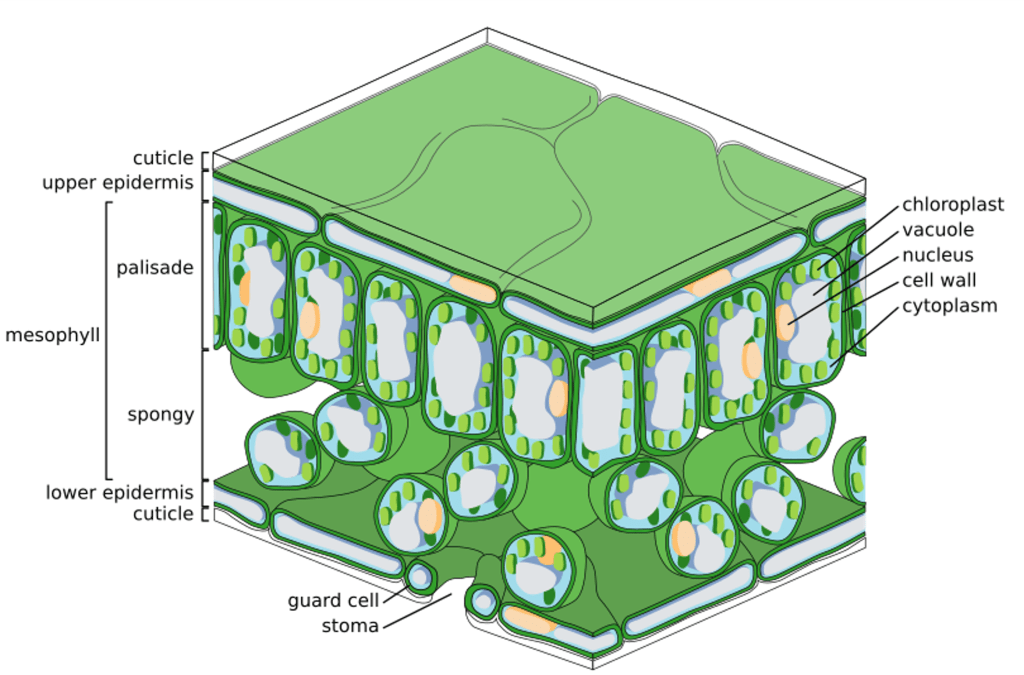

Image from Aly Baumgartner.
In many plants, leaves have been modified into specialized structures for different functions, including parts of flowers for reproduction (as in many angiosperms), spines for defense (as in cacti), trapping structures for gathering food (in carnivorous plants), and even homes or food stores to attract symbiotic insects.
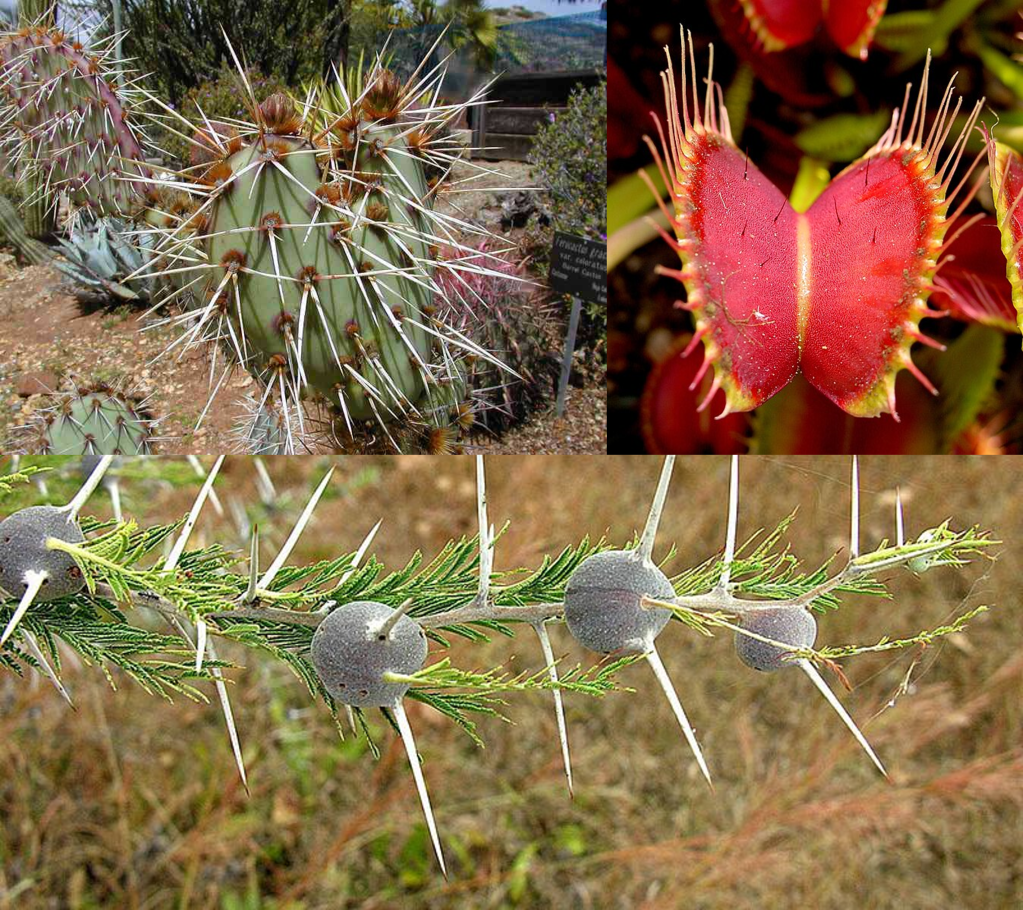
Top left: Cactus spines. Public domain image.
Top right: “Jaws” of a venus flytrap. Image by Noah Elhardt, CC BY-SA 2.5
Bottom: Those round structures in this acacia are domacia, or “homes” for ants. Image by Dick Culbert, CC BY 2.0
The oldest known leaves are over 400 million years old, found on some of the earliest land plants. Leaves appear to have evolved multiple times within vascular plants. The origin of leaves led to an explosion of diversity in land plants during the Paleozoic, changing the composition of the Earth’s atmosphere, turning our planet green, and making land-based ecosystems as we know them possible.
Fossil leaves are often preserved as compressions or carbonized remains, retaining the overall shape and structure of the original leaf. Paleontologists examine the shape and chemistry of fossil leaves to interpret ancient climate conditions, atmospheric composition, and environmental makeup.

Top middle: Fossil Sabalites palm leaf. Public domain image.
Top right: Fossil Ginkgo leaf. Image by Kevmin, CC BY-SA 4.0
Bottom left: Fossil heartseed leaf, Cardiospermum. Image by James St. John, CC BY 2.0
Bottom right: One more leaf fossil for fun. Image by JJonahJackalope, CC BY-SA 4.0
Learn More
The evolution and functional significance of leaf shape in the angiosperms (technical, open access)
The origin and early evolution of vascular plant shoots and leaves (technical, open access)
Evolution of Developmental Potential and the Multiple Independent Origins of Leaves in Paleozoic Vascular Plants (technical, open access)
Sensitivity of a leaf gas-exchange model for estimating paleoatmospheric CO2 concentration (technical, open access)
And here are some botanical citizen science projects recommended by Aly!
Project BudBurst
Nature’s Notebooks
FunLeaf
Notes from Nature
__
If you enjoyed this topic and want more like it, check out these related episodes:
We also invite you to follow us on Facebook or Instagram, buy merch at our Zazzle store, join our Discord server, or consider supporting us with a one-time PayPal donation or on Patreon to get bonus recordings and other goodies!
Please feel free to contact us with comments, questions, or topic suggestions, and to rate and review us on Spotify or Apple Podcasts!
 The Common Descent Podcast
.png)


.jpg)


_(Green_River_Formation,_Eocene;_Utah,_USA)_(44557178634).jpg)


Leave a comment