
Listen to Episode 202 on PodBean, YouTube, Spotify, or wherever you listen to your favorite podcasts!
This episode, we wrap up our fungal trilogy with an exploration of the fungal interactions that hit most close to home, that of Fungi and Animals.
In the news
Hands and feet of pterosaurs reveal diverse walking habits
Fossil tail clubs belonged to Jurassic sauropod dinosaurs
Detailed description of a second impact crater near the end-Cretaceous
Bioluminescent firefly discovered in Early Cretaceous amber
Fungus Among Us
Fungi and animals interact in a wide variety of ways, from parasitism to partnership to predation. Some of these are one-sided interactions, while others are mutually beneficial.
The most obvious way that animals benefit from fungi is through their diet. Many small invertebrates feed on microscopic fungal parts such as spores and hyphae, while plenty of larger animals eat mushrooms and other fungal fruiting bodies. Some animals get a significant portion of their nutrients or water through fungi, and certain arthropods are even fungus-eating specialists. This is an ancient habit; fungus remains are known from animal coprolites (fossil poop) as far back as the Devonian Period.

Right: A truffle, subterranean fungal fruiting body. Image by Royonx, CC BY-SA 3.0
Like plants, fungi can benefit from being eaten. The job of a fungal fruiting body is to produce and spread spores, and while many fungi do this by releasing spores into the air or water, some rely on animals to carry their spores around for them. Many species of fungi produce fruiting bodies with an appealing smell that draws animals near, and when the animal touches or eats the fungus, it picks up the spores and carries them elsewhere. In some species, the fungal spores make it all the way through an animal’s digestive tract and then grow in the poop.
There are also carnivorous fungi that use adhesive substances or constricting loops of hyphae to capture, kill, and absorb nutrients from small animals like nematodes. These trapping structures are also known from the fossil record as far back as the Cretaceous Period.

Many species of fungus live some or all of their lives inside the bodies of animals. This can include the fungi in our guts which help us digest plant matter; species that live inside us without affecting us at all; and others that grow into harmful or even deadly infections when the opportunity arises.
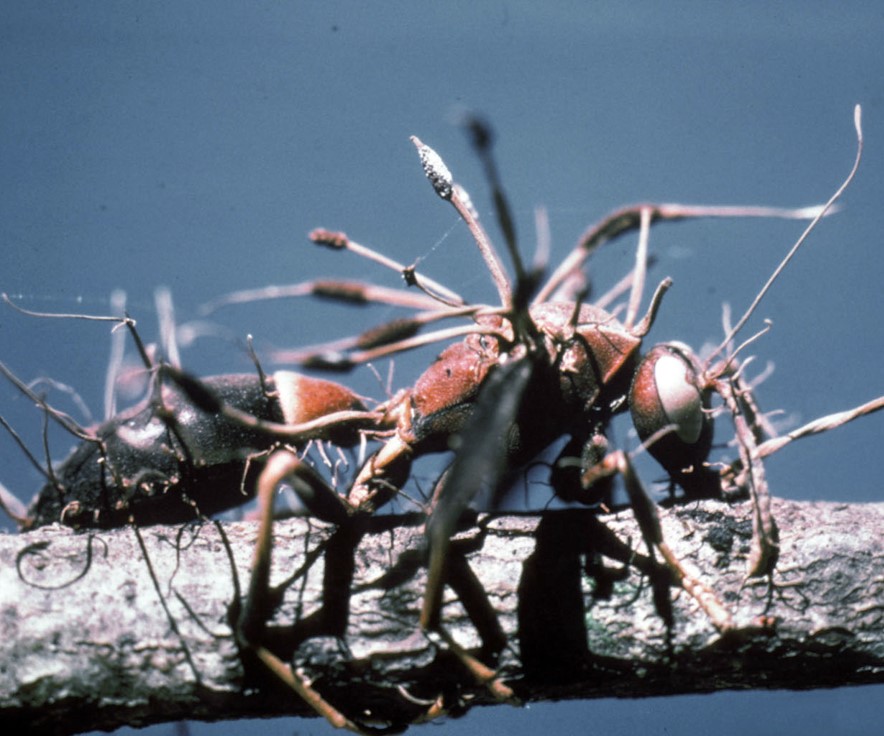
Among the most dramatic examples are fungal parasites of arthropods, some of which end up completely overtaking the body of their hosts. Some species grow fruiting bodies directly out of the carcass of their host once it’s dead, while others – like the famous fungal parasites of cicadas – shed spores as their host flies around infecting others. And of course there are the famous Ophiocordyceps fungi that infect ants, force them to crawl up to a high location, and then sprout out of their bodies to drop spores on the rest of the colony.
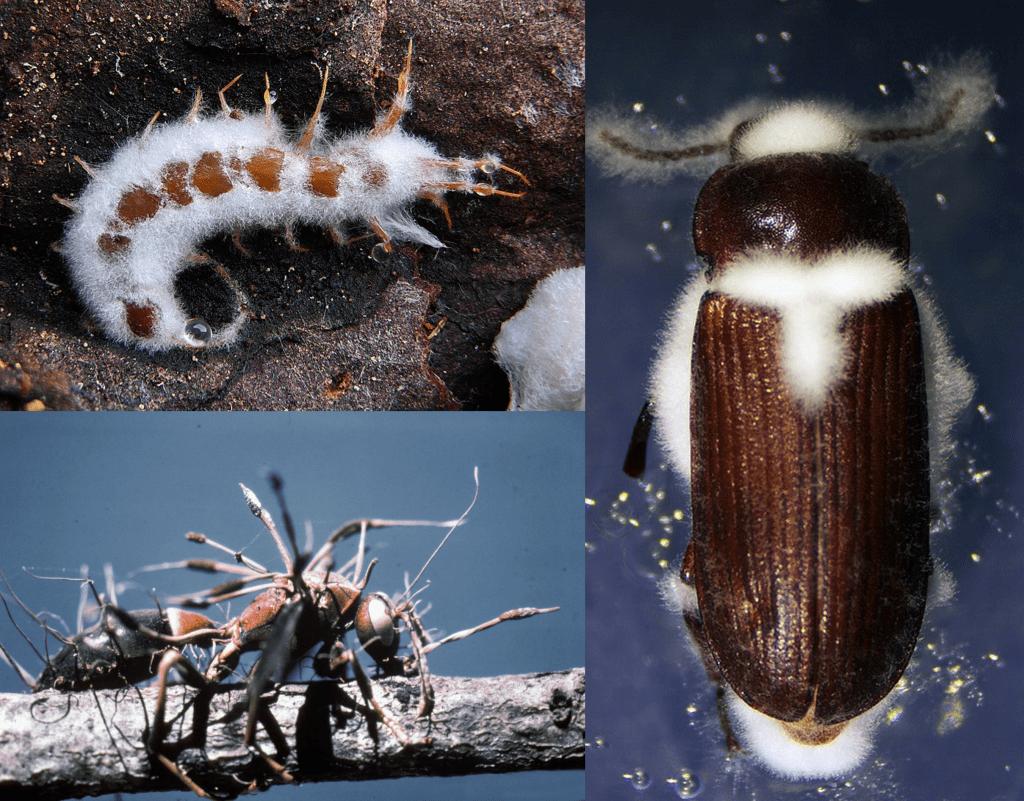
Bottom left: Wasp parasitized by Cordyceps fungus. Image by Erich G. Vallery, CC BY-SA 3.0
Right: Beauveria bassiana parasite emerging from a mealworm. Image by Preisegger et al 2023, CC BY-SA 4.0
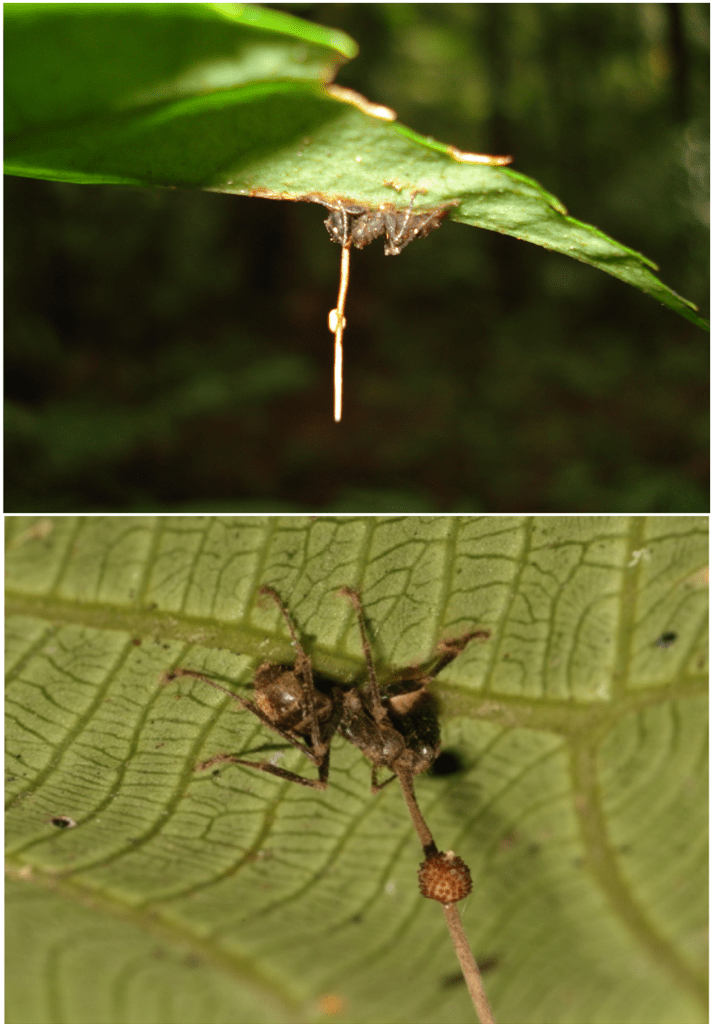
This sort of dramatic fungal parasitism is documented from the distant past by some truly incredible fossils.
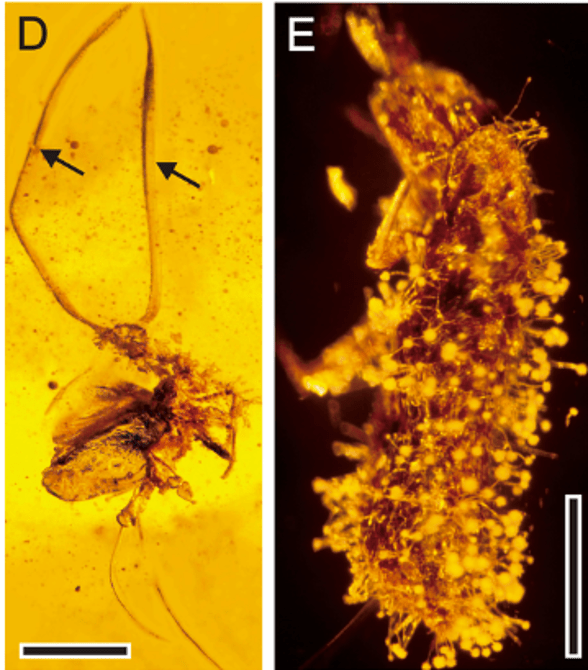
Right: Fruiting bodies of Aspergillus emerging from a springtail in Eocene amber.
Images from Luo, Haelewaters, and Krings 2023
And then some animals are fungus farmers. Certain species of ants, termites, and beetles are known to cultivate gardens of fungus within their nests. These insects bring plant matter to feed the fungus and even remove pests from the fungal garden, and then the fungus becomes an important source of nutrition for the insect larvae and/or adults. In many cases, these species are so tightly connected that the insects and fungi cannot survive without each other. Scarce genetic and fossil evidence suggests this behavior goes back as far as the Cretaceous Period.
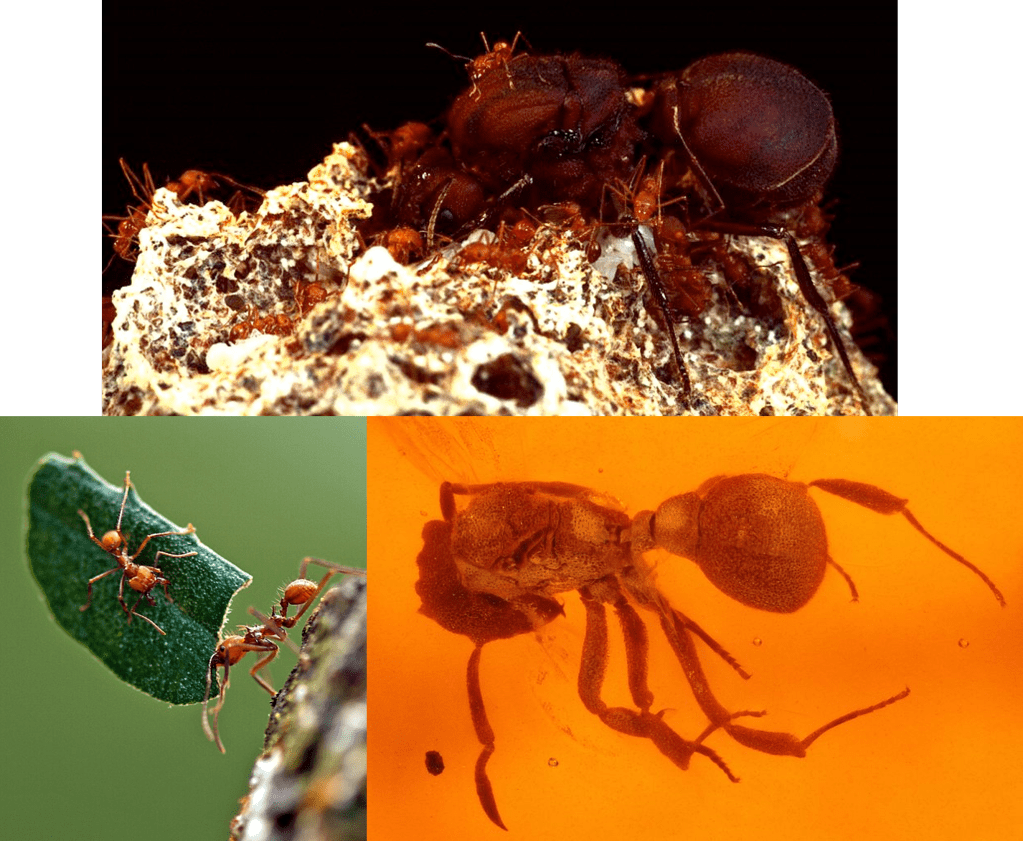
Bottom left: Leafcutter ants transport freshly cut leaves to feed their fungal garden. Image by Kathy & Sam, CC BY 2.0
Bottom right: Fossil fungus-growing ant (genus Atta) in Dominican amber. Image by Christopher Johnson, Public Domain
Learn More
Emergent Diseases:
Chytridiomycosis
White Nose Syndrome
Snake Fungal Disease
Mycophagy (technical, paywall)
Mammalian mycophagy: A global review of ecosystem interactions between mammals and fungi (technical, open access)
Fungus-farming insects: Multiple origins and diverse evolutionary histories (technical, open access)
Ants Farmed Fungi in the Wake of Dinosaurs’ Demise 66 Million Years Ago
Fossils of parasitic fungi (technical, open access)
The oldest fossil evidence of animal parasitism by fungi supports a Cretaceous diversification of fungal–arthropod symbioses (technical, paywall)
Disaster mycology (technical, open access)
__
If you enjoyed this topic and want more like it, check out these related episodes:
We also invite you to follow us on Facebook or Instagram, buy merch at our Zazzle store, join our Discord server, or consider supporting us with a one-time PayPal donation or on Patreon to get bonus recordings and other goodies!
Please feel free to contact us with comments, questions, or topic suggestions, and to rate and review us on Spotify or Apple Podcasts!
 The Common Descent Podcast


.jpg)


.jpg)
Leave a comment