
Listen to Episode 203 on PodBean, YouTube, Spotify, or wherever you listen to your favorite podcasts!
They’re among the most diverse and widespread mammals in the world, ranging from itty bitty critters to huge herbivores. This episode, we explore Rodents.
In the news
Fossils finally reveal the head of the ancient millipede Arthropleura
Late Cretaceous birds hunted like modern raptors
Inch-long eggs are the smallest known fossil dinosaur eggs
Research examines how evolution education affects students’ later lives
Mice, Rats, and Much More
Most non-flying mammals are rodents. With over 2200 known species on nearly every landmass on Earth, rodents are exceptionally successful animals. They include burrowing gophers, tree-dwelling squirrels, semi-aquatic beavers, tiny jerboas that weigh a fraction of an ounce, enormous 100-pound capybaras, and much more.
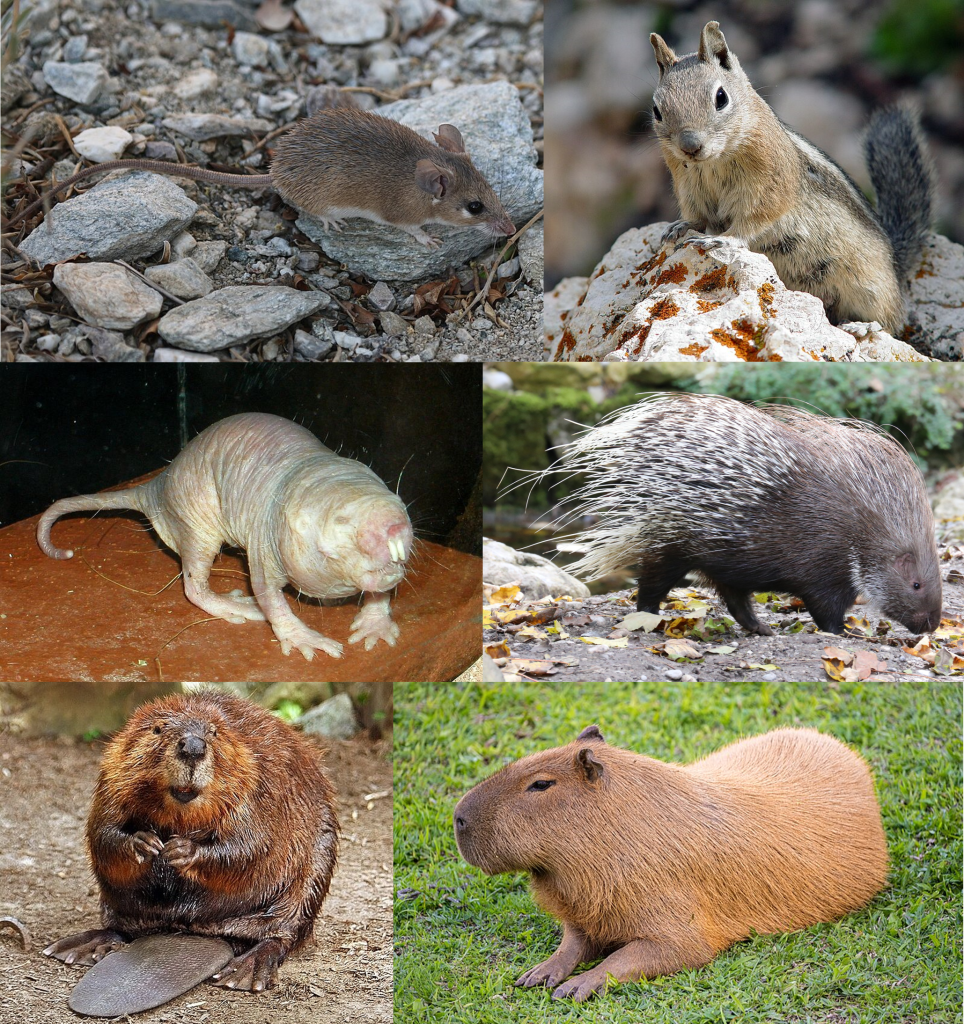
Top right: Golden-mantled ground squirrel (Callospermophilus lateralis). Image by Eborutta, CC BY-SA 3.0
Middle left: Naked mole rat (Heterocephalus glaber). Image by Roman Klementschitz, CC BY-SA 3.0
Middle right: Indian crested porcupine (Hystrix indica). Image by Rufus46, CC BY-SA 3.0
Bottom left: American beaver (Castor canadensis). Image by Steve, CC BY-SA 2.0
Bottom right: Capybara (Hydrochoeris hydrochaeris). Image by Wilfredo Rafael Rodriguez Hernandez, CC0
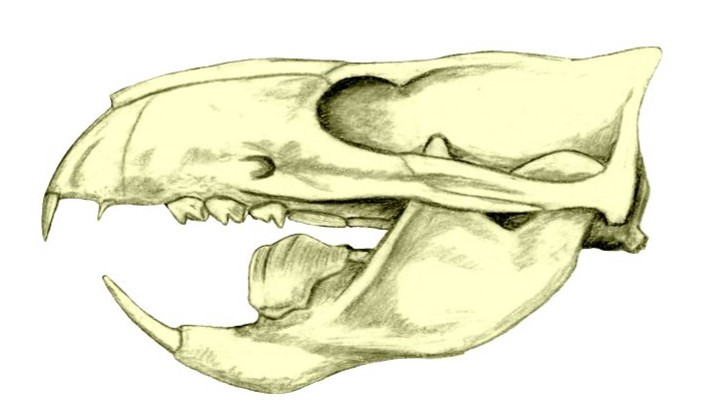
Rodents have very distinctive skulls, with a set of large, ever-growing incisors at the front separated by a large gap (a diastema) from their grinding molars in the back. Generally speaking, rodents have two modes of feeding: gnawing, in which they chisel away at wood or bone or other hard materials with their incisors; and chewing, in which they grind up food with their molars.
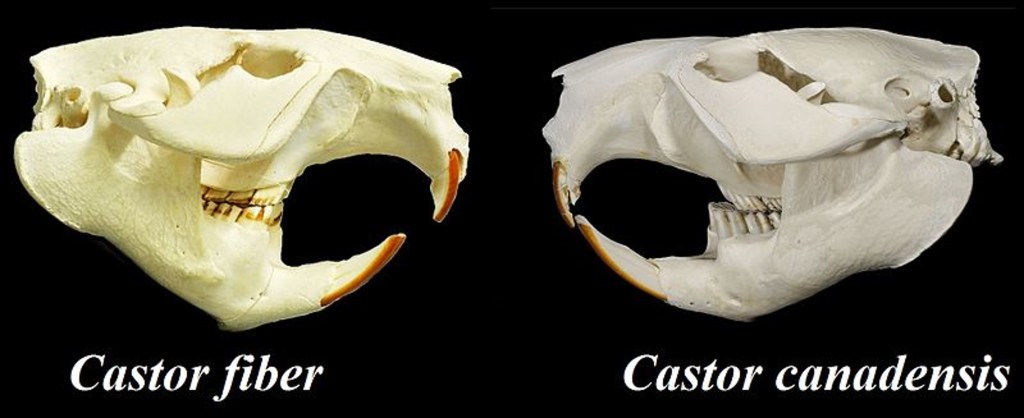
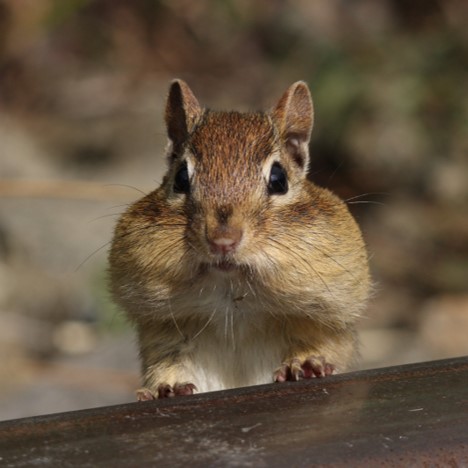
Rodents first appear in the fossil record in the Paleocene, around 60 million years ago, evolving from ancestors closely related to rabbits and primates. Rodents seem to have started out in the northern hemisphere, but they rapidly spread all over the world, leaving behind an extensive fossil record.
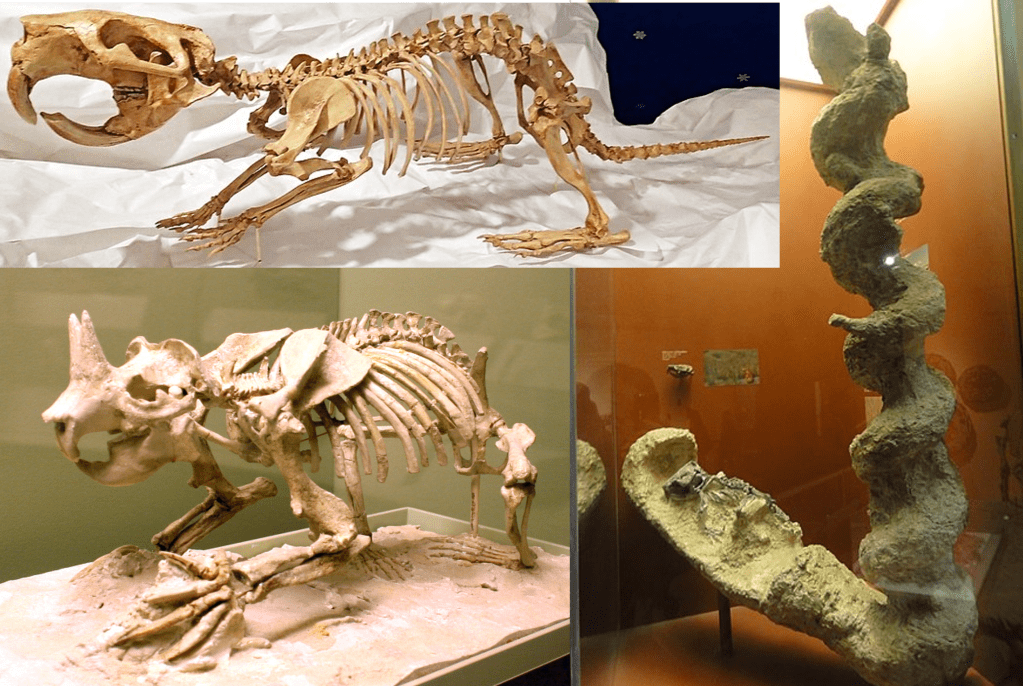
Bottom: The horned gopher Ceratogaulus. Image by Ryan Somma, CC BY-SA 2.0.
Right: The famous “Devil’s corkscrew” fossil burrow and its burrower, the ancient beaver Palaeocastor. Image by Inazakira, CC BY-SA 2.0
The rodent fossil record is particularly impressive in South America. Caviomorph rodents made it to South America during the Oligocene – they likely rafted over from Africa, similar to New World primates – and eventually gave rise not only to some of the most distinctive modern rodents (guinea pigs, capybaras, New World porcupines, and more) but also the very largest known rodents in Earth history. The record-holder is Josephoartigasia, with an estimated weight of around half a ton.
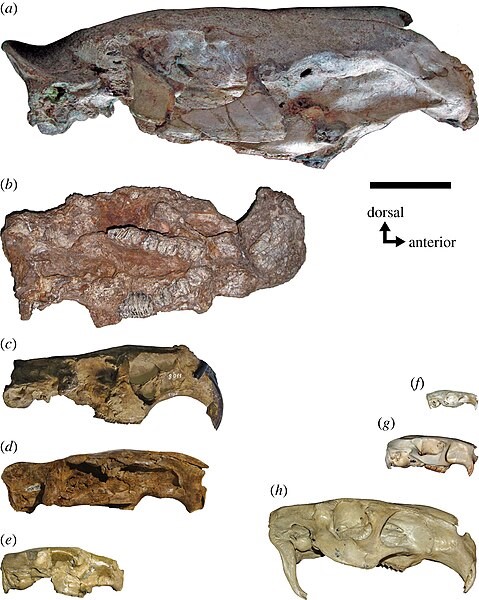
Fossils: (a) Josephoartigasia, the largest known rodent of all time; (b) Phoberomys; (c) Telicomys; (d) Neoepiblema; (e) Tetrastylus
Modern: (f) Guinea pig (Cavia porcellus); (g) Pacarana (Dinomys branickii); (h) Capybara (Hydrochoeris hydrochaeris).
Scale bar = 10cm.
Image from Engelman 2022.
The story of rodent evolution is intertwined with that of another group: multituberculates. Now extinct, multituberculates were extremely diverse during the Mesozoic. Their lifestyles, diversity, and even their skull anatomy were all very similar to rodents. Multituberculates disappeared during the Eocene, around the same time rodents were diversifying, leading some scientists to suspect rodents out-competed these ancient analogs.
Learn More
Look at those feet! Early evolution of rodents and lagomorphs
Legend of the “Devil’s Corkscrews”
Rodent Evolution: Back to the Root (technical, open access)
Functional Evolution of the Feeding System in Rodents (technical, open access)
The evolution of fossoriality and the adaptive role of horns in the Mylagaulidae (technical, open access)
__
If you enjoyed this topic and want more like it, check out these related episodes:
We also invite you to follow us on Facebook or Instagram, buy merch at our Zazzle store, join our Discord server, or consider supporting us with a one-time PayPal donation or on Patreon to get bonus recordings and other goodies!
Please feel free to contact us with comments, questions, or topic suggestions, and to rate and review us on Spotify or Apple Podcasts!
 The Common Descent Podcast


.jpg)


_(Pleistocene;_North_America)_4.jpg)


Leave a comment