
Listen to Episode 205 on PodBean, YouTube, Spotify, or wherever you listen to your favorite podcasts!
Not all plants rely on the sun. Some steal the nutrition they need from other photosynthesizers. This episode, we explore the diversity and evolution of Parasitic Plants.
In the news
First-ever discovery of a frozen sabertooth cat is a kitten
New system for interpreting plesiosaur swimming styles
Bird and bat wings follow different evolutionary patterns
The incredible capabilities of ankylosaur body armor
Plants Parasitizing Plants
Parasitic plants are species that get some or all of their nutrition from other living plants. Over 4,000 species are known to live this way. Depending on the species, they might be full-time or part-time parasites, they might be parasites of other plants’ roots or stems, and some must be at least partially parasitic in order to complete their life cycle.
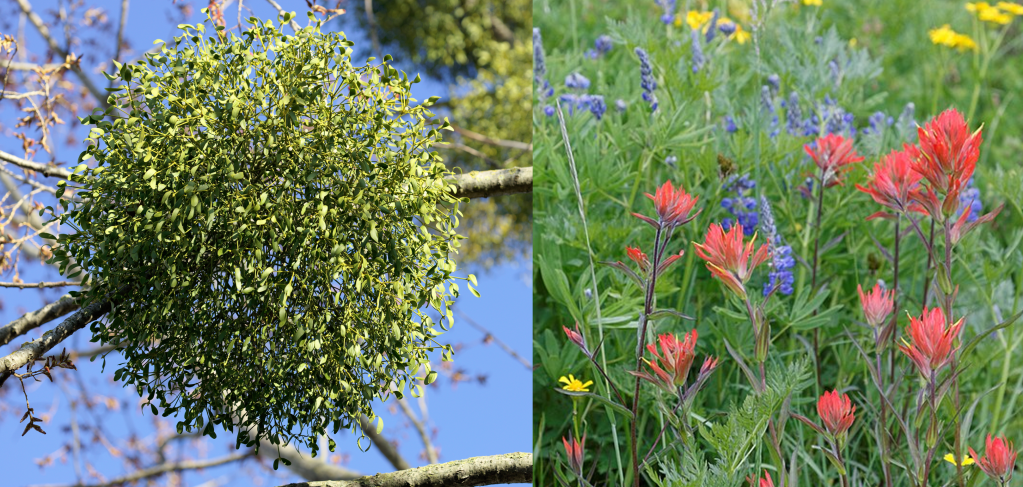
Left: Common mistletoe (Viscum album) is a stem parasite on trees. Image by Pascal Volk, CC BY-SA 4.0
Right: Prairie-fire (Castilleja) is a root parasite on grasses and forbs. Image by KimonBerlin, CC BY-SA 2.0
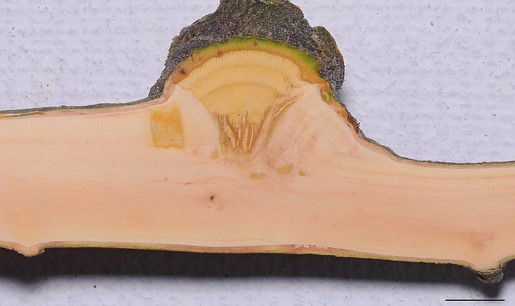
Parasitic plants all share a feature called a haustorium, which penetrates the host’s tissues and connects the parasite to the host’s vascular system. Several parasitic plants cause stunted growth, low reproduction, or even high mortality in their hosts, including some especially damaging agricultural pests.

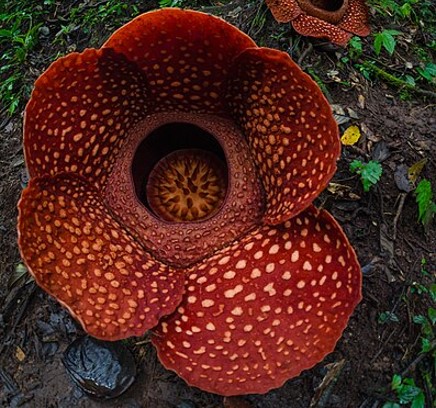
Left: Stinking corpse lily (Rafflesia) is a parasite of grapevines. These parasites lack stems, leaves, and roots, and they grow the world’s largest flowers. Image by Maizal Chaniago, CC BY-SA 4.0
Right: Dodder (Cuscuta) is a vine that is also a stem parasite. Image by Mikenorton, CC BY-SA 4.0
Parasitic lifestyles in plants have evolved several times independently across various flowering plant lineages since the Cretaceous Period. The haustorium has even evolved convergently several times. Since the haustorium is the only obvious anatomical structure of parasitic plants, and since it is often very small and hidden within the plants’ tissues, there are no confirmed fossils of parasitic plants, although there are reports of fossil pollen from modern parasitic plant families.
Learn More
Impacts of parasitic plants on natural communities (technical, open access)
Parasitic angiosperms: How often and how many? (technical, paywall)
A living bridge between two enemies: haustorium structure and evolution across parasitic flowering plants (technical, paywall)
__
If you enjoyed this topic and want more like it, check out these related episodes:
We also invite you to follow us on Facebook or Instagram, buy merch at our Zazzle store, join our Discord server, or consider supporting us with a one-time PayPal donation or on Patreon to get bonus recordings and other goodies!
Please feel free to contact us with comments, questions, or topic suggestions, and to rate and review us on Spotify or Apple Podcasts!
 The Common Descent Podcast

.jpg)


_called_haustorium_inside_the_tissues_of_its_host_linden_tree_(Tilia_cordata_Mill.).).jpg)
Leave a comment