
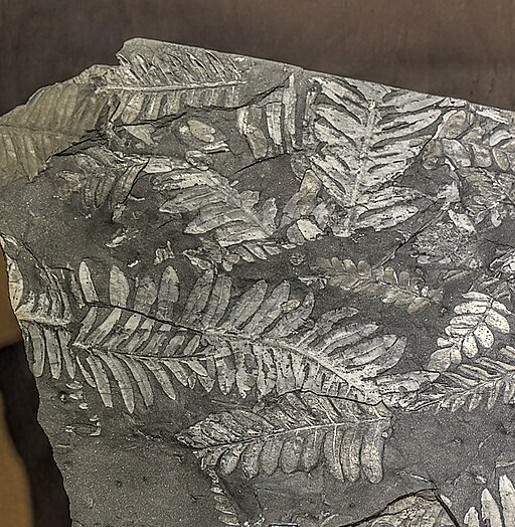
Listen to Episode 215 on PodBean, YouTube, Spotify, or wherever you listen to your favorite podcasts!
They’re an extraordinarily diverse group of plants, famous in the fossil record and in our modern world. This episode, we discuss the modern and ancient variety of Ferns.
In the news
Riley Black’s new book: When the Earth was Green
Cretaceous wasp with a venus fly-trap butt
Unusual two-fingered therizinosaur with a preserved claw sheath
And here’s an important article on Colossal’s disturbing “dire wolves”
Friends with Fronds
Ferns and their close cousins are a highly diverse group of vascular plants that reproduce with spores. Most famous ferns have divided leaves called fronds. Ferns are the second most diverse group of vascular plants, after angiosperms (flowering plants).

Top left: Cinnamon fern (Osmundastrum cinnamomeum). Image by Shuvaev, CC BY-SA 4.0
Top middle: Tree fern. Image by P. Hughes, CC BY-SA 4.0
Bottom left: Bracken fern (Pteridium). Image by Joshua Mayer, CC BY-SA 2.0
Bottom middle: Mosquito fern (Azolla). Image by Kurt Stüber, CC BY-SA 3.0
Right: Close-up of a monarch fern with spore-containing sori. Image by Vitaium, CC BY-SA 4.0
Most ferns belong to a group called Polypodiidae, also known as leptosporangiate ferns, including the most iconic “classic” ferns such as cinnamon ferns, bracken ferns, tree ferns, and about 8,000 other species. Outside of these groups are several hundred more species of other ferns and near-ferns (sometimes called “fern allies”), which include horsetails, quillworts, club mosses, and plenty more.

Top left: Marattiid fern. Image by Chris Hoess, CC BY-SA 4.0
Top middle: Clubmoss (Lycopodium). Image by Ryan Sorrells, CC BY-SA 4.0
Top right: Whisk fern (Psilotum). Image by Eric Guinther, CC BY-SA 3.0
Bottom left: Adder’s-tongue (Ophioglossum). Image by Krzysztof Ziarnek, CC BY-SA 4.0
Bottom middle left: Horsetail (Equisetum). Image by Krzysztof Ziarnek, CC BY-SA 4.0
Bottom middle right: Quillwort (Isoetes). Image by Valerii Glazunov, CC BY-SA 4.0
Bottom right: Spikemoss (Selaginella). Image by Nativeplants garden, CC BY-SA 4.0
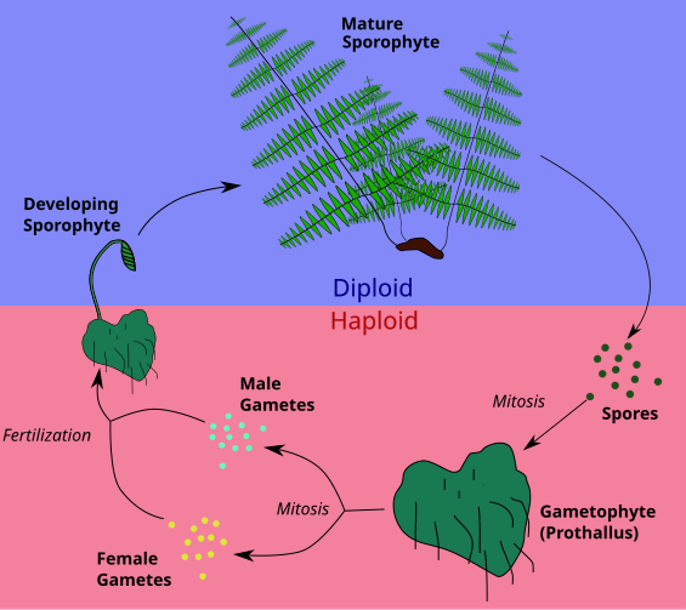
Image by Jeffrey Finkelstein, CC BY-SA 3.0
The oldest fossil ferns are from the Devonian Period, over 360 million years ago. Ferns and their relatives are very abundant in Carboniferous fossil deposits, and modern fern groups diversified significantly in the late Mesozoic Era alongside flowering plants.
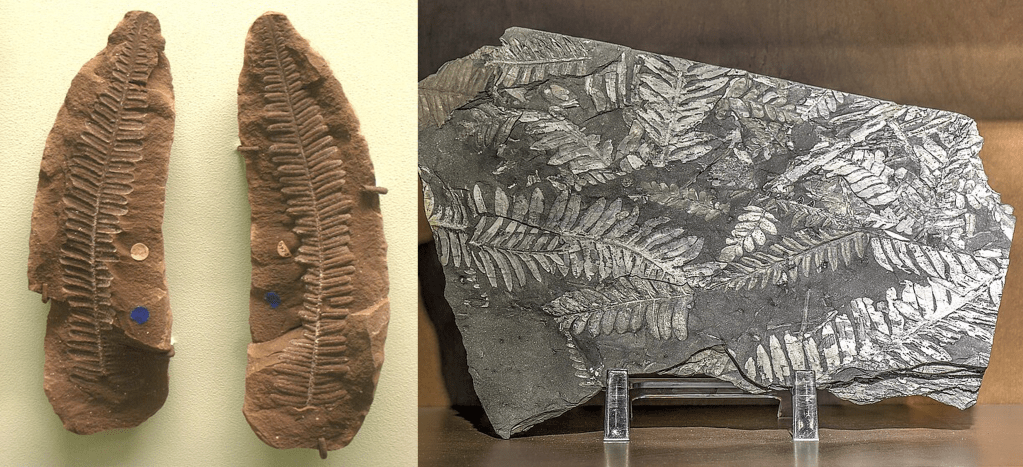
Left: Fossil from Mazon Creek, Illinois. Image by Daderot.
Right: Fossil from the Llewellyn Formation, Pennsylvania. Image by Dsdugan.
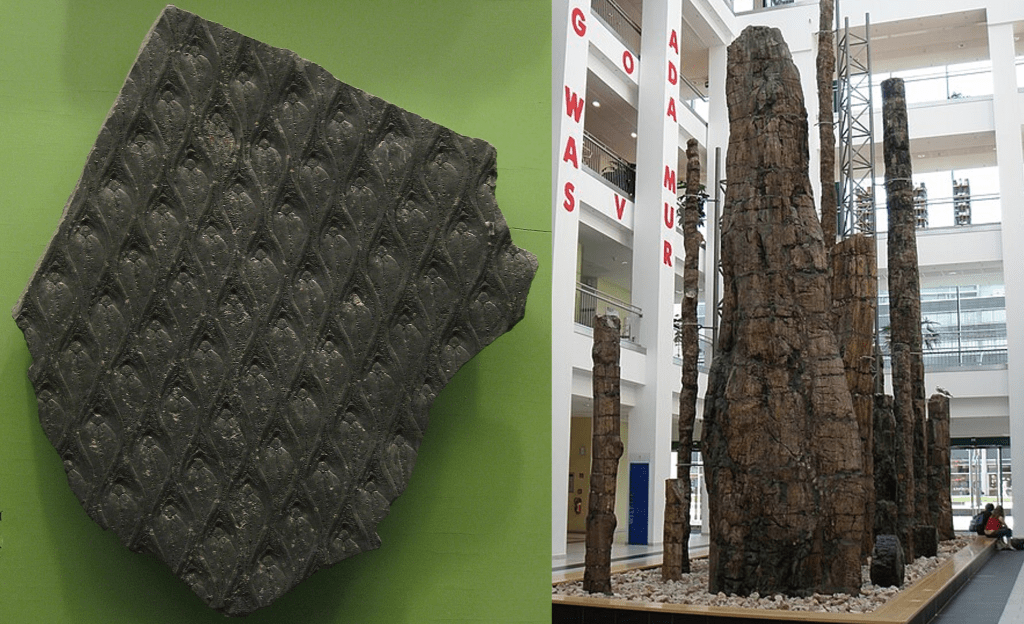
Left: Fossilized wood of the fern-cousin Lepidodendron, the “scale tree.” Image by Jstuby.
Right: Petrified trunks of ancient giant horsetails. Image by Sgeureka.
These plants also played a significant role in certain ancient events such as the “fern spike” after the end-Cretaceous mass extinction, a time when ferns did especially well in recovering ecosystems, and the Azolla Event of the Eocene Epoch, where an explosion of mosquito ferns is associated with a dramatic cooling event.
Note that none of these plants should be confused with seed ferns, which are an assortment of ancient seed-producing plants that are decidedly not ferns.
Learn more
About Ferns – American Fern Society
Ferns and Lycophytes – World Plants
Fern Fossils at the Sam Noble Museum
__
If you enjoyed this topic and want more like it, check out these related episodes:
We also invite you to follow us on Facebook or Instagram, buy merch at our Zazzle store, join our Discord server, or consider supporting us with a one-time PayPal donation or on Patreon to get bonus recordings and other goodies!
Please feel free to contact us with comments, questions, or topic suggestions, and to rate and review us on Spotify or Apple Podcasts!
 The Common Descent Podcast


_-_Flickr_-_wackybadger.jpg)


Leave a comment