
Listen to Episode 233 on Podbean, YouTube, Spotify, or wherever you listen to your favorite podcasts!
Of all the highly successful and capable flying insects in the world, few are as successful or capable as those in the order Diptera. This episode, we explore the unique features and dynamic evolutionary history of Flies and Mosquitoes.
In the news
New species of long-snouted croc from Cretaceous Egypt
It seems some mosasaurs swam upriver
An earthquake-induced sea turtle stampede
Anacondas became giant in the wetlands of the Miocene
Buzz Buzz
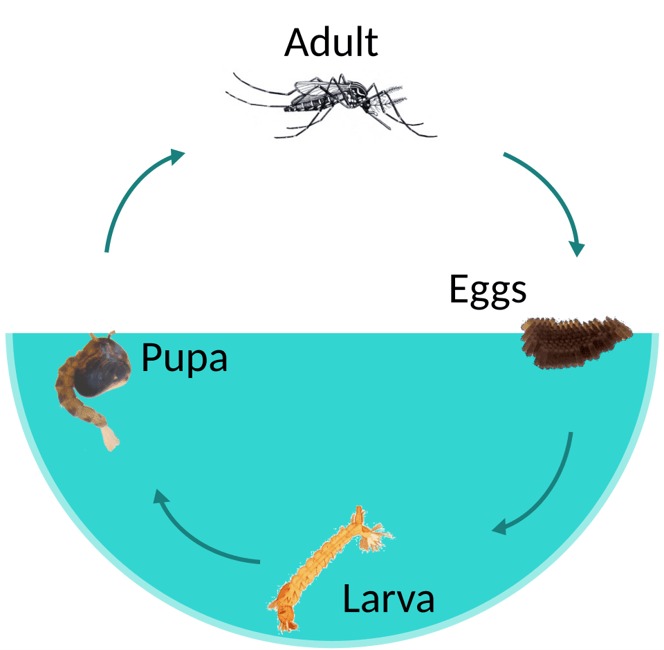
Insects of the order Diptera are commonly called flies. This group includes around 150,000 living species that inhabit nearly every terrestrial habitat on Earth. Many of these species are called “flies” (houseflies, crane flies, sand flies, etc.), though others are called midges, gnats, or mosquitoes.
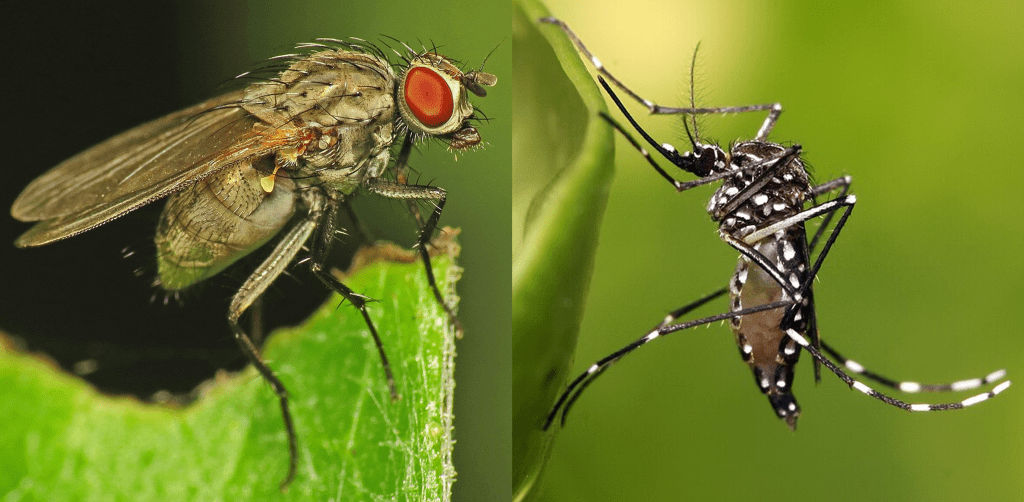
Left: A fly of the family Anthomyiidae. Image by Martin Cooper, CC BY 2.0
Right: Yellow fever mosquito. Image by Muhammad Mahdi Karim, GFDL 1.2
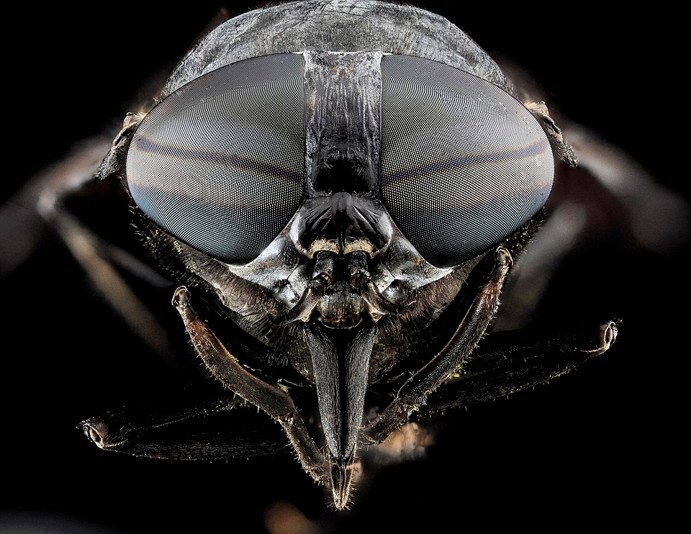
Fly diets vary widely, but their mouthparts generally fall into two categories: sponge-like shapes for lapping and soaking up fluids; and long, slender forms for piercing and sucking. Depending on the species, fly food can include plant matter, live prey, carrion, and – in many famous cases – blood.
As their name implies, flies fly. Whereas most insects have two pairs of wings, Diptera (a name that means “two wings”) have only one. The hind pair of wings has become adapted into a pair of specialized structures called halteres, which are partly responsible for the famous aerial maneuverability of these insects. Halteres act as gyroscopes, moving along with the wings to aid in balance and steering, making flies some of the most skillful fliers in the world.
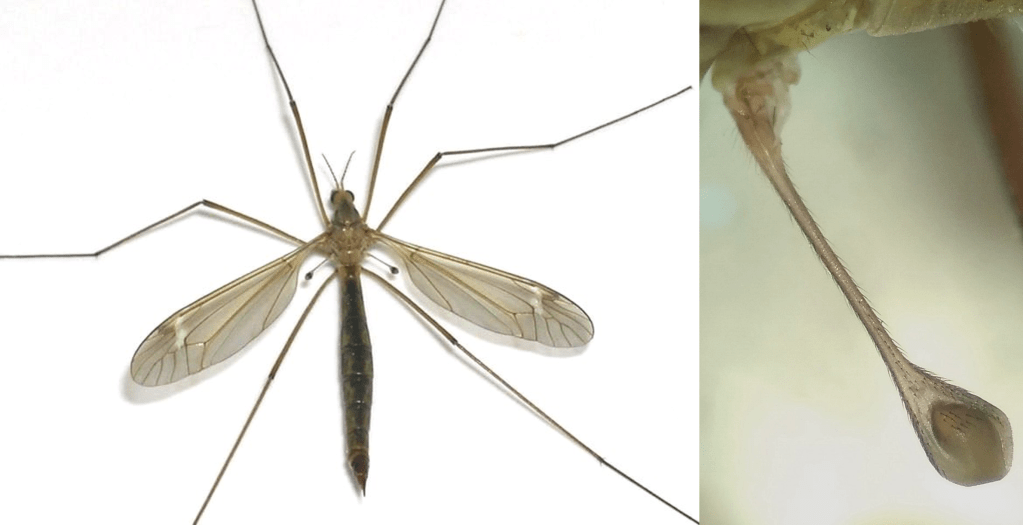
Right: Closeup of a single cranefly haltere. Assafn, CC BY-SA 4.0
The oldest fossil members of this group come from the Triassic Period, over 220 million years ago. By this time, they already possessed characteristic features of maggot-like larvae and winged adults. Modern groups of flies appeared throughout the Mesozoic Era, followed by a major radiation of modern lineages after the K-Pg Extinction.
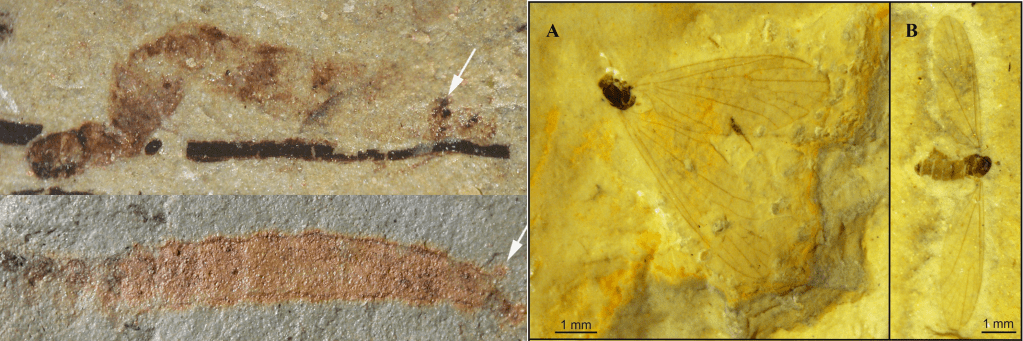
Right (A and B): Fossil fly adults preserved in sediments from the Jurassic/Cretaceous Boundary of Russia. Image from Kopeć et al 2021
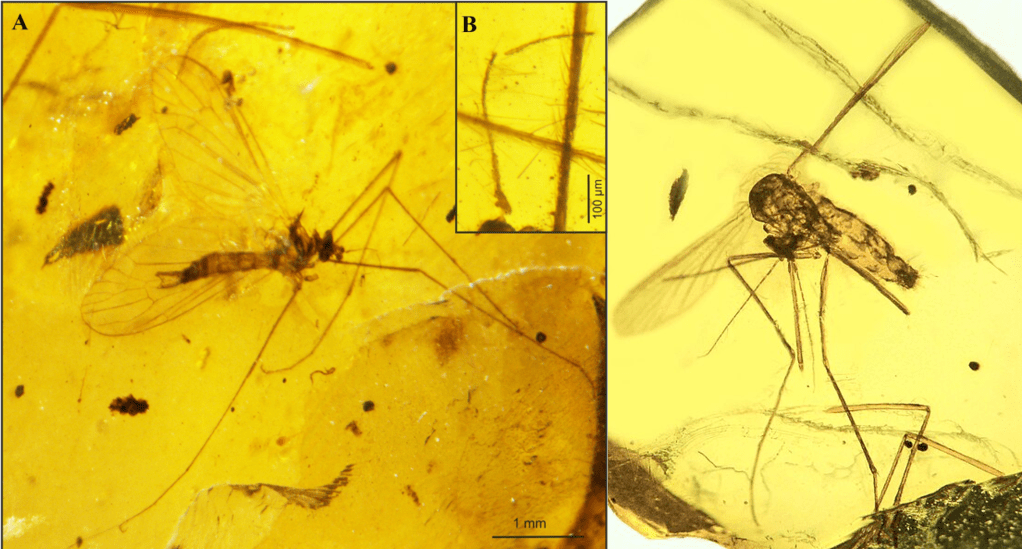
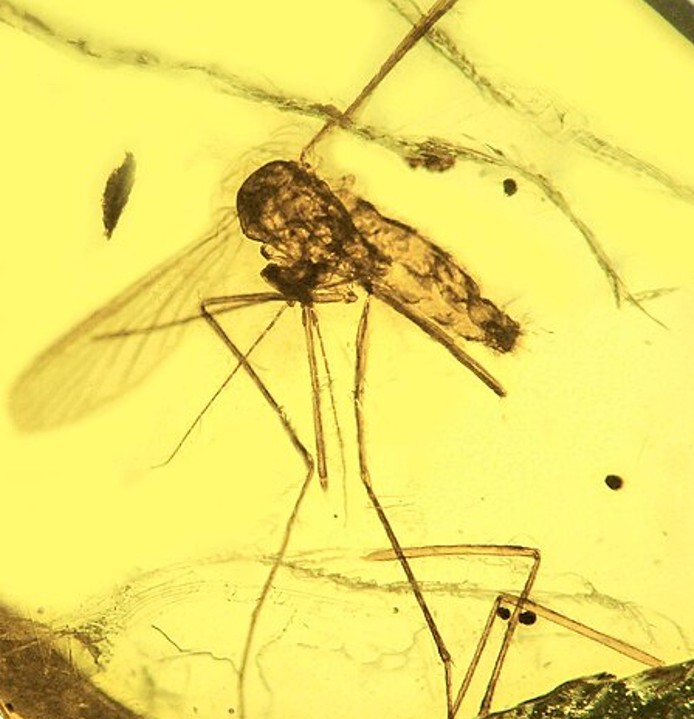
Right: The fossil mosquito Culex malariager preserved in Miocene Dominican amber. Image from Oregon State University, CC BY-SA 2.0
Learn More
Episodic radiations in the fly tree of life (technical, open access)
The earliest fossil mosquito (technical, open access)
Where the Immatures of Triassic Diptera Developed (technical, open access)
Exceptional fossils of Mesozoic Diptera (technical, open access)
__
If you enjoyed this topic and want more like it, check out these related episodes:
We also invite you to follow us on Facebook or Instagram, buy merch at our Zazzle store, join our Discord server, or consider supporting us with a one-time PayPal donation or on Patreon to get bonus recordings and other goodies!
Please feel free to contact us with comments, questions, or topic suggestions, and to rate and review us on Spotify or Apple Podcasts!
 The Common Descent Podcast
_(10144905255).jpg)


.jpg)


Leave a comment