
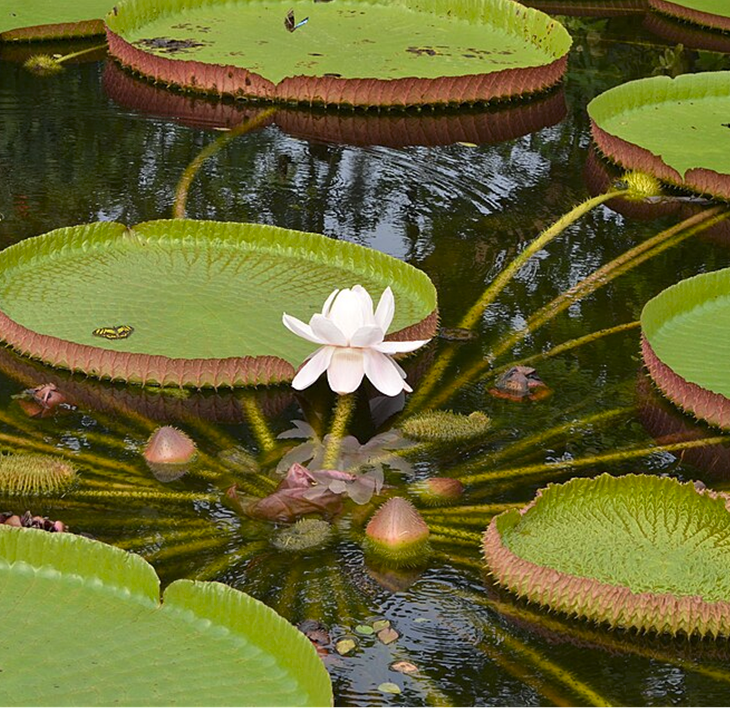
Listen to Episode 235 on Podbean, YouTube, Spotify, or wherever you listen to your favorite podcasts!
All plants need water, but some species take it to the extreme. This episode, we discuss the adaptations and evolution of Aquatic Plants.
In the news
The mass extinction that led to the Age of Fishes
Some ammonites apparently survived the Cretaceous extinction
Our gut microbes evolve in response to our diets
European horned dinosaurs hiding in plain sight
Wet Plants
Aquatic plants, or “hydrophytes,” are plants that spend a good portion of their life in the water. Despite being a specialized lifestyle, this habit has evolved over 200 separate times, all over the world, and in every major lineage of plant life.
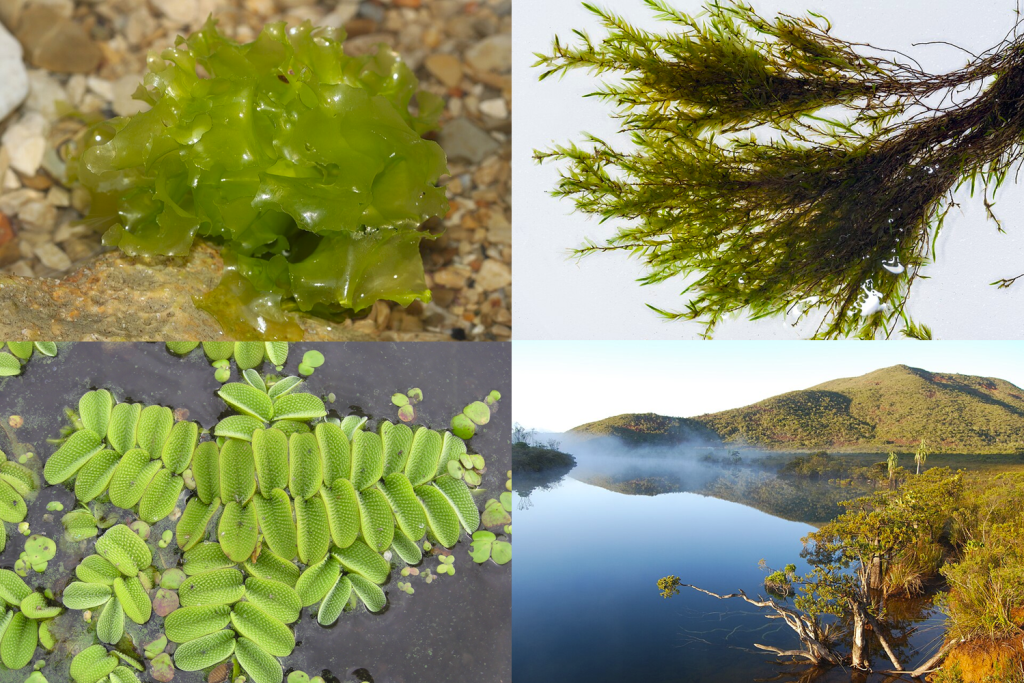
Top left: Sea lettuce (Ulva lactuca), a type of green algae. Image by Holger Krisp, CC BY 3.0
Top right: Fontinalis moss (Fontinalis hypnoides). Image by John Game, CC BY 2.0
Bottom left: Floating fern (Salvinia natans). Image by Le Loup Gris, CC BY-SA 3.0
Bottom right: Bois bouchon (Retrophyllum minus), an aquatic conifer. Image by Cathy Bartillat, CC BY-SA 4.0
Aquatic plants vary quite a lot in their aquatic-ness. Some plant roots below the water but hold their leaves or flowers above the surface; others are built to float freely atop the water; and some spend their entire lives submerged. Nearly all aquatic plants live in freshwater habitats, but sea grasses manage to survive in the ocean.
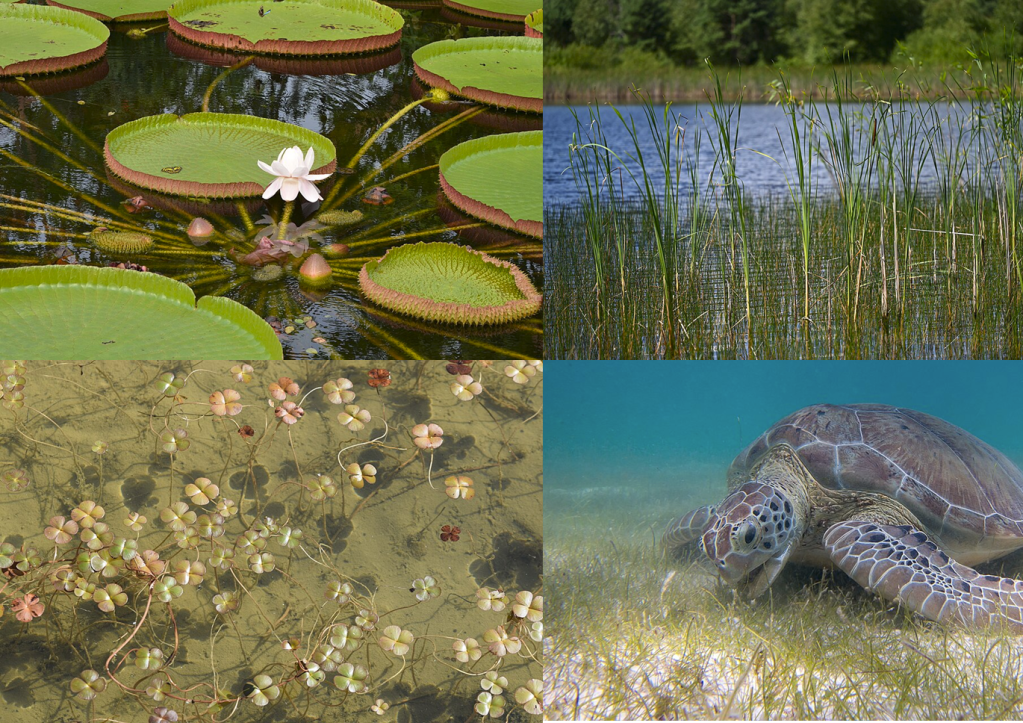
Top right: Cattails (Typha angustiflora) root in wetlands and emerge out of the water. Image by Krzysztof Ziarnek, CC BY-SA 4.0
Bottom left: Waterclover (Marsilea quadrifolia) live underwater, often with leaves floating at the surface. Image by Krzysztof Ziarnek, CC BY-SA 4.0
Bottom right: Seagrasses live fully submerged in ocean habitats. Image by P. Lindgren, CC BY-SA 3.0
A variety of physical adaptations allow aquatic plants to thrive underwater. Some have spongy aerenchyma tissues with air channels that allow gas exchange above and below the water’s surface, others have stems that are particularly flexible or particularly sturdy depending on their need to resist the movement of water or to go with the flow, and many are able to extract carbon dioxide directly from the water instead of air.

Plants evolved from aquatic algae ancestors, so – like vertebrates – they have aquatic beginnings. Secondarily aquatic land plants – that is, plants that moved back into the water later – are known from fossils as far back as the Cretaceous Period. Identifying aquatic plant fossils is tricky, and often relies on a combination of physical features (like leaf shape) and the nature of the surrounding sediment (ie. freshwater deposits).
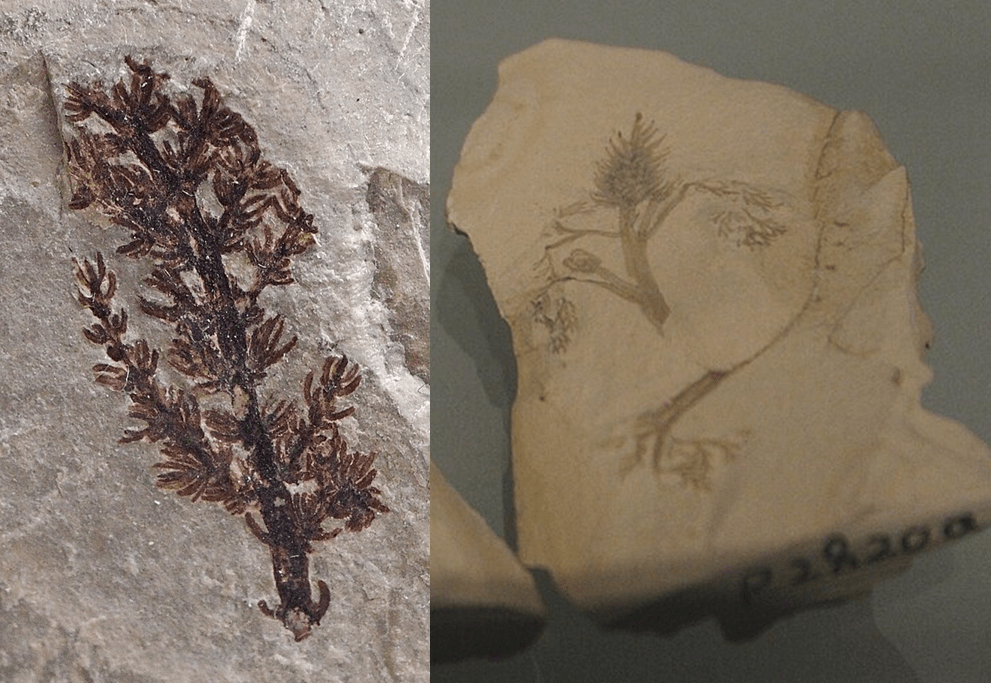
Right: Fossil of Archaefructus from Cretaceous China. Image by Jonathan Chen, CC BY-SA 4.0
Learn More
The number and kinds of embryo-bearing plants which have become aquatic (technical, paywall)
Montsechia, an ancient aquatic angiosperm (technical, open access)
Experimental evidence of pollination in marine flowers by invertebrate fauna (technical, open access)
__
If you enjoyed this topic and want more like it, check out these related episodes:
- Episode 57 – The Evolution of Flowering Plants
- Episode 145 – Photosynthesis
- Episode 215 – Ferns
- Episode 231 – Back to the Water (Secondarily Aquatic Vertebrates)
We also invite you to follow us on Facebook or Instagram, buy merch at our Zazzle store, join our Discord server, or consider supporting us with a one-time PayPal donation or on Patreon to get bonus recordings and other goodies!
Please feel free to contact us with comments, questions, or topic suggestions, and to rate and review us on Spotify or Apple Podcasts!
 The Common Descent Podcast

_(7077305247).jpg)
_1.jpg)


Leave a comment