
Listen to Episode 69 on PodBean, Spotify, YouTube, or wherever you get your podcasts!
Lots of animal groups have evolved bony armor, but one group of dinosaurs really took it to the extreme. The armored knobs, spikes, and weapons they wore all over their bodies have fascinated dino-fans for more than a century, and there are still so many questions unanswered. This episode, we look at Ankylosaurs.
In the news
Shark bites on an ancient baleen whale
The oldest skull of Australopithecus
New analysis on how dromaeosaurs used their “killer claws”
Pterosaur poop! And it’s a lot like a flamingo’s
Meet the Ankylosaurs
Ankylosaurs are quadrupedal herbivorous dinosaurs famous for their dazzling diversity of armor. As with many armored animals (such as crocodiles and ground sloths), this armor is built of skin-bones (osteoderms) covered in keratin scutes. Ankylosaurs took that basic design and modified into an impressive array of knobs, spikes, plates, and clubs.
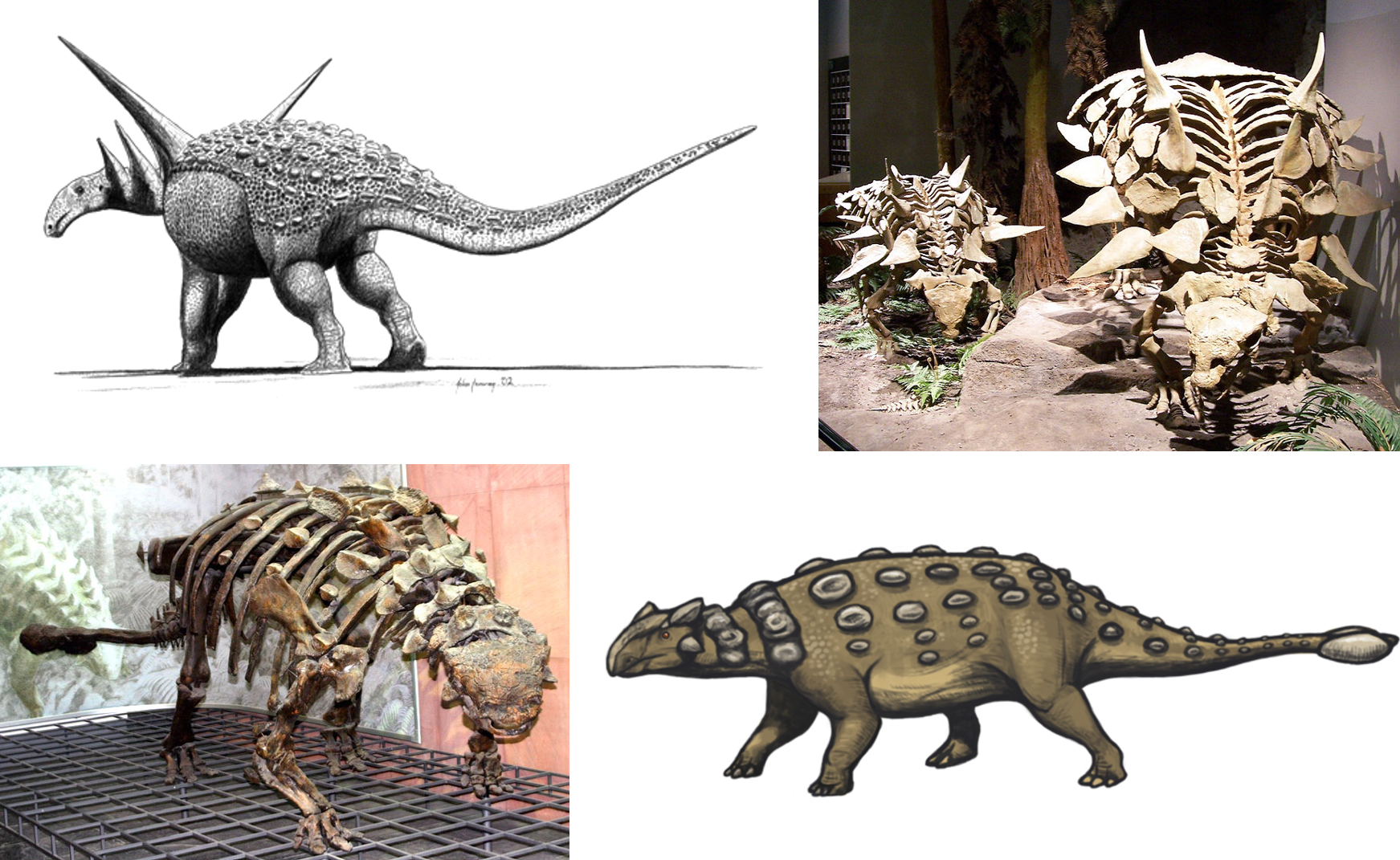
The closest relatives of ankylosaurs are the stegosaurs, who share this affinity for spikes and plates. Together, these two groups make up the group Thyreophora, the armored dinosaurs.
Ankylosaurs were most diverse during the Cretaceous Period, but the most famous of them all, the North American Ankylosaurus, lived right at the end of the Mesozoic, around 66 million years ago. Paleontologists have studied Ankylosaurus for over a century, and our understanding of it has changed quite a bit over the years.
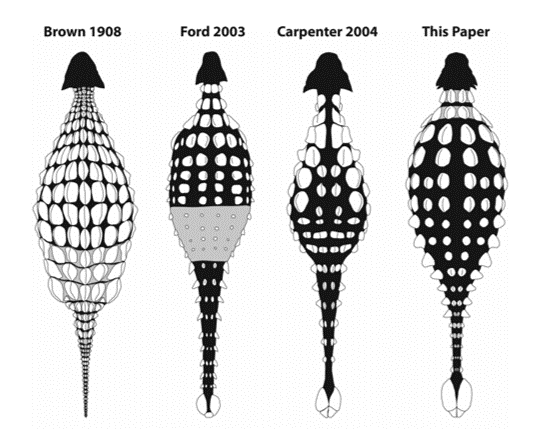
Not much is known about ankylosaur lifestyles. Since they had low bodies and simple teeth, they’re thought to have eaten low-growing plants without doing much chewing. Their complex nasal passages may have helped them keep their heads cool or make loud noises. And they have a famously strange habit of being fossilized upside-down.
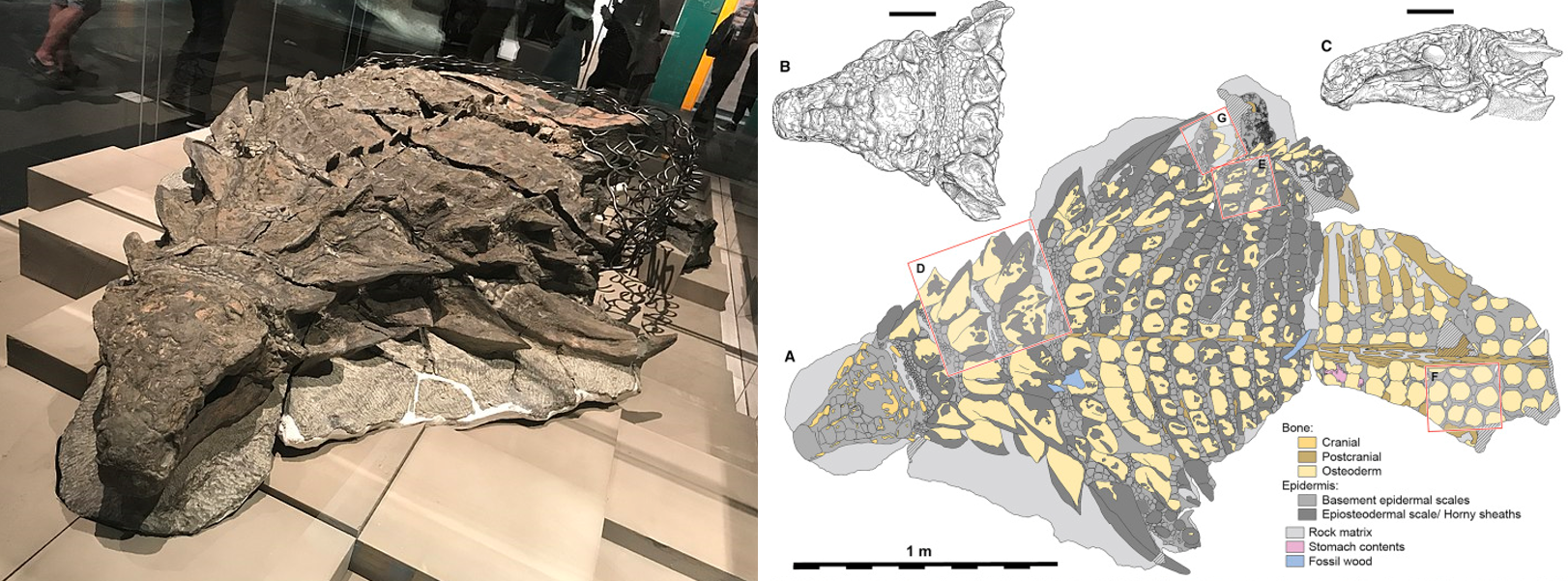
That Amazing Armor
As a general rule, ankylosaurs were covered along their backs by a coating of armor made up of small osteoderms (bones in the skin). Many also had larger osteoderms forming rows of knobs or spikes. Some had rings of osteoderms around their necks; others had bony shields over their hips; some had spikes sticking out of their head, neck, or shoulders; some were armored on their legs, bellies, or even their eyebrows!
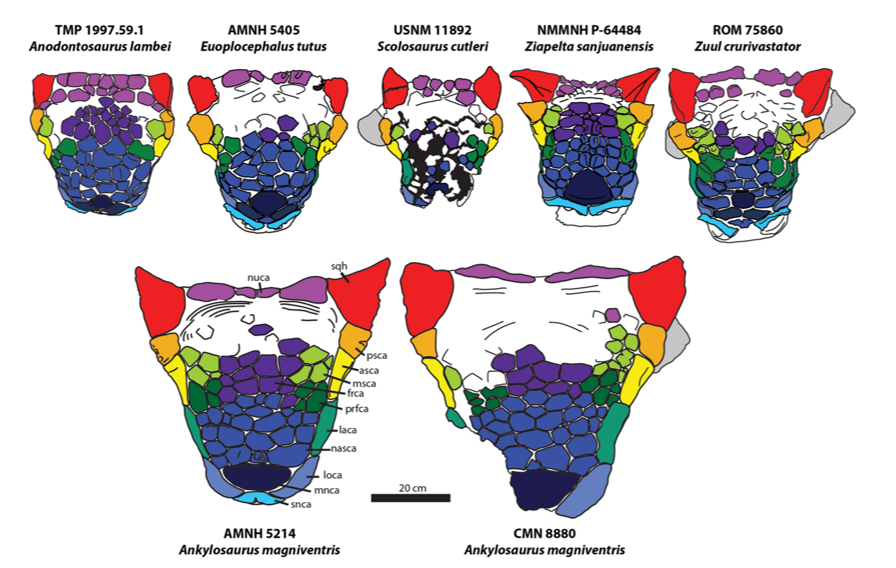
It seems obvious to suggest the armor was for protection, either against predators or competitors or both, but there’s reason to believe it may also have been important for flashy displays or for regulating body temperature. One study found that some ankylosaur spikes were very sturdy, while others were more delicate and perhaps more decorative.
And then there were the tail clubs.
The ankylosaurids of the Late Cretaceous had evolved long, stiff tails that ended in a bulb of osteoderms. The largest Ankylosaurus tail clubs could be two meters long including the stiffened “handle,” and the “knob” at the end could be 60cm long.
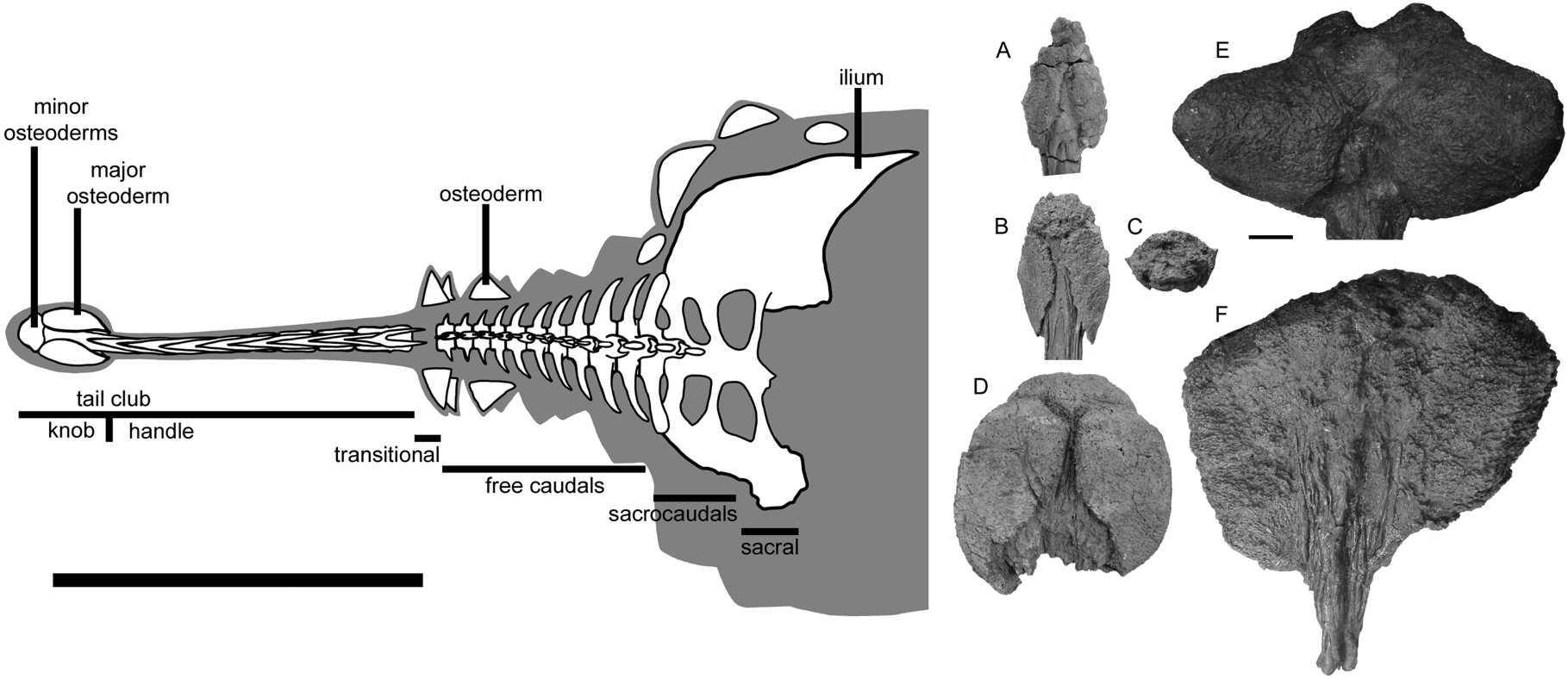
It’s generally agreed that these were weapons, but exactly how they used them is still debated. There’s some evidence that a swing from a big club could shatter bones, but were they fighting off predators, using them in male-to-male combat, or for some other reason? It’s hard to know for sure.
More Ankylosaur
Get a crash course on armored dinosaurs in Tom Holtz’s dinosaur class. (Not too technical)
Two new amazing ankylosaurs were discovered recently in North America: Zuul and Borealopelta. (Non-technical)
Arbour 2009 examined the efficacy of the tail club as a weapon. (Technical)
Arbour and Mallon 2017 with an updated look at Ankylosaurus. (Technical)
—
If you enjoyed this topic and want more like it, check out these related episodes:
We also invite you to follow us on Twitter, Facebook, or Instagram, buy merch at our Zazzle store, join our Discord server, or consider supporting us with a one-time PayPal donation or on Patreon to get bonus recordings and other goodies!
Please feel free to contact us with comments, questions, or topic suggestions, and to rate and review us on iTunes!


 The Common Descent Podcast
Leave a reply to commondescentpc Cancel reply