

Listen to Episode 201 on PodBean, YouTube, Spotify, or wherever you listen to your favorite podcasts!
This episode, we explore one of nature’s oldest and most important cross-Kingdom relations, that of Fungi & Plants.
In the news
New fossils reveal that this strange-toothed bird was a fruit-eater
Fossil plants from Tasmania offer new clues to ancient polar forests
Major moments in coelacanth evolution linked to tectonic changes
Extraordinary fossil site is a window into early land plants and animals
An Iconic Duo
All around the world, fungi and plants form close relationships. These can be mutually beneficial or harmfully parasitic, and they are often a key part of the broader function of an ecosystem.
One of the most famous fungus-plant relationships occurs in and around plant roots. Fungal structures called mycorrhizae are composed of fungal hyphae that transport nutrients in and out of the plant tissues, providing extra nutrition for both partners. Nearly all living land plants have mycorrhizae associated with their roots, and this symbiotic connection not only facilitates the health of the plants, but also allows for connection and communication between different individual plants and even different plant species.
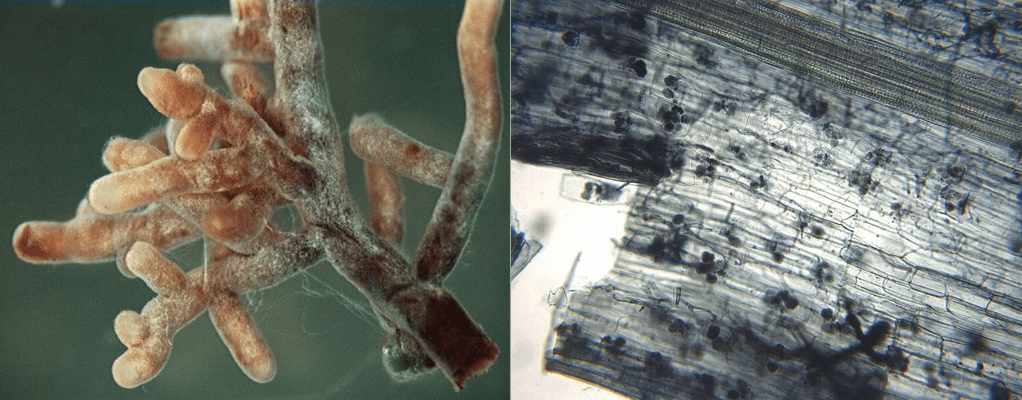
Right: Microscope image of arbuscular mycorrhizae within plant root cells. Image by MS Turmel, Public Domain

Right: Ectomycorrhizal arbuscles in the root of Eocene Metasequoia.
Images from Strullu-Derrien et al 2018
Another famous fungus-plant symbiosis is that of lichens. Lichens are generally composed of a net of fungal mycelium that contains photosynthesizing algal or bacterial cells, as well as yeast cells. With the fungi providing structure and the photosynthesizers generating energy, lichens are able to survive in environments that most other organisms couldn’t.

Middle: Flavoparmelia caperata, a foliose lichen. Image by Jason Hollinger, CC BY 2.0
Right: Cross-section diagram of a lichen. Image by Nefronus, CC BY-SA 4.0
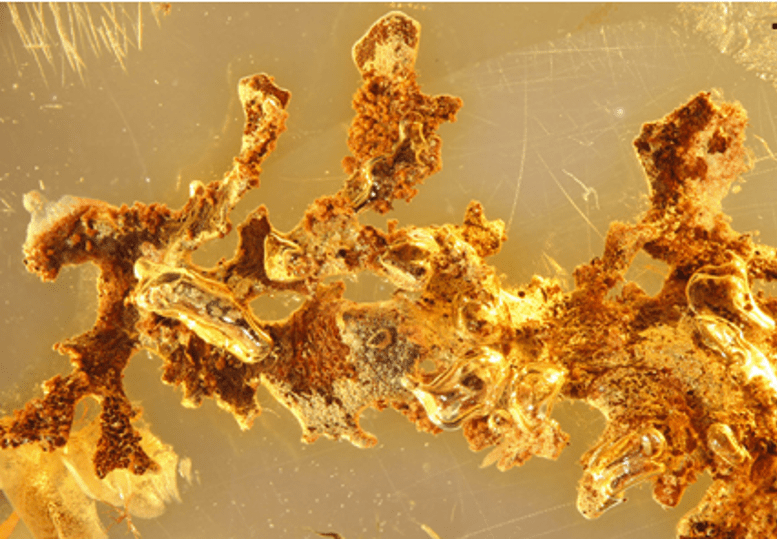
Image from Hartl et al 2015
Of course, fungi and plants can also be enemies. Many fungi act as parasites or pathogens of leaves and other plant tissues, which can harm or even kill the entire plant. On the other hand, there are some plants that are parasites of fungal tissues.
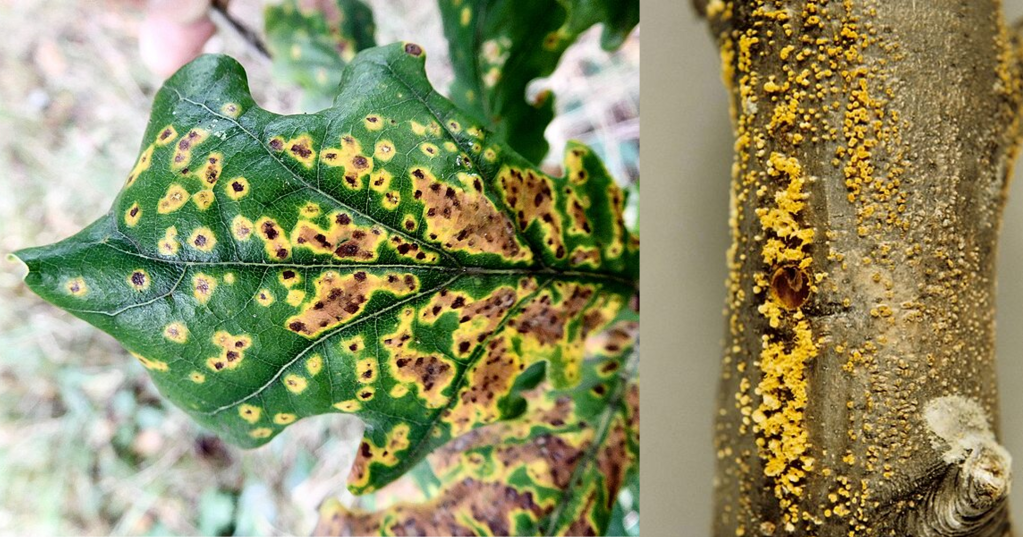
Right: Chestnut blight on a chestnut tree. Image by Joseph O’Brien, CC BY 3.0
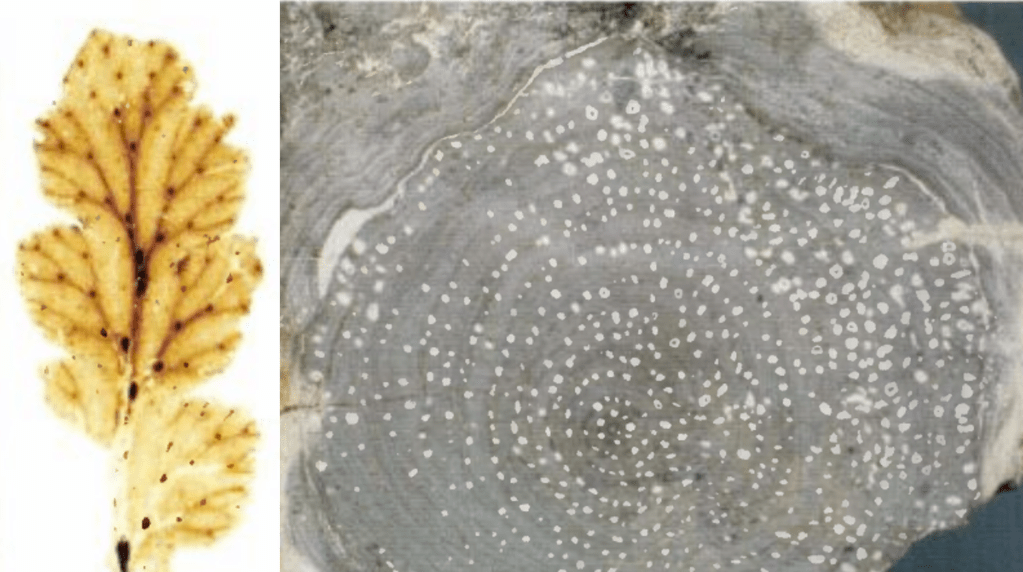
Right: Pocket rot on Araucarioxylon from Permian Antarctica.
Images from Taylor and Krings 2005.
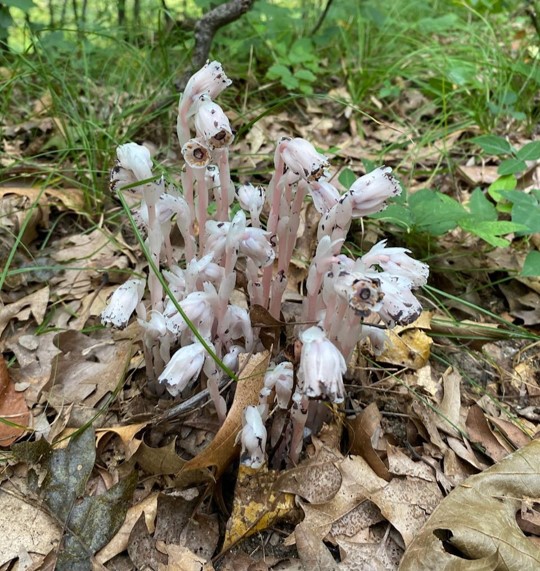
Photo by Aly Baumgartner.
Mycorrhizae, lichens, and other fungus-plant relationships are known from the fossil record as far back as the Devonian Period, around the time of the very earliest land ecosystems. In fact, the connections between these two groups are so widespread in modern and fossil species that it’s likely fungi and plants have been working together since they first made it onto land. Symbiotic partnerships like mycorrhizae and lichens were probably an important part of early land ecosystems, and they might even be responsible for the establishment of life on land as we know it.
Learn More
Mycorrhizae: The Symbiotic Relationship between Fungi and Roots
Lichens
Evolutionary history of plant hosts and fungal symbionts predicts the strength of mycorrhizal mutualism (technical, open access)
Friends or foes? Emerging insights from fungal interactions with plants (technical, open access)
__
If you enjoyed this topic and want more like it, check out these related episodes:
We also invite you to follow us on Facebook or Instagram, buy merch at our Zazzle store, join our Discord server, or consider supporting us with a one-time PayPal donation or on Patreon to get bonus recordings and other goodies!
Please feel free to contact us with comments, questions, or topic suggestions, and to rate and review us on Spotify or Apple Podcasts!


 The Common Descent Podcast


Leave a reply to B von Brunswick Cancel reply