

Listen to Episode 213 on PodBean, YouTube, Spotify, or wherever you listen to your favorite podcasts!
Leave a carcass or a log or a pile of poop out in the wild long enough and it will break down into its component parts. This episode, we discuss the diversity and ecological importance of Decomposers.
In the news
Ancient amphibians after the Permian mass extinction
Research explores how crocodiles are reacting to climate change
Waterfowl foraging traces from the Eocene Green River Formation
New insights into how narwhals use their tusks
A giant flying squirrel from the Gray Fossil Site
WARNING. This page contains images of decomposing animal remains.
Breaking Down
Any unliving organic material left out in the wild – a carcass, a fallen log, a pile of poop – will gradually break down thanks to the action of organisms and the elements. This process is decomposition. It takes many forms, and there’s plenty of overlap with related concepts like scavenging and digestion.
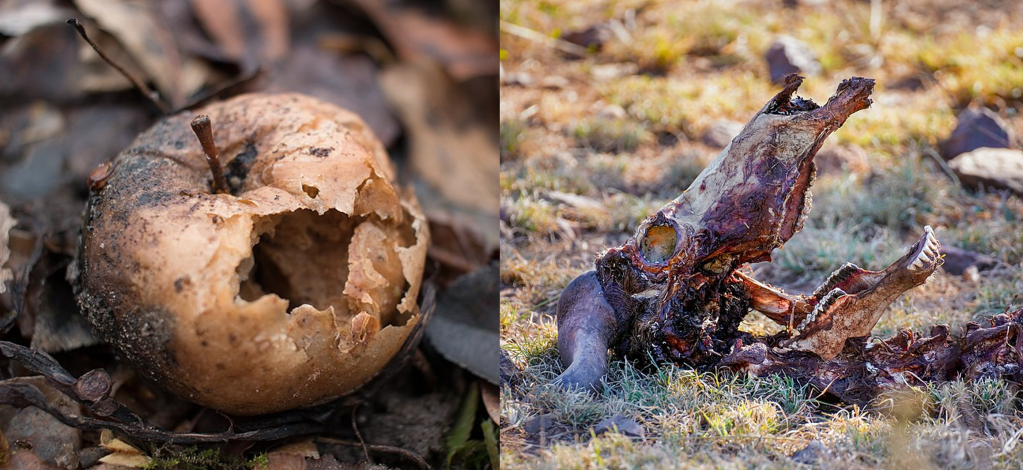
Right: A decomposing skull of an African buffalo. Image by Giles Laurent, CC BY-SA 4.0
The most famous decomposers are bacteria and fungi, but plenty of animals contribute to the process as well, including lots of flies and beetles that feed on or utilize carcasses or dead plants. But not all organic material is the same, and neither are all decomposers. For example, some insects specialize on fresh carcasses, while others don’t move in until later in the process, and some species break down soft tissues while others focus on fluids. Meanwhile, certain fungi are among the only organisms that can break down the tough tissues of woody plants. Decomposition takes a community, and indeed, a fallen tree or carcass often becomes home to an entire ecosystem of decomposers.
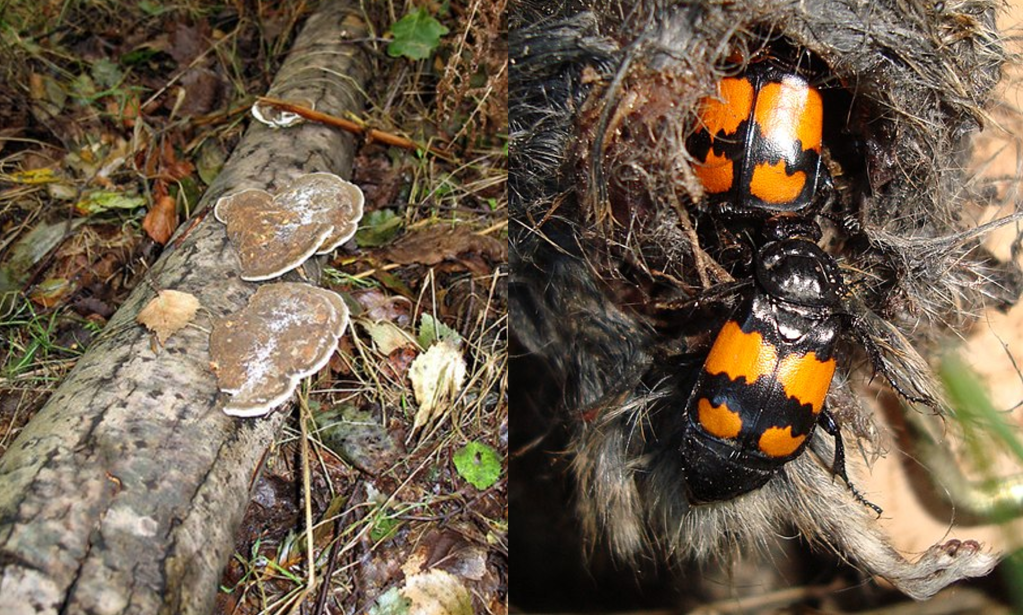
Right: Silphid beetles feeding on a mouse carcass. Image by Calle Eklund, CC BY-SA 3.0
Decomposers are a crucial part of an ecosystem, since they disassemble organic compounds and make their component parts available to other organisms, either by releasing nutrients into the surrounding environment or by becoming food for other animals.
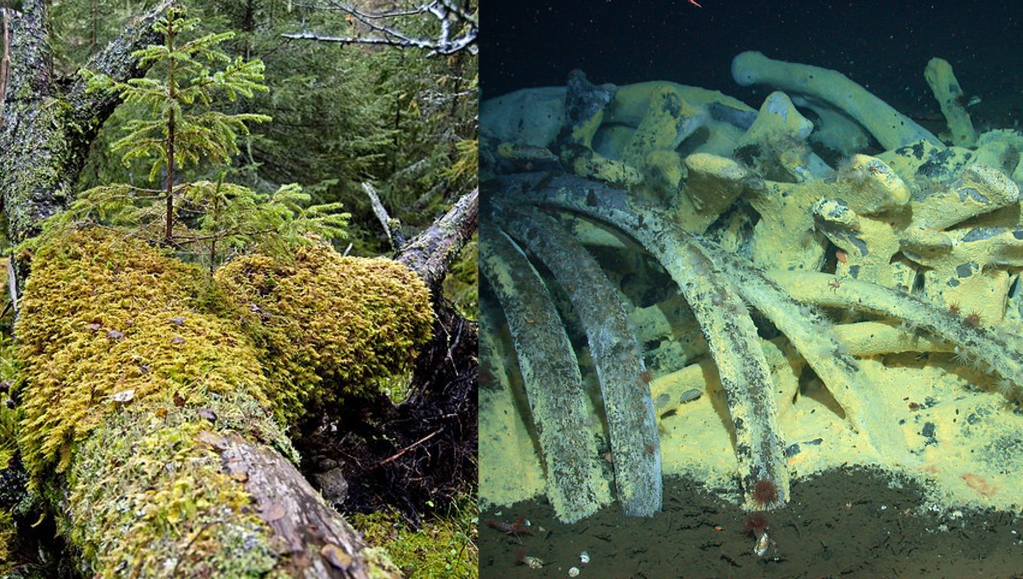
Right: Bacteria and invertebrates feeding on a whale carcass. Image by Craig Smith, NOAA
The process of decomposition tends to follow a consistent set of general stages. Studying these can be important for understanding how a carcass impacts its local environment, and it’s especially useful in fields like forensics where scientists can use this information to determine a time since death.

Decomposers are obviously very important for the fossil record, since most fossil remains have undergone some amount of decomposition. In many cases, well-preserved fossil remains are an indicator of limited decomposition; an insect in amber can be so beautifully preserved because it became inaccessible to decomposers when it became trapped in resin.
On the other hand, some research suggests that the action of certain bacteria or fungi can actually improve fossilization, either by concentrating certain minerals around organic remains or by out-competing more damaging decomposers.
The study of what happens to an organism after it dies and before it becomes a fossil is taphonomy.
Learn More
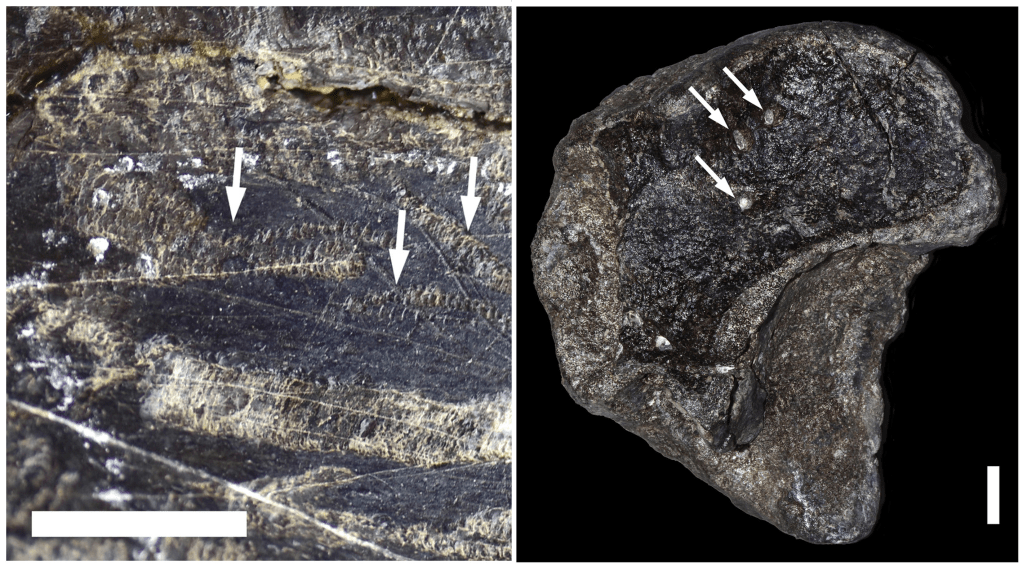
Decomposition of dinosaur bones (technical, open access)
A Miocene whale fall (technical, open access)
A Jurassic ichthyosaur fall (technical, open access)
Fungus-induced fossilization (technical, open access)
Did the evolution of white rot fungi stop Paleozoic coal formation? (article)
No, it didn’t (technical, open access)
Methods of estimating Time Since Death (technical, open access, also a bit gross)
__
If you enjoyed this topic and want more like it, check out these related episodes:
We also invite you to follow us on Facebook or Instagram, buy merch at our Zazzle store, join our Discord server, or consider supporting us with a one-time PayPal donation or on Patreon to get bonus recordings and other goodies!
Please feel free to contact us with comments, questions, or topic suggestions, and to rate and review us on Spotify or Apple Podcasts!

 The Common Descent Podcast

_Photo_by_Giles_Laurent.jpg)


Leave a reply to llewelly Cancel reply