
Listen to Episode 227 on Podbean, YouTube, Spotify, or wherever you listen to your favorite podcasts!
The famous faces of birds and turtles are just some of the examples of the many times animals have evolved tough, toothless snouts. This episode, we explore the diversity and evolution of Beaks.
In the news
Iron-rich nodules might turn out to be the first evidence of life on Mars
The surprising evolution of body shape in sharks
Ancient DNA reveals what microbes lived within mammoths
The repeated evolution of ant-eating
Beaks
The classic image of a beak is a set of toothless jaws covered by a keratin sheath. The classic image of a beak is also on the face of a bird, which are by far the most diverse group of beaked animals in the modern world.

Bird beaks come in many shapes and sizes, often related to the diet of the bird, though beaks are also used for preening, handling tools, display, and many other functions. A lack of teeth generally prevents birds from chewing their food, but they make up for it with the grinding activity of their internal gizzards.
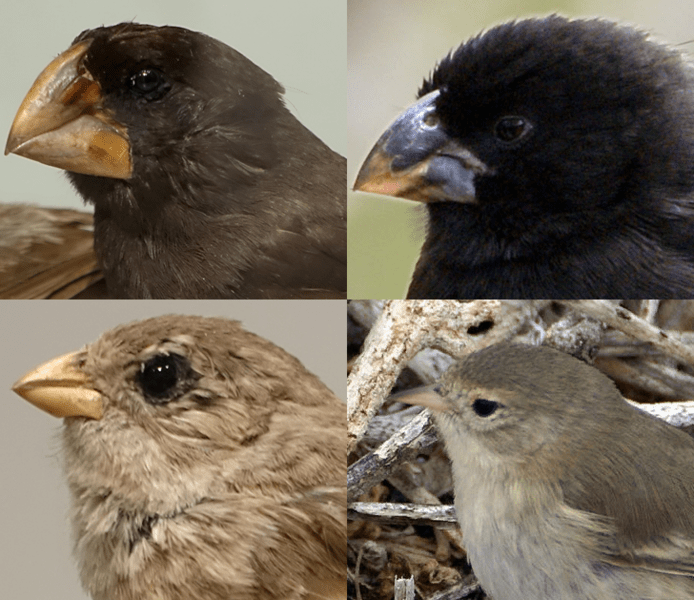
Of course, birds are not the only beaked animals. The word “beak” is used to describe a wide variety of facial structures that are superficially similar but often quite structurally different. The toothless, keratin-covered mouths of turtles are very similar to bird beaks, while the beak of a parrotfish is actually made up of teeth. Cephalopod mouths are extremely similar to bird beaks in shape, but composed of chitin instead of keratin.
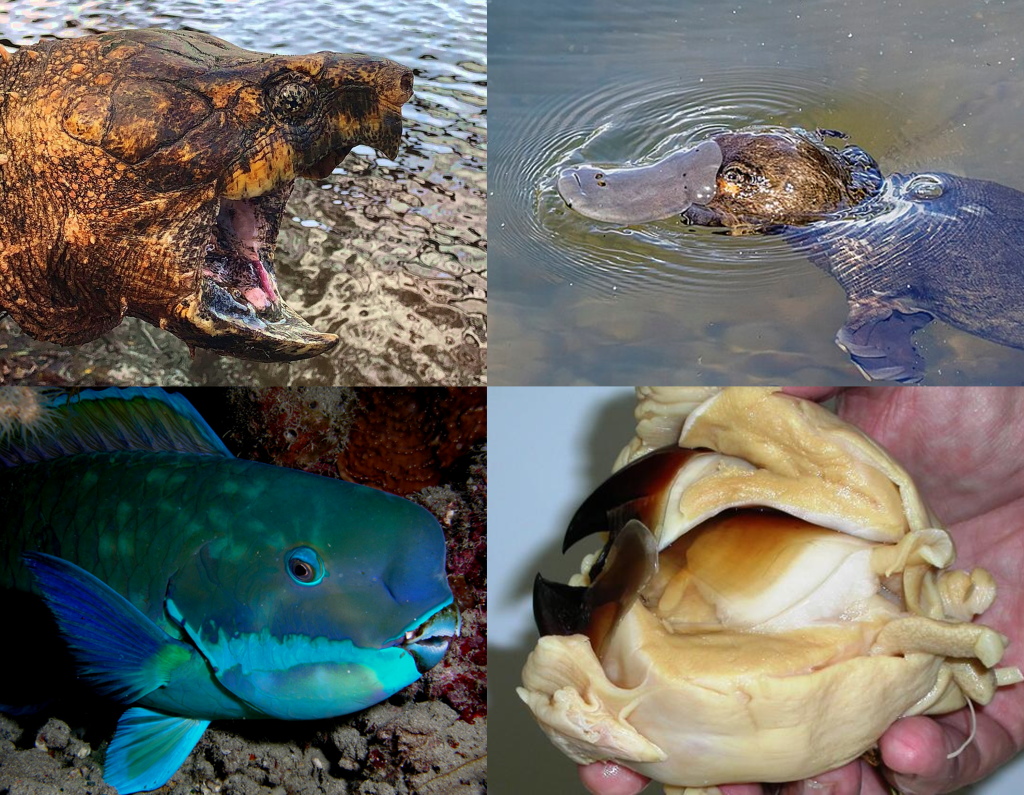
Top left: Alligator snapping turtle. Image by Glenn Bartolotti, CC BY-SA 4.0
Top right: Duck-billed platypus. Image by Charles J. Sharp, CC BY-SA 4.0
Bottom left: Parrotfish. Image by Nhobgood, CC BY-SA 3.0
Bottom right: Giant squid beak. Image from Smithsonian.
Identifying beaks in the fossil record is tricky, since the keratin sheath itself rarely fossilizes. However, the shape of the jaws, distribution of teeth, and indirect indicators of a keratin sheath can allow paleontologists to infer the presence of a beak. Such evidence has revealed even more beaked species from the distant past, including dicynodonts and rhynchosaurs.
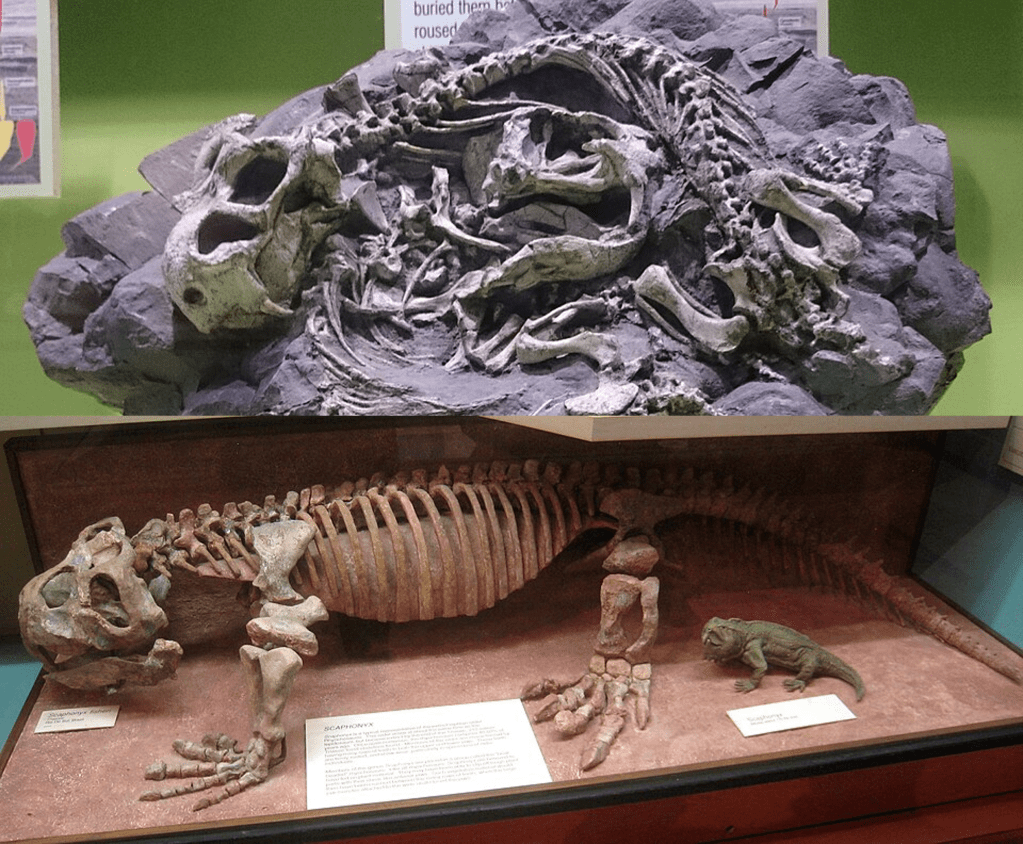
Bottom: The rhynchosaur Hyperodapedon. Image by Daderot.
A lack of teeth is generally a defining feature of modern beaks, but this has not always been the case. During the Cretaceous Period, birds evolved a mosaic of features, including varying degrees of beaked-ness and toothed-ness. Birds such as Ichthyornis had a toothless beak in the front of the jaw, but teeth elsewhere.

Right: Skeletal cast of Ichthyornis. Image by MCDinosaurHunter, CC BY-SA 3.0
Modern birds are entirely toothless; their ancestors had completely lost their teeth back in the Cretaceous Period, and all of their descendants have inherited this trait. But modern birds have repeatedly evolved tooth-like structures, including the serrated edges of the beak in many waterbirds and the impressive bony spikes in the jaws of the pseudo-toothed pelagornithids.
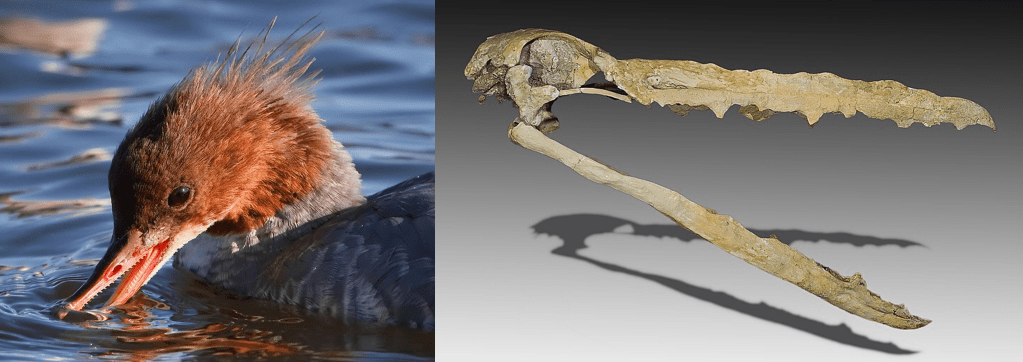
Right: Fossil skull of Pelagornis, displaying tooth-like bony spikes of the beak. Image by Didier Descouens, CC BY-SA 4.0
In addition to birds, many other lineages of dinosaurs independently evolved some form of beak. Some had completely toothless beaks like modern birds, such as certain oviraptorids and ornithomimosaurs, while others like ceratopsians and hadrosaurs had beaks up front and powerful tooth batteries farther back. Among dinosaurs, the evolution of a beak is typically associated with a shift to a more herbivorous diet.

Top left: Skull of the ceratopsian Triceratops. Image by Daderot.
Top right: Skull of the oviraptorosaur Ajancingenia. Image by Tylwyth Eldar, CC BY-SA 4.0
Bottom left: Skull of the ornithomimosaur Gallimimus. Image by Tylwyth Eldar, CC BY-SA 4.0
Bottom right: Skull of the hadrosaur Edmontosaurus. Image by Jonathan Chen, CC BY-SA 4.0
Closely related to dinosaurs, pterosaurs also had beaks. Like birds, pterosaur beaks exhibited great variety in their shape, function, and degree of toothlessness.
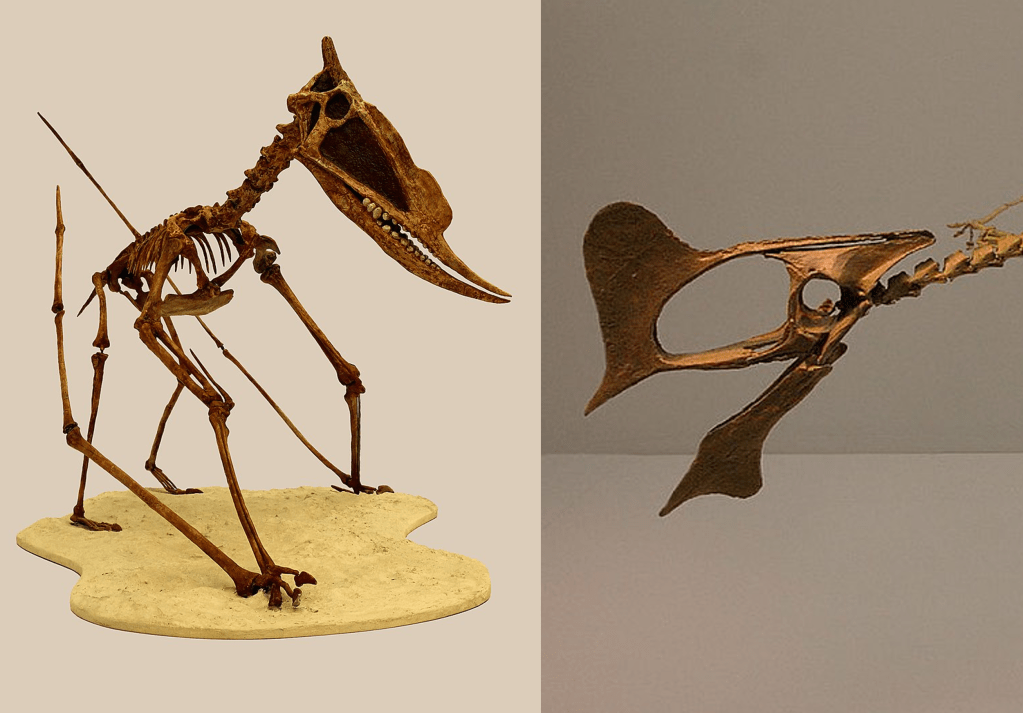
Right: Skull of Tapejara. Image by Kabacchi, CC BY 2.0
Learn More
From snout to beak: the loss of teeth in birds (technical, paywall)
Common developmental origins of beak shapes and evolution in theropods (technical, open access)
The coevolution of rostral keratin and tooth distribution in dinosaurs (technical, open access)
Pterosaur’s sensitive beak helped it detect nearby prey
__
If you enjoyed this topic and want more like it, check out these related episodes:
- Episode 37 – Evolution of Birds
- Episode 60 – Turtles
- Episode 88 – Evolution of Teeth
- Episode 173 – Herbivores (Plant-Eaters)
We also invite you to follow us on Facebook or Instagram, buy merch at our Zazzle store, join our Discord server, or consider supporting us with a one-time PayPal donation or on Patreon to get bonus recordings and other goodies!
Please feel free to contact us with comments, questions, or topic suggestions, and to rate and review us on Spotify or Apple Podcasts!
 The Common Descent Podcast
.jpg)


_Scottsdale_4.jpg)


Leave a comment