
Listen to Episode 243 on Podbean, YouTube, Spotify, or wherever you listen to your favorite podcasts!
A lot of the life on Earth is hidden away underground! This episode, we explore the many forms and deep history of Burrowers.
In the news
The impacts of malaria on early human distribution
The oldest known octopus isn’t an octopus after all
Footprints of a possible pterosaur hunt
Giant Cretaceous octopuses
Dig In
Burrowers are animals that dig holes or tunnels into the ground. Animals that spend most of their times underground are called fossorial. These animals utilize subterranean habitats to avoid surface danger, to forage for underground food, or to raise their young in a secluded location.
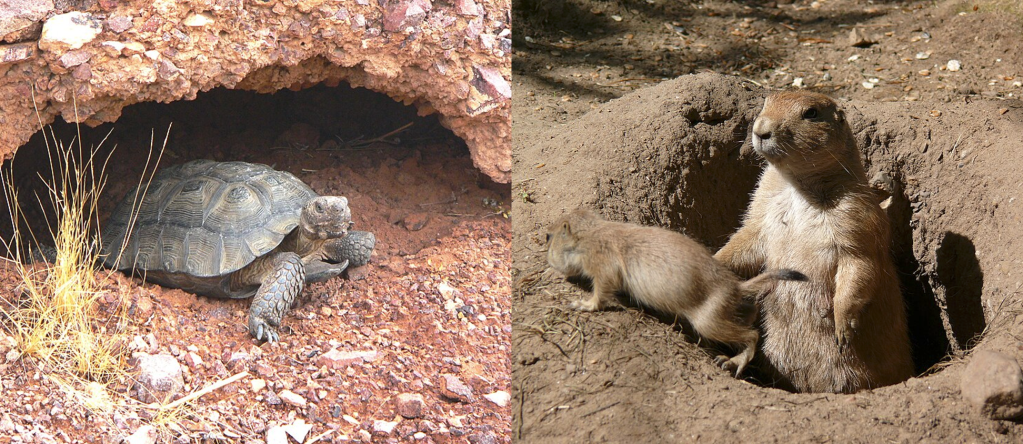
Right: Prairie dog. Image by Gunnar Ries, CC BY-SA 2.5
The most famous burrowers dig into dirt or sand, but there are also species that burrow into snow or bore into wood. Many fossorial species have evolved a vermiform (work-like) body shape, using spade-like heads to push through sediment; this is particularly common in lizards, and of course worms. Many others dig primarily with their forelimbs. Some species are extremely specialized in this regard, such as moles with their out-turned, shovel-like hands. Many rodents, unusually, dig with their chisel-like teeth.
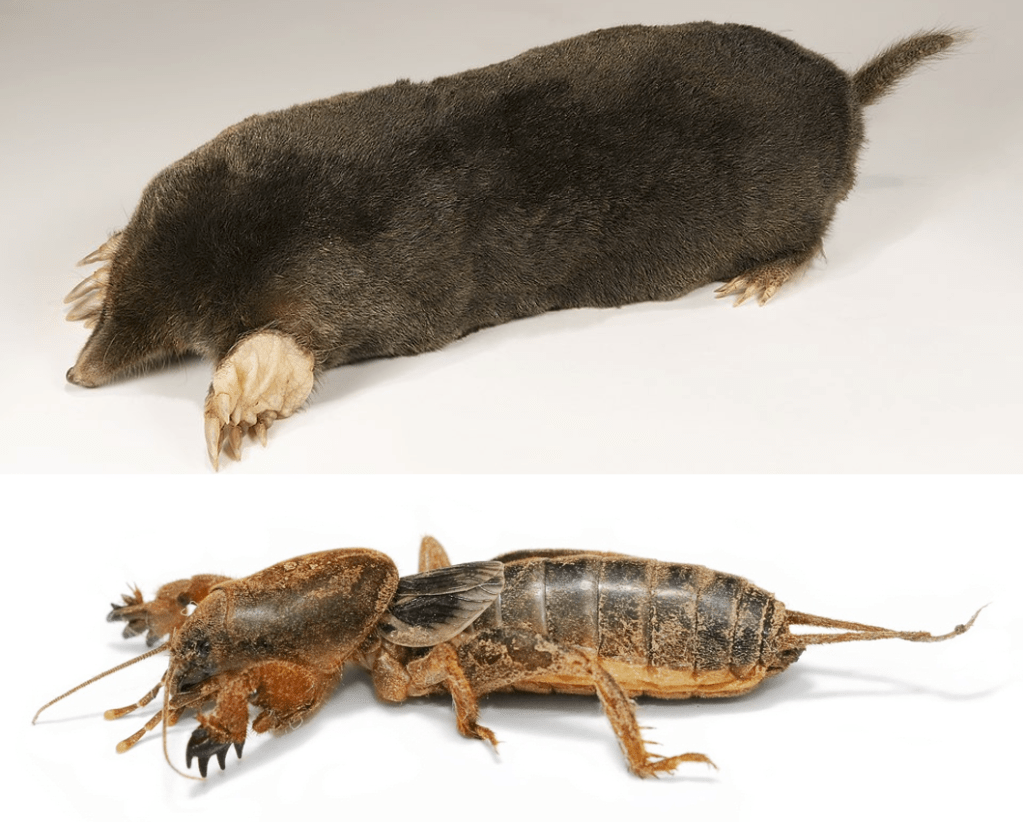
Bottom: A mole cricket, displaying wide, shovel-like forelimbs. Image by Fir0002
Many of these burrowers construct permanent burrows underground. For some, this are simple tubes or chambers where they can rest or hide out, while others construct vast and complex networks of tunnels and chambers, like those built by prairie dogs and ants. In turn, many non-digging animals make use of burrows constructed by others, such as burrowing owls.
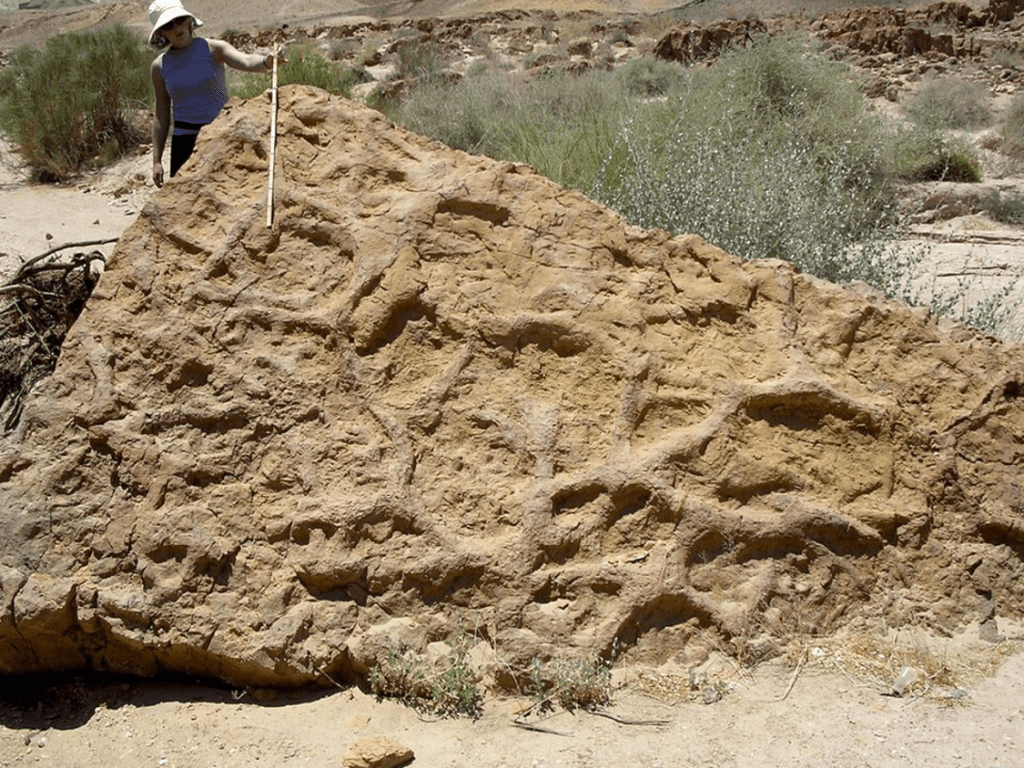
Unsurprisingly, burrows are common in the fossil record, typically represented as either a burrow-shaped void in petrified sediment or as a burrow-shaped rock formed from sediment that in-filled an ancient burrow. Identifying the creator of a fossil burrow can be difficult, but by comparing ancient burrows with those of living species, and by looking for clues within the burrow such as fossilized feces or scratch marks, paleontologists can narrow down the options.
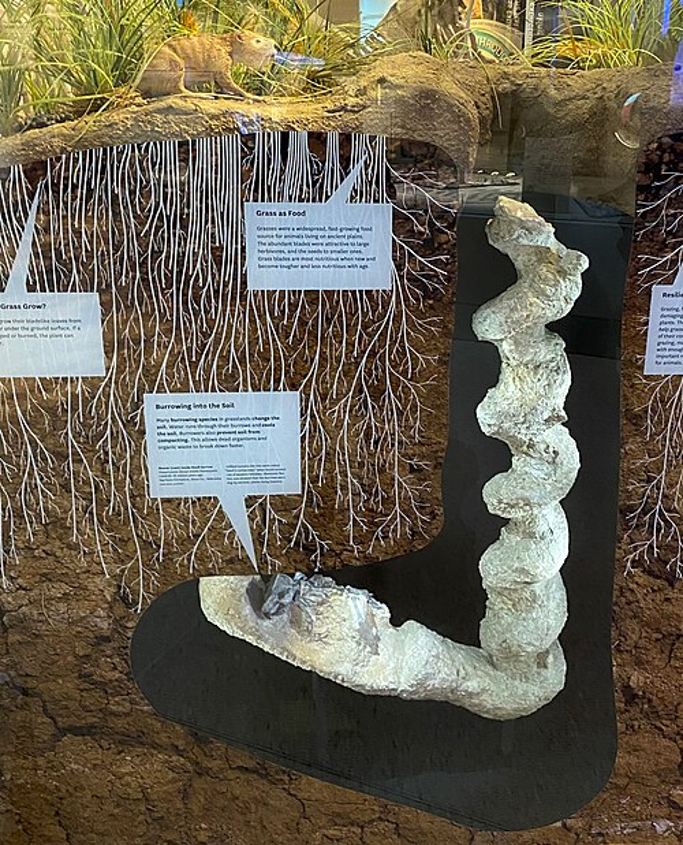
Occasionally, paleontologists will be lucky enough to find a burrow-maker fossilized within its burrow, such as the case of the burrowing dinosaur Oryctodromeus or the ancient beaver Palaeocastor which carved the famous helical “Devil’s Corkscrews” of North American badlands.
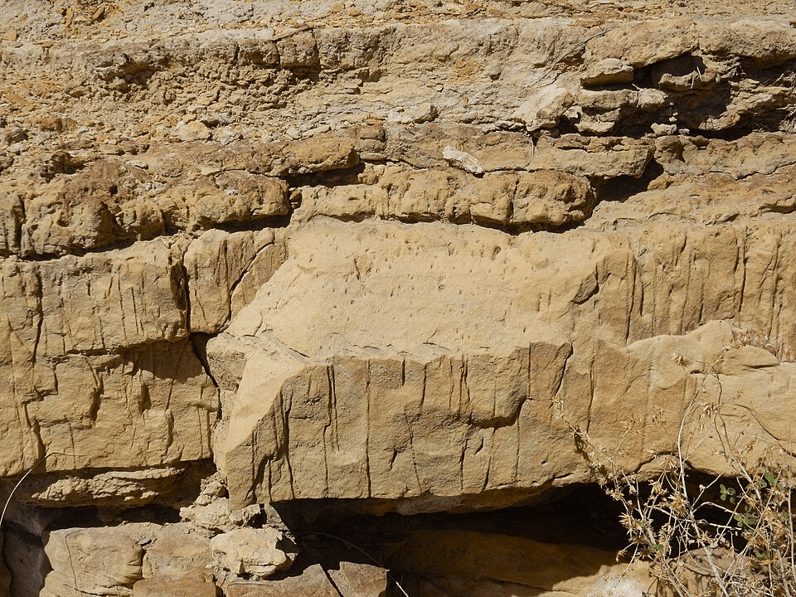
The oldest known fossil burrows are from the Cambrian Period, which saw an explosion of diversity in seafloor-dwelling invertebrates which burrowed into ocean sediments. This event, the Cambrian Substrate Revolution, was the origin of complex subterranean habitats like we have today.
Learn More
Burrowing animals: Determining species by burrows & damage
A Triassic cuddle set in stone
How Scientists Resolved the Mystery of the Devil’s Corkscrews
The Worms That Turned – Research shows first burrowing animals helped engineer explosion of life
Brazil’s mysterious tunnels made by giant sloths
Why animals construct helical burrows: Construction vs. post-construction benefits (technical, open access)
Fossorial Origin of the Turtle Shell (technical, open access)
Unique bone microanatomy reveals ancestry of subterranean specializations in mammals (technical, open access)
Evolution of fossorial locomotion in the transition from tetrapod to snake-like in lizards (technical, open access)
__
If you enjoyed this topic and want more like it, check out these related episodes:
We also invite you to follow us on Facebook or Instagram, buy merch at our Zazzle store, join our Discord server, or consider supporting us with a one-time PayPal donation or on Patreon to get bonus recordings and other goodies!
Please feel free to contact us with comments, questions, or topic suggestions, and to rate and review us on Spotify or Apple Podcasts!
 The Common Descent Podcast
.jpg)


Leave a comment