
Listen to Episode 253 on Podbean, YouTube, Spotify, or wherever you listen to your favorite podcasts!
The most charismatic and abundant large mammals of Australia also include the world’s largest hoppers. This episode, we discuss the unusual anatomy and deep history of Kangaroos.
In the news
Evidence from teeth for warm-bodied tyrannosaurs
Fossil insights into the ancestors of sea stars
First evidence of Diplodocus outside North America
A new species of tiny cats living in Bolivia
What Big Feet You Have
Kangaroos, wallabies, wallaroos, tree-kangaroos, and quokkas are all united in the marsupial Family Macropodidae (meaning “large feet”). This group includes over 60 species inhabiting a variety of habitats across Australia, New Guinea, and nearby islands.
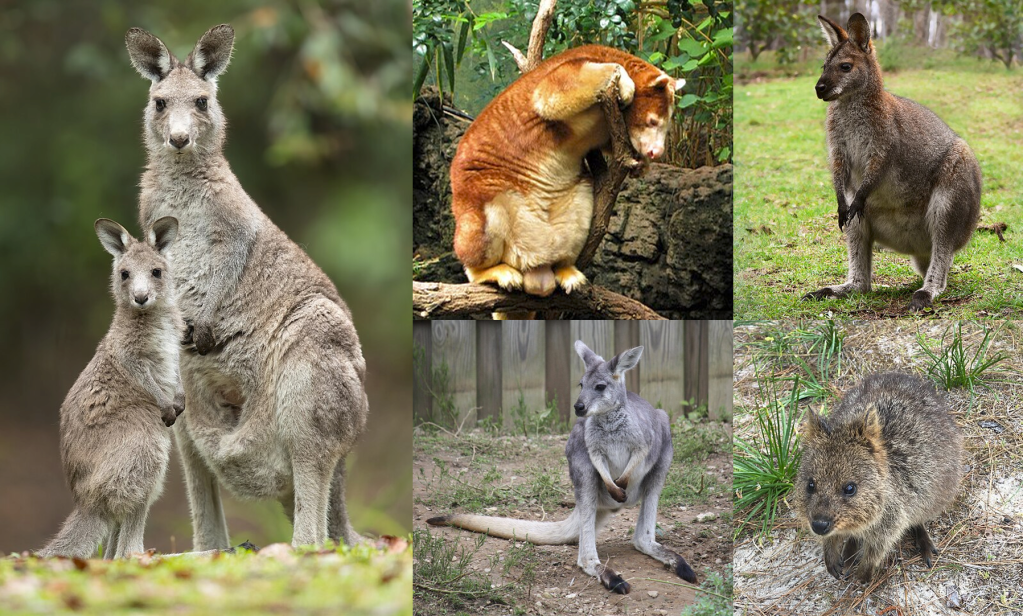
Top Middle: Matschie’s tree-kangaroo (Dendrolagus matschiei). Image by Postdlf, CC BY-SA 3.0
Bottom Middle: A wallaroo (Macropus robustus). Image by Ltshears, CC BY-SA 3.0
Top Right: A red-necked wallaby (Macropus rufogriseus). Image by Benjamint444, CC BY-SA 3.0
Bottom Right: A quokka (Setonix brachyurus). Image by Chrisophe95, CC BY-SA 4.0
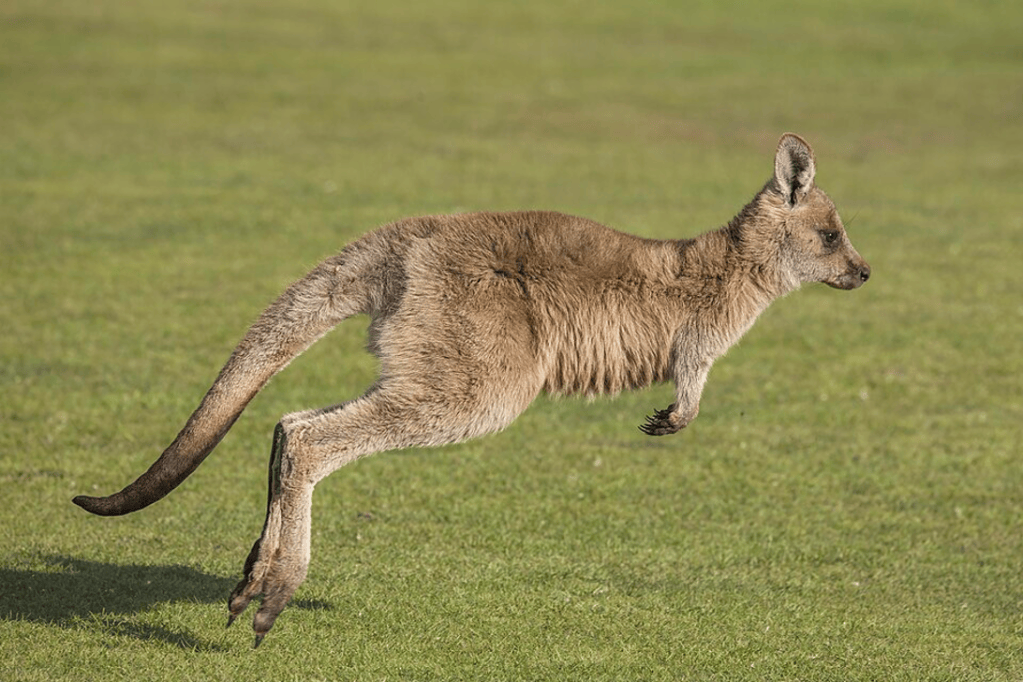
Kangaroos and their cousins are famous for the way they get around. At high speeds, most species in this group employ bipedal hopping, made exceptionally efficient by their large feet, powerful back legs, and very thick Achilles tendon which transfers energy from one hop to the next.
At slow speeds, many kangaroos use “five-legged” locomotion, in which they scoot along using all four limbs and their large, muscular tail.
Among the large native herbivores of Australia, kangaroos are the largest and most abundant. They are very effective grazers, equipped with thick tooth enamel and complex stomachs, occupying a similar ecological niche as hoofed mammals on other continents.
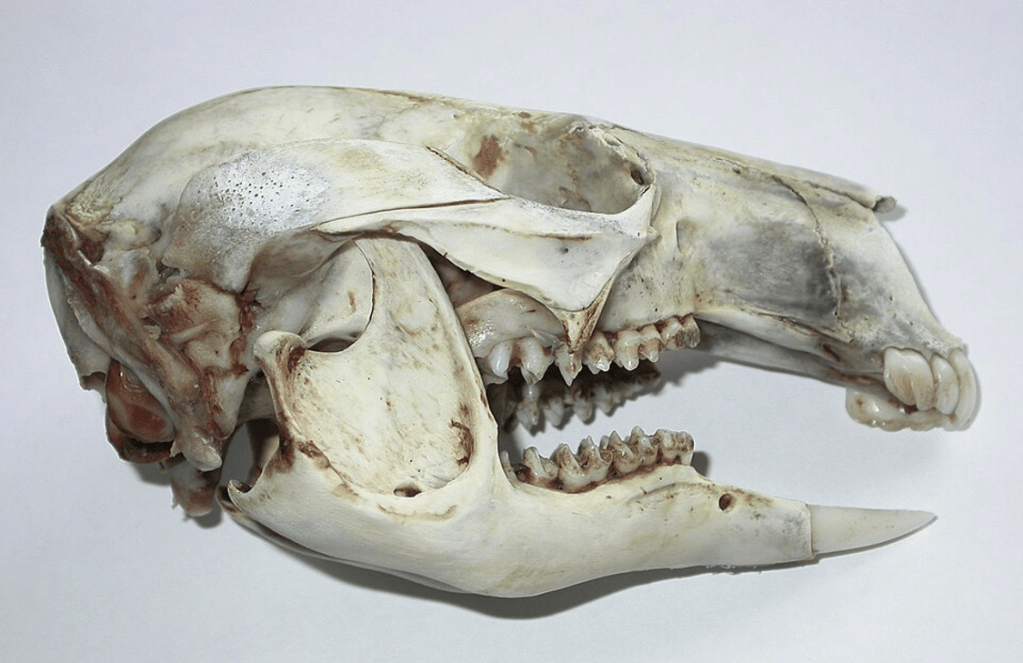
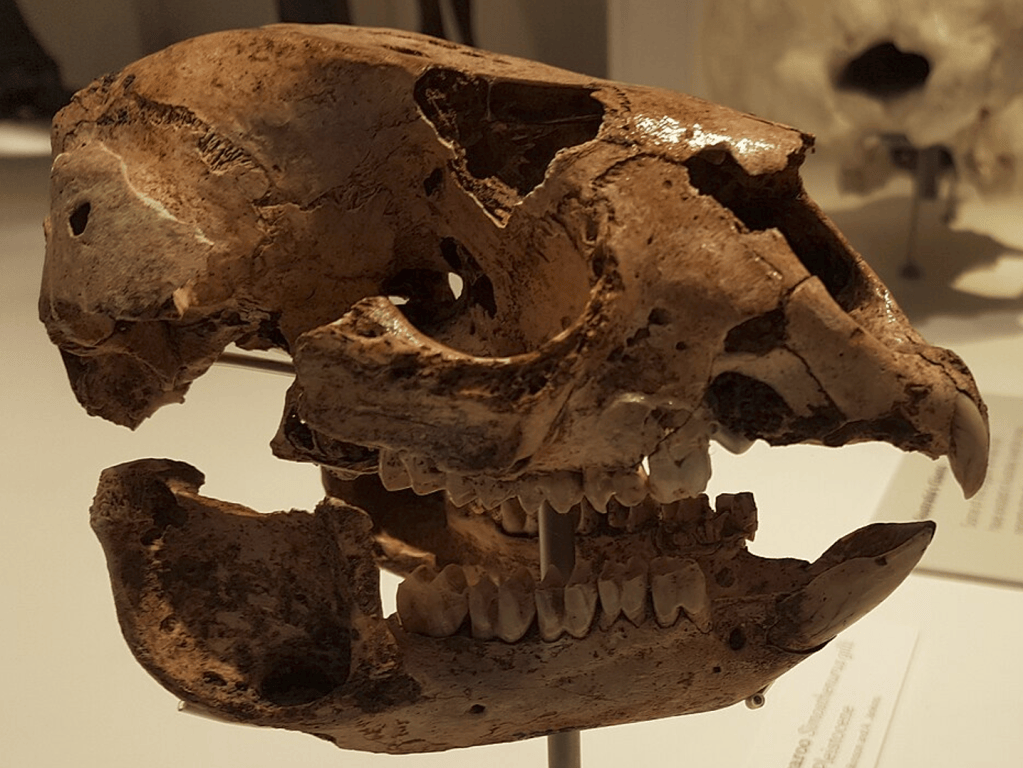
The ancestors of macropods were probably possum-like arboreal animals. The earliest known fossil macropods, around 20 million years ago, are small, and their diets and modes of locomotion aren’t entirely clear. By the Late Miocene, around 8 million years ago, fossils provide evidence of powerful hopping abilities similar to modern kangaroos. And around the same time period, the spread of grasslands across Australia provided extensive habitat for the diversification of this group.
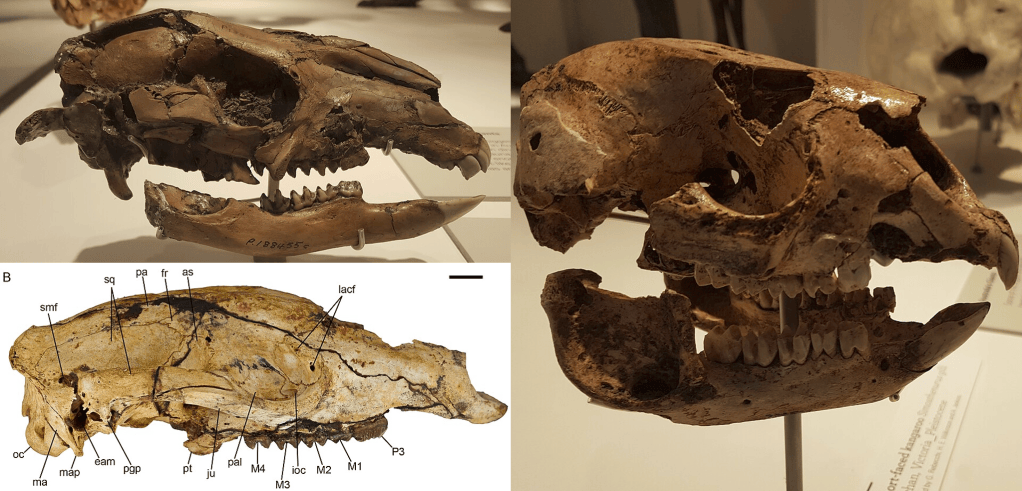
Bottom Left: Skull of the early, quadrupedal kangaroo Balbaroo nalima. Image by Black et al 2014, CC BY 4.0
Right: Skull of the giant Pleistocene kangaroo, Simosthenurus. Image by Paleocolour
Multiple lineages of macropods have evolved enormous sizes, the largest of which stood more than two meters tall and weighed over 300kg, more than twice as heavy as the largest living kangaroos. The most famous of these were the “giant short-faced” sthenurine kangaroos, which might have been too big to hop, with some evidence suggesting they were walking kangaroos!
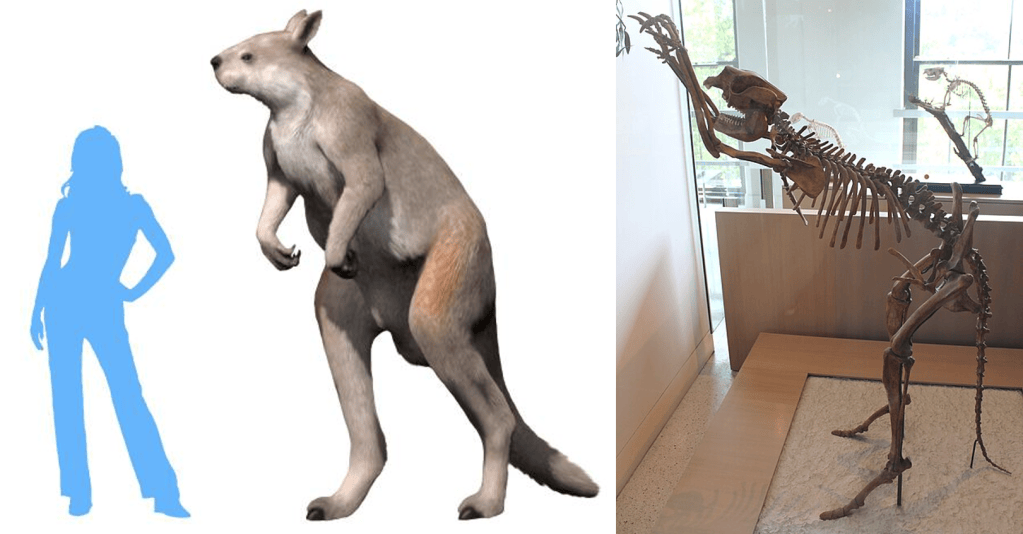
Right: Cast of the skeleton of the giant kangaroo Simosthenurus. Image by Jonathan Chen, CC BY-SA 4.0
Learn More
The mechanics of hopping by kangaroos (technical, open access)
Locomotion and ecology in stem kangaroos (technical, open access)
Diversification of kangaroos coincided with emerging grasslands (technical, open access)
Did Australia’s extinct giant kangaroos hop or stride?
Biomechanical limits of hopping in the hindlimbs of giant extinct kangaroos (technical, open access)
Divergent locomotor evolution in “giant” kangaroos (technical, open access)
__
If you enjoyed this topic and want more like it, check out these related episodes:
We also invite you to follow us on Facebook or Instagram, buy merch at our Zazzle store, join our Discord server, or consider supporting us with a one-time PayPal donation or on Patreon to get bonus recordings and other goodies!
Please feel free to contact us with comments, questions, or topic suggestions, and to rate and review us on Spotify or Apple Podcasts!


_juvenile_hopping_Esk_Valley.jpg)


Leave a Reply