
Listen to Episode 254 on Podbean, YouTube, Spotify, or wherever you listen to your favorite podcasts!
While tyrannosaurs were stomping around the northern continents, another group of predators were the biggest and baddest critters in the south. This episode, we explore the unusual anatomy and surprising success of the overshadowed Abelisaurs.
In the news
Fossilized plesiosaur vomit from Norway
Isotopes suggest dinosaurs occasionally ate seaweed
DNA and fossils provide new insights into bat evolution
Microraptors convergently evolved a suite of flight adaptations
Rough Heads, Tiny Arms
Abelisaurs are a group of large predatory dinosaurs known mainly from the Late Cretaceous of the world’s southern landmasses (South America, Africa, Madagascar, and India), where they lived alongside – and likely ate – enormous titanosaurs.
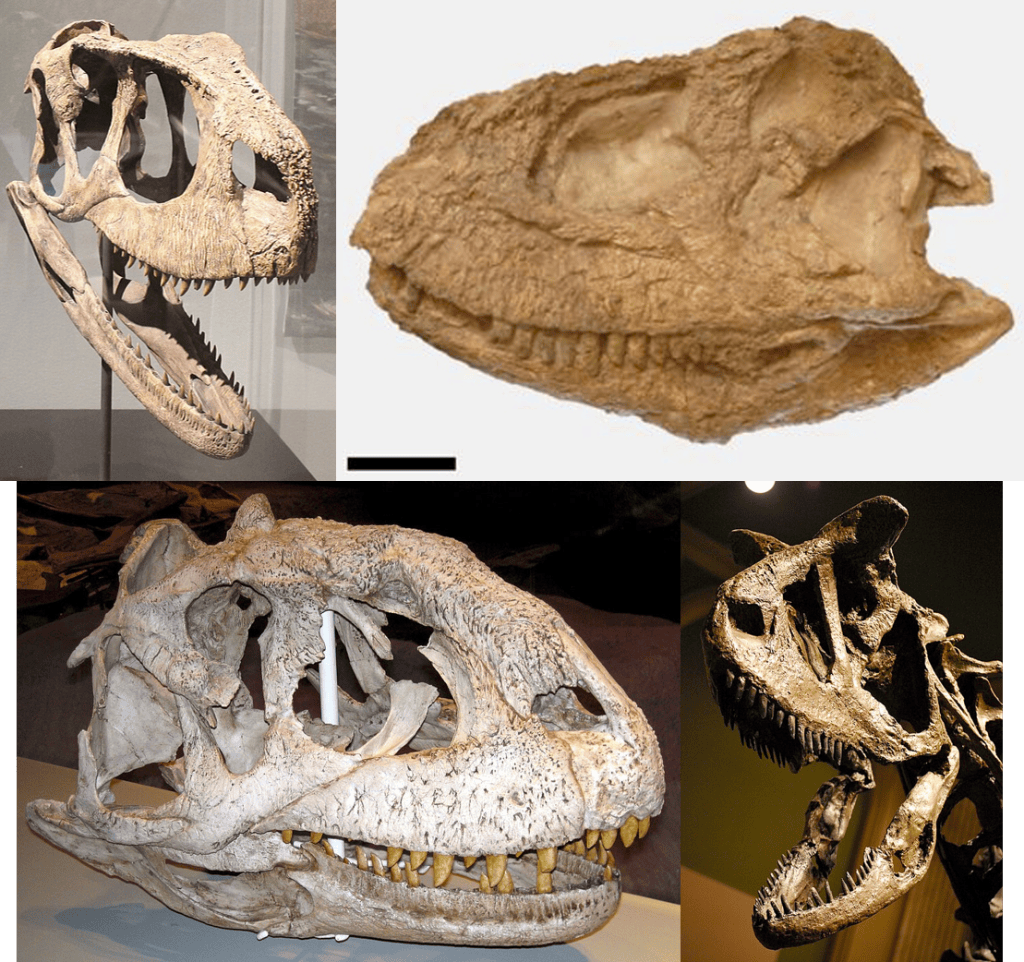
Top Right: Skull of Skorpiovenator. Image by Rafael Delcourt, CC BY 4.0
Bottom Left: Skull of Majungasaurus. Image by James St. John, CC BY 2.0
Bottom Right: Skull of Carnotaurus. Image by AStrangerintheAlps, CC BY-SA 3.0
Abelisaurs have very distinctive skulls with short rounded snouts and thickened skull roofs adorned with various bumps and rough patches. Their bodies are similarly robust, with relatively short and powerful necks and hind limbs. Their arms are extremely small, with highly reduced arm and finger bones, and they were probably used for very little activity, if any.
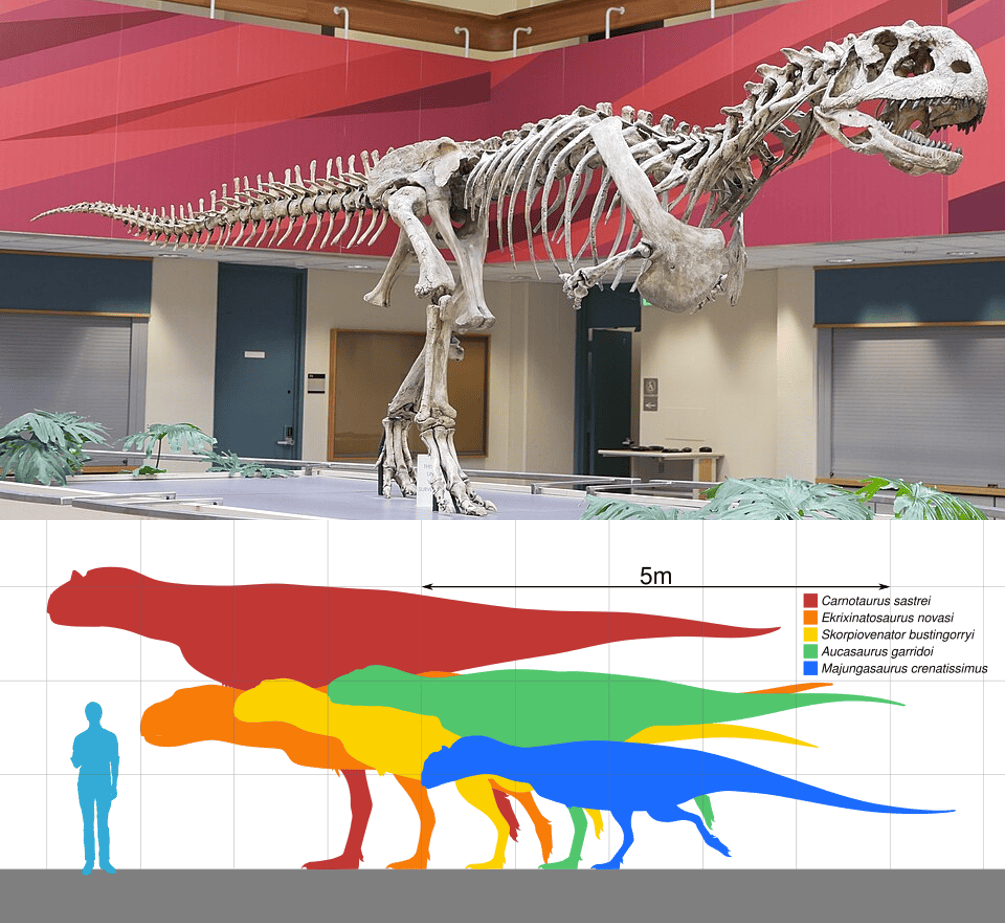
Bottom: Size comparisons of various abelisaurs. Image by Slate Weasel.
Abelisaurs belong to a branch of theropod dinosaurs called Ceratosauria, alongside ceratosaurs and a bunch of others sometimes grouped in the ‘noasaurs.’ For most of the Late Cretaceous Period, abelisaurs were the largest predators across most southern environments. The biggest of them grew over 8 meters long with estimated weights of at least two or three tons.
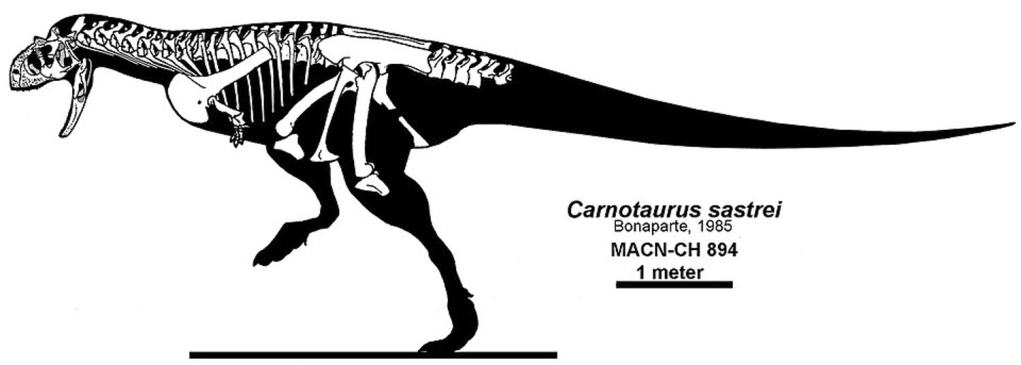
Most abelisaurs are known from fragmentary remains, but a handful are represented by nearly complete skeletons. The most famous of these by far is Carnotaurus from Argentina. Carnotaurus is known from a single well-preserved individual, representing one of the largest known abelisaurs, and sporting a distinctive pair of horns atop its head.
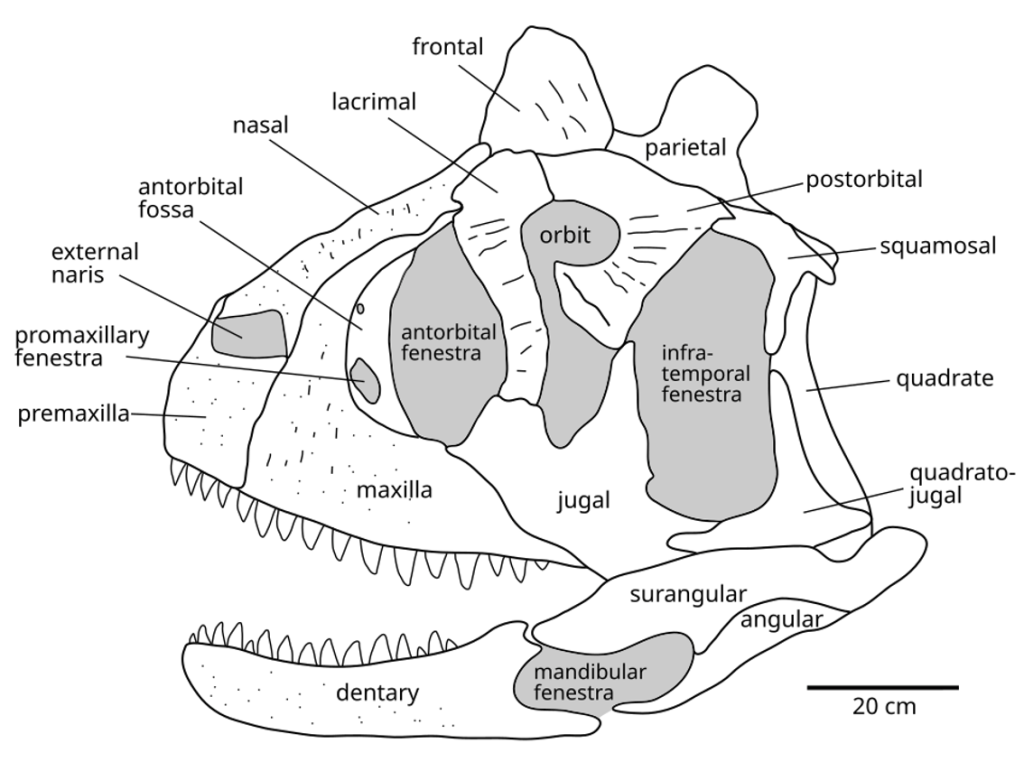
Horn-like structures are also known from several other members of this group, including Majungasaurus from Madagascar, Rajasaurus from India, and Skorpiovenator from Argentina. These horns seem to have evolved multiple times among this group, since they’re constructed from different skull bones in many of these species. The exact function of these horns is unclear; it seems likely they were important display features, but some scientists have hypothesized that the extra-sturdy skulls and horns of some – like Carnotaurus – might have been able to withstand competitive headbutting.
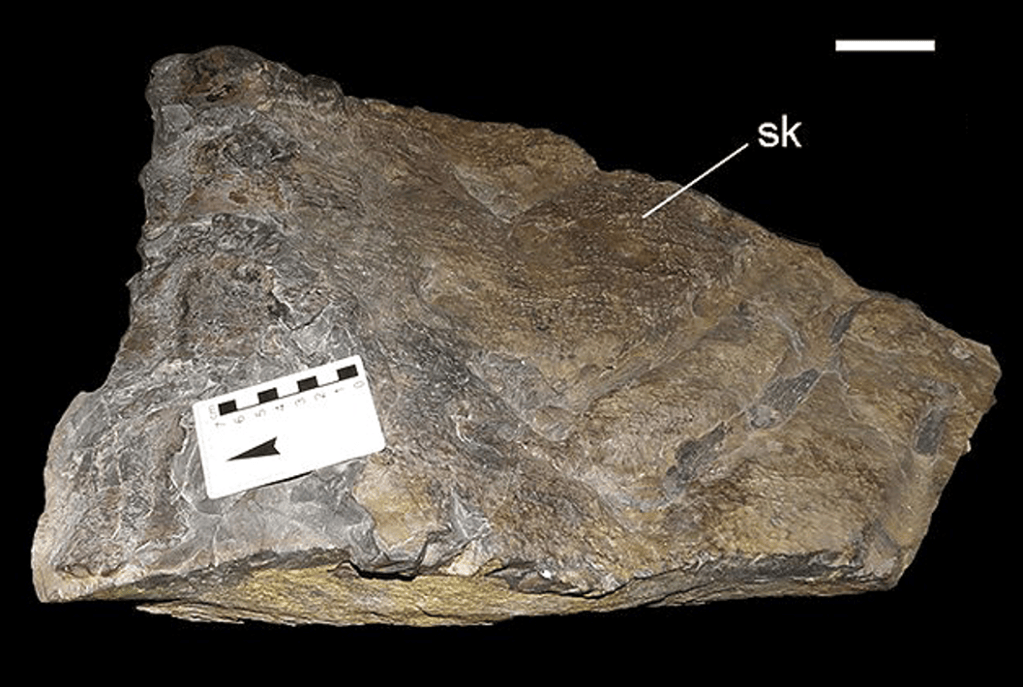
The single known skeleton of Carnotaurus also includes some of the best preserved skin impressions of any dinosaur. This animal was covered in small scales interrupted by randomly-distributed larger scales. Interestingly, there is no sign of feathers, suggesting that Carnotaurus – and perhaps abelisaurs in general – had little to no fluffy coat.
Learn More
Some recently-described abelisaur species:
Koleken from Patagonia (technical)
Caletodraco from France (technical)
Llukalkan from Patagonia (technical)
Growth and body sizes across abelisaurs (technical)
The scaly skin of Carnotaurus (technical, open access); Sci-News article
__
If you enjoyed this topic and want more like it, check out these related episodes:
We also invite you to follow us on Facebook or Instagram, buy merch at our Zazzle store, join our Discord server, or consider supporting us with a one-time PayPal donation or on Patreon to get bonus recordings and other goodies!
Please feel free to contact us with comments, questions, or topic suggestions, and to rate and review us on Spotify or Apple Podcasts!


.jpg)


Leave a Reply