
Listen to Episode 256 on Podbean, YouTube, Spotify, or wherever you listen to your favorite podcasts!
Why go through all that effort chasing after prey when you can just convince them to wander into your waiting clutches? This episode, we discuss the diversity and evolution of Predatory Lures.
In the news
“Giant” hexapod soil predators of the Jurassic
Unusually “chunky” belemnite cephalopods
An armored ocean-dwelling Triassic amphibian
Using body proportions to predict ancient aquatic habits
Come a Little Closer…
It takes a lot of energy to chase after your prey, so why not lure them to you? Many predators have developed various methods of luring hapless prey into their clutches. Lots of predatory lures are a form of aggressive mimicry, with predators sending a signal that promises some sort of false benefit.
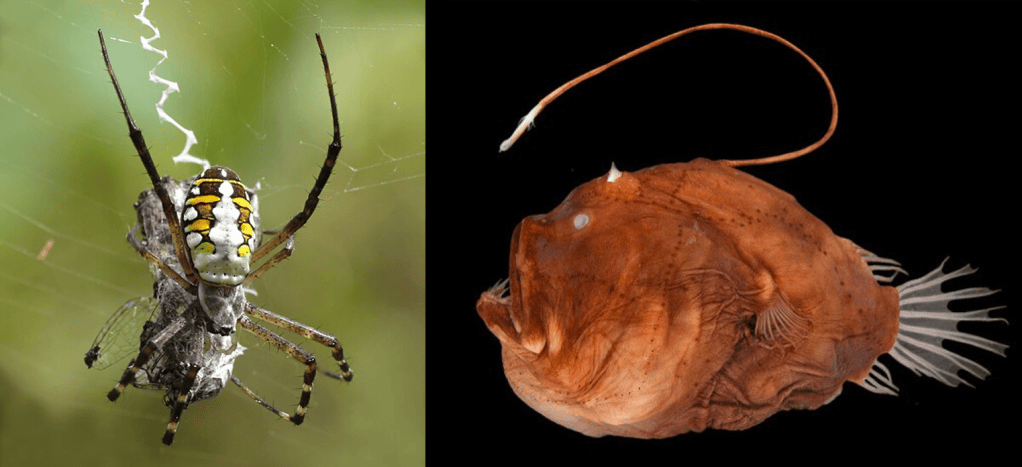
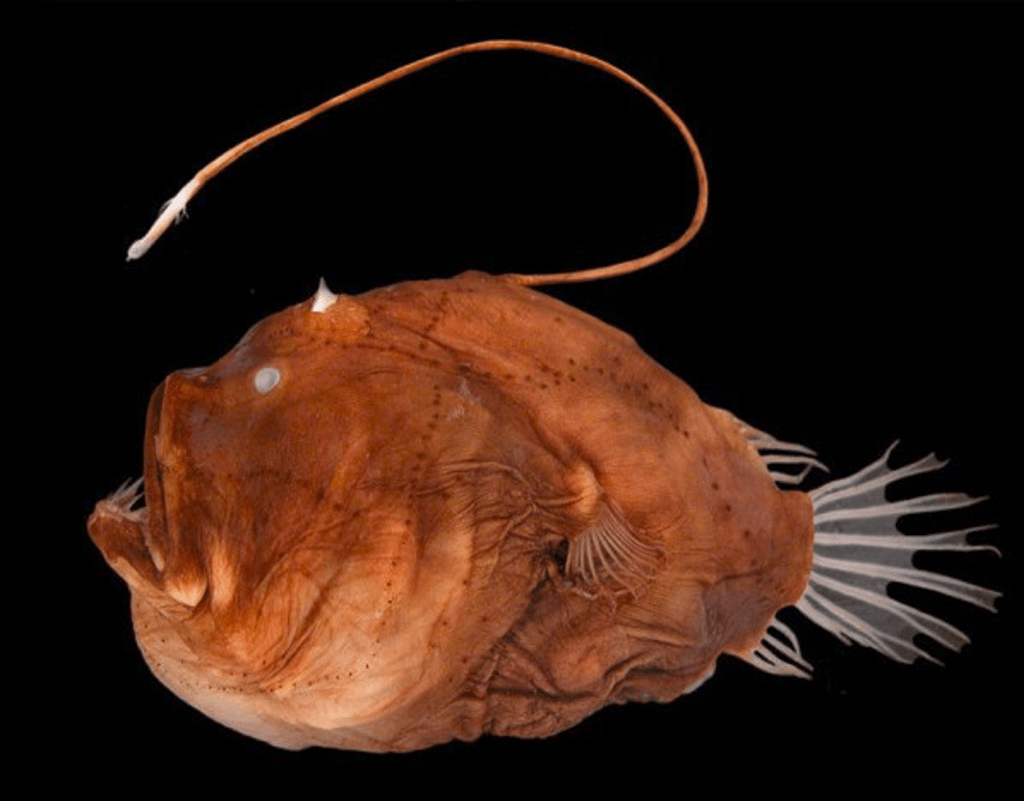
Right: Deep-sea anglerfish dangle bioluminescent lures and wait for small fish to approach. Other anglerfish use non-glowing lures which wiggle or produce enticing chemicals. Image from Masaki Miya et al 2010
Many famous predatory lures are anatomical: the dangling fin of an anglerfish, the worm-like tongue of an alligator snapping turtle, and the flower-like coloration of many spiders are all examples of body parts used as lures.
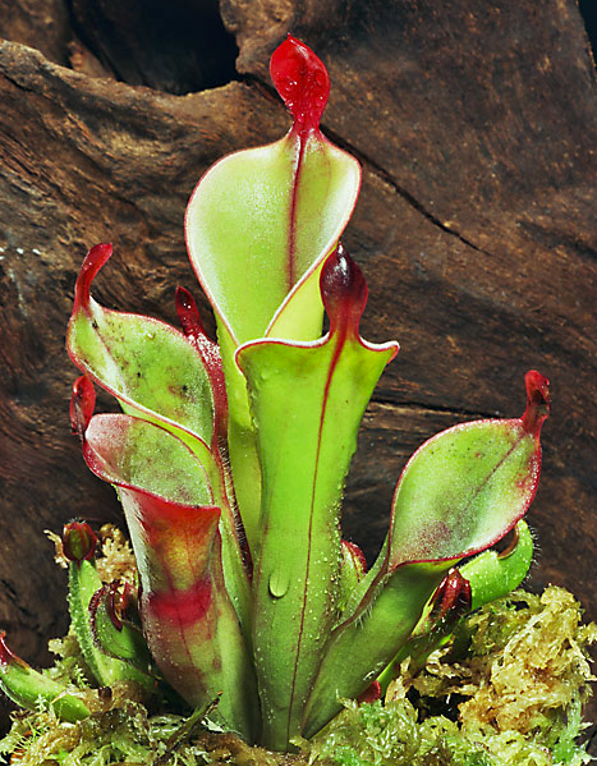
Others make use of behavioral lures. Predatory fireflies mimic the light-flashing patterns of mating females to lure in delicious males; shrikes mimic the mating calls of smaller birds to draw them in; and many species of carnivorous plants release chemicals to mimic the scent of food or the pheromones of mates to attract insects to eat.
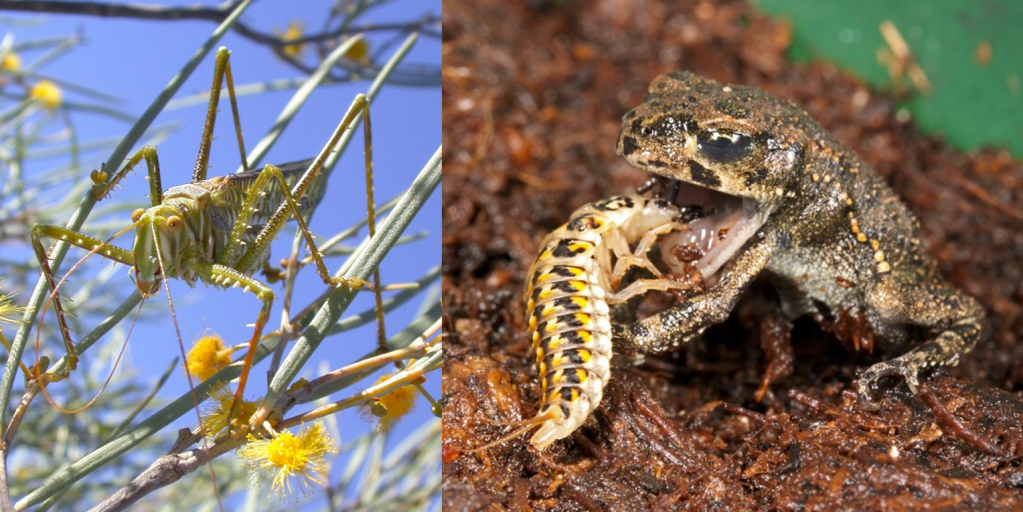
Right: The larvae of Epomis ground beetles imitate struggling prey to attract frogs, then the larvae attack and eat their would-be predators, a fascinating case of reverse predation. Image from Wizen and Gasith 2011.
Predatory lures have obvious benefits, but there are trade-offs as well. A lure is meant to be noticed, but many of these predators have predators of their own. Anglerfish with glowing lures tend to dangle them far enough away from their body so that the tiny light attracts small fish but doesn’t also illuminate their own face and attract bigger, hungrier fish. Many spiders have evolved color patterns or web styles which attract some tasty species but are unnoticeable or repulsive to dangerous ones, while other spiders use specialized lures to attract only very specific prey species. In many species, such as predatory fireflies, the same mechanism they use to lure prey is also used to attract mates, so their adaptations need to be able to do both.
Various forms of mimicry have evolved countless times in an enormous variety of lineages. Many of these lures are built-in or instinctual to some degree, but others might be learned or involve some degree of active consideration. Green herons are known to use a variety of bait items, which they drop into the water to attract fish, and similar intentional baiting strategies have been suggested (albeit contentiously) in crocodiles and orcas. These strategies are sometimes called cognitive aggressive mimicry. By far the most versatile and successful users of this form of lures are humans.
Learn More
The evolution of prey-attraction strategies in spiders: the interplay between foraging and predator avoidance (technical, open access)
Signals, cues and the nature of mimicry (technical, open access)
Batesian–aggressive mimicry (technical, open access)
The Evolution of Lures in Anglerfishes (technical, open access)
Bait-fishing by Birds (technical, open access)
Versatile Aggressive Mimicry of Cicadas by an Australian Predatory Katydid (technical, open access)
An Unprecedented Role Reversal: Ground Beetle Larvae Lure Amphibians and Prey upon Them (technical, open access)
Fatal Attraction: Spiders Lure Male Moth Prey with the Promise of Sex (technical, open access)
__
If you enjoyed this topic and want more like it, check out these related episodes:
- Episode 105 – Carnivorous Plants
- Episode 123 – Spiders
- Episode 126 – Mimicry
- Episode 182 – Camouflage
We also invite you to follow us on Facebook or Instagram, buy merch at our Zazzle store, join our Discord server, or consider supporting us with a one-time PayPal donation or on Patreon to get bonus recordings and other goodies!
Please feel free to contact us with comments, questions, or topic suggestions, and to rate and review us on Spotify or Apple Podcasts!


Leave a Reply