
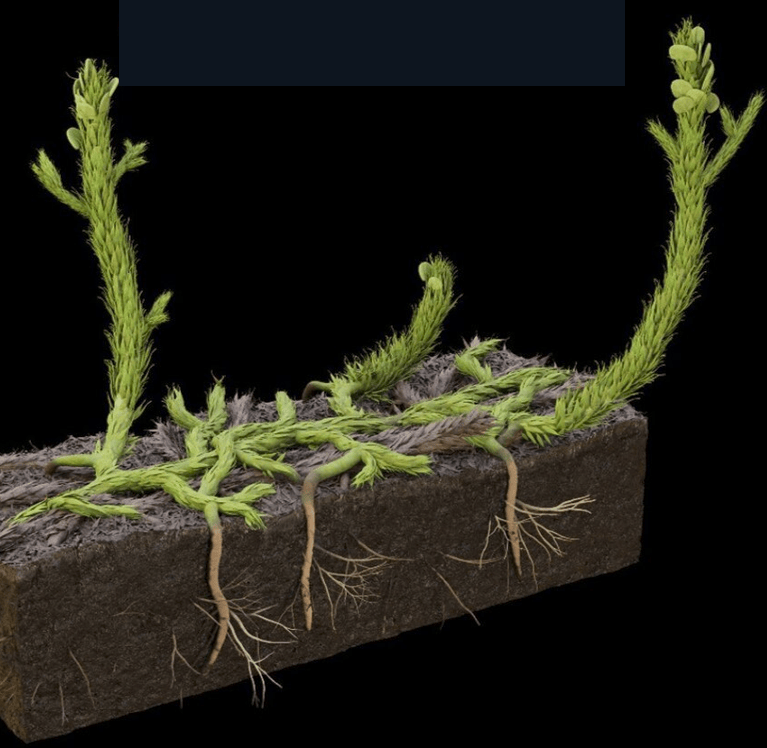
Listen to Episode 257 on Podbean, YouTube, Spotify, or wherever you listen to your favorite podcasts!
410 million years ago, the minerals seeping out of hot springs encased and preserved one of Earth’s oldest land ecosystems. Today, these extraordinary rocks and fossils make up the world-famous rocks of the Rhynie Chert.
In the news
Tyrant Lizard Queen: The Love, Life, and Terror of Earth’s Greatest Carnivore
Climate niches through the history of crocs
Tracks from a cougar-sized Mesozoic mammal
The Oldest Known Land Ecosystem
First described in 1912, the Rhynie Chert is a silica-rich deposit in Scotland which contains fossils in exquisite detail from a ~410-million-year-old hot springs ecosystem.
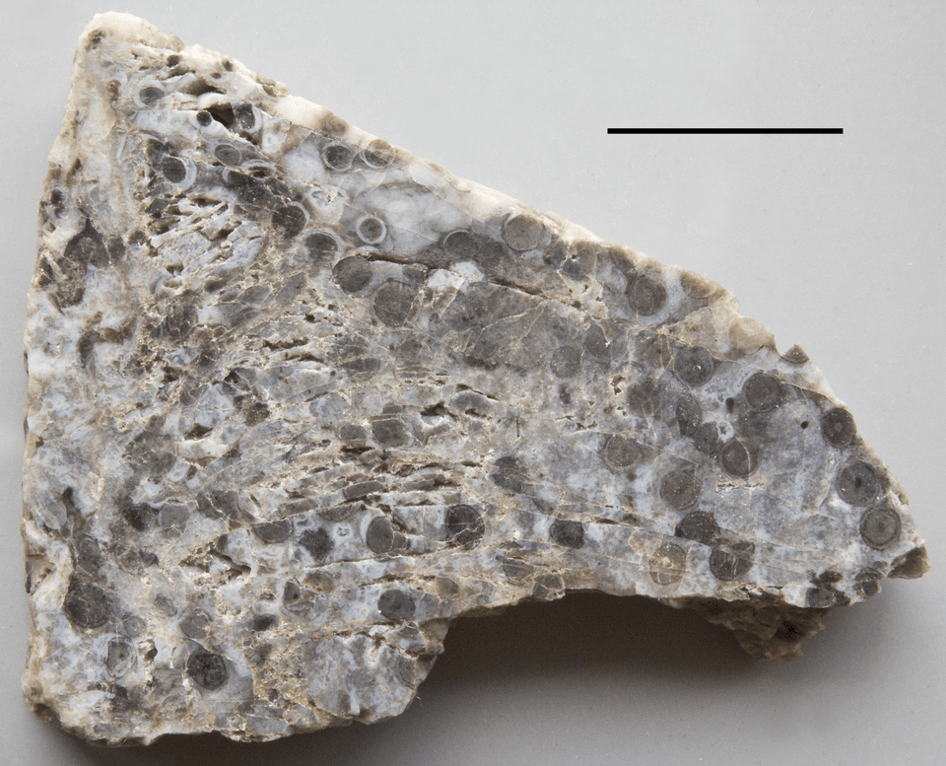
As silica precipitated out of spring water, it encased and petrified the remains of plants, animals, and microbes in freshwater and dry land habitats, in many cases preserving their remains down to microscopic cellular detail.
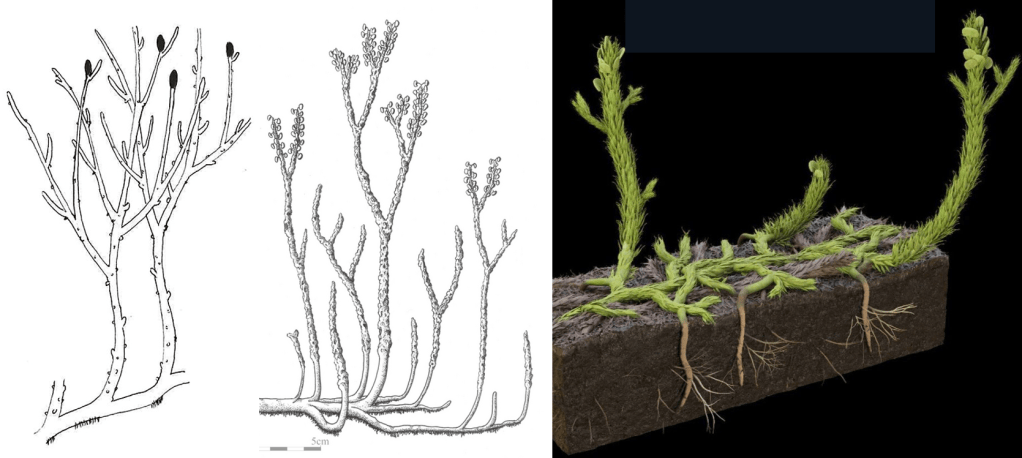
Left: Artist’s reconstruction of Rhynia gwynne-vaughanii. Image by Griensteidl, CC BY-SA 3.0
Center: Artist’s reconstruction of Nothia aphylla. Image by falconaumanni
Right: Artist’s reconstruction of Asteroxylon mackiei. Image from Hetherington et al 2021.
The Rhynie Chert preserves the oldest known community of land plants and animals. The plants all represent early experiments in vascularization, with several species of small (>50cm tall) branching plants, while the animals include some of the oldest known arachnids, centipedes, insects, and freshwater crustaceans.
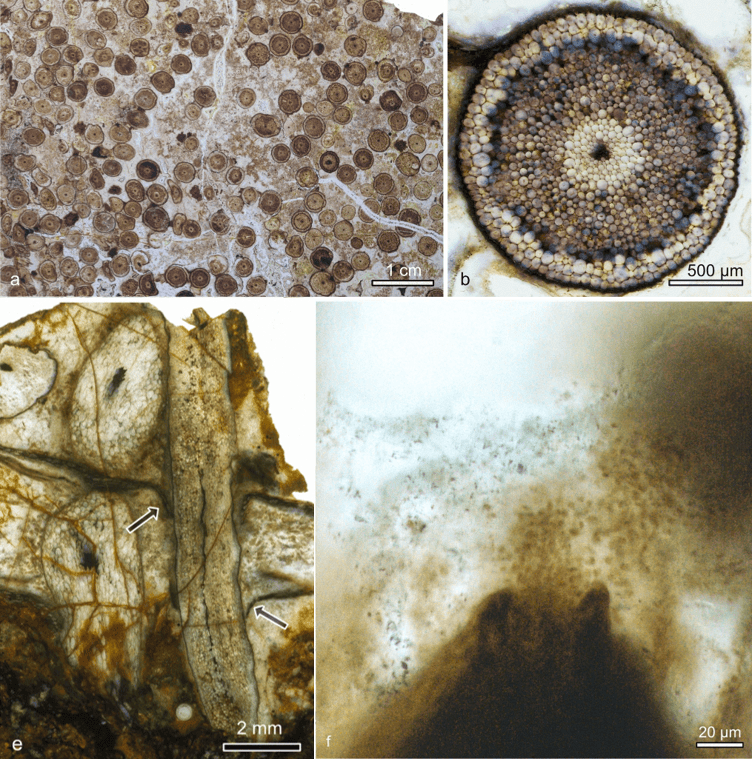
Top left: Cross section of a dense stand of Rhynia stems.
Top right: Cross section through a single well-preserved Rhynia stem, showing cellular details.
Bottom left: A vertical root of Asteroxylon.
Bottom right: An antheridium of Aglaophyton fossilized in the process of releasing sperm cells.
Images from Kerp et al 2026
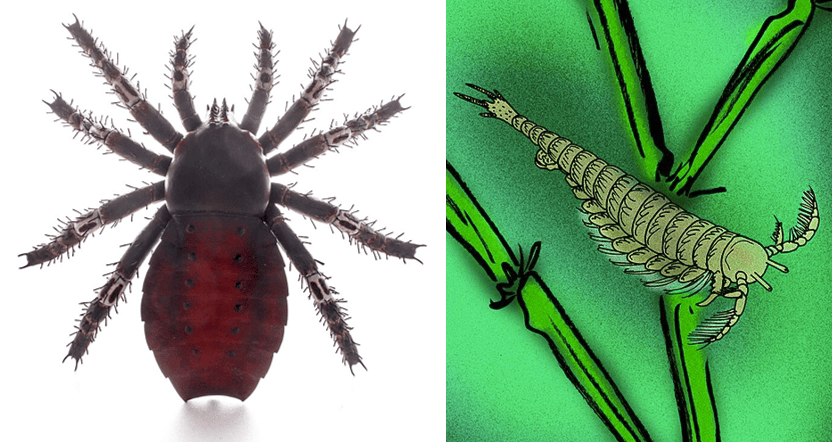
Left: Artist’s reconstruction of the land-dwelling spider-like trigonotarbid Palaeocharinus. Image by Matteo De Stefano/MUSE, CC BY-SA 3.0
Right: Artist’s reconstruction of the freshwater crustacean Lepidocaris. Image by Apokryltaros, CC BY-SA 4.0
The fossils of the Rhynie Chert also preserve incredible evidence of some of the oldest ecological interactions between groups of life, with nematode worms hatching inside plant tissues, fungal parasites attacking algae, and the earliest examples of plant-fungus root symbiosis.
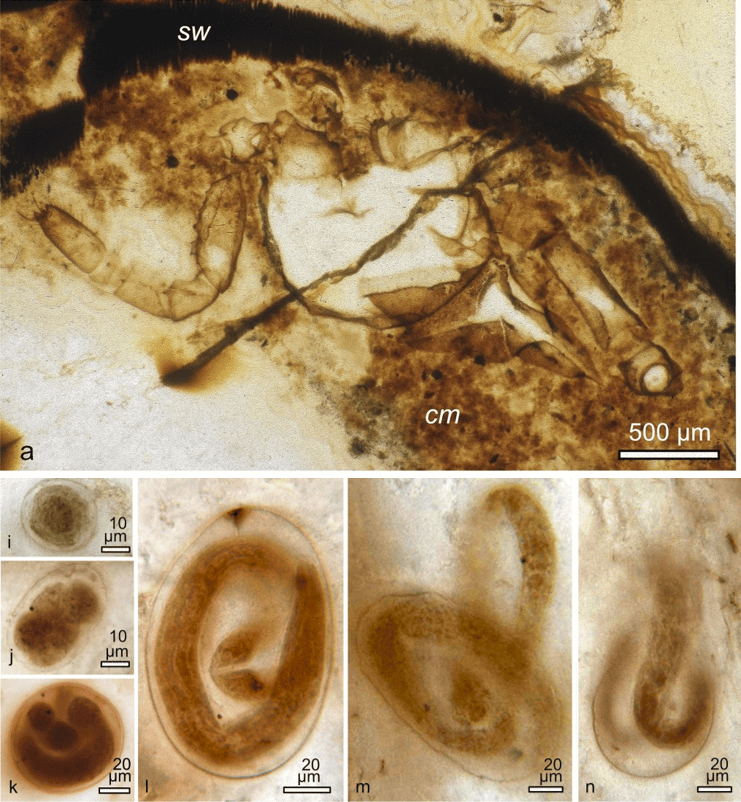
Bottom: Various stages of embryo development of the fossil nematode Palaeonema, from single-celled to fully grown to hatching from the egg.
Images from Kerp et al 2026
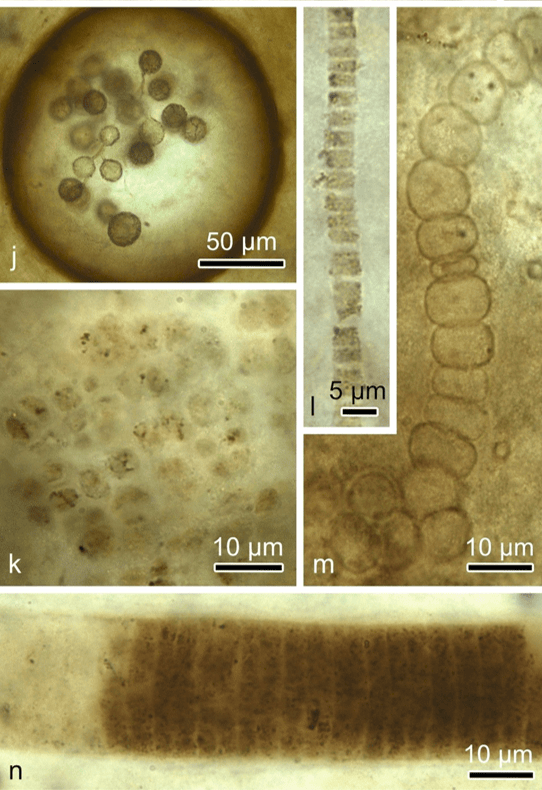
j. Fungal spores inside a larger fungal spore; k. a cluster of cyanobacteria (Rhyniococcus); l. filamentous cyanobacteria (Archaeothrix); m. more cyanobacteria (Langiella); n. more cyanobacteria (Palaeolyngbya).
Images from Kerp et al 2026
Learn More
The Rhynie chert Lagerstätte – An Early Devonian hot-spring ecosystem frozen in time (technical, open access)
History and contemporary significance of the Rhynie cherts (technical, open access)
Organs and tissues of Rhynie chert plants (technical, open access)
Terrestrial invertebrates in the Rhynie chert ecosystem (technical, open access)
__
If you enjoyed this topic and want more like it, check out these related episodes:
We also invite you to follow us on Facebook or Instagram, buy merch at our Zazzle store, join our Discord server, or consider supporting us with a one-time PayPal donation or on Patreon to get bonus recordings and other goodies!
Please feel free to contact us with comments, questions, or topic suggestions, and to rate and review us on Spotify or Apple Podcasts!


Leave a Reply