
Listen to Episode 245 on Podbean, YouTube, Spotify, or wherever you listen to your favorite podcasts!
A relatively small group of plants with a debatable reputation as dinosaur food, our focus for this episode is the history of Cycads.
In the news
Dinosaur-like, toothless croc-cousin from New Mexico
A trio of Cretaceous Arctic mammals
Fossils finally provide support for a link between turtles and archosaurs
Stromatolites from a Pleistocene crater lake
Cycads!
Cycadophytes (cycads) are gymnosperms, meaning they belong to the same overall category of plants as conifers and ginkgos, although they have a similar appearance to unrelated plants like ferns and palms.
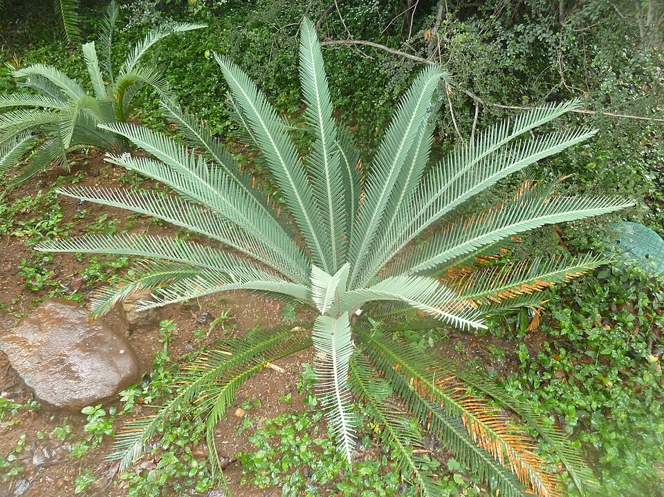
Cycads are woody, leafy plants that range from a few centimeters tall to several meters in height. These tend to be slow-growing and long-lived plants. There are four major groups of living cycads, comprising a total of around 400 species.
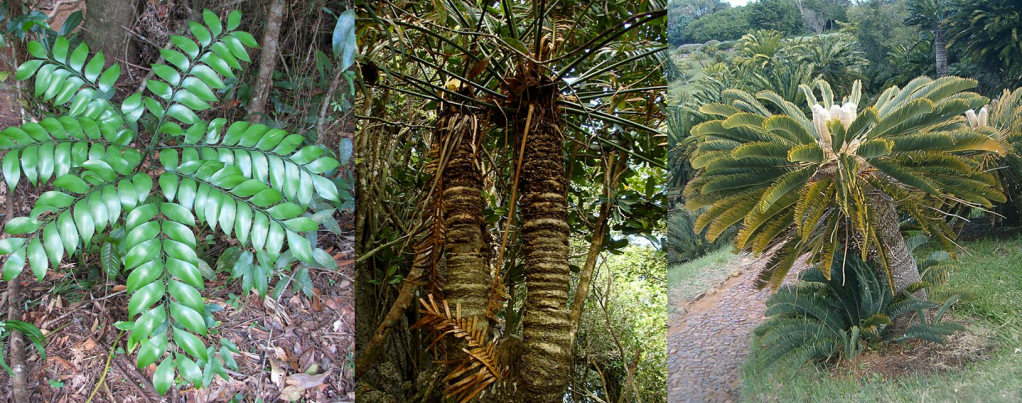
Center: Cycas micronesica from Micronesia. Image by Chamorroplants671, CC BY-SA.40
Right: Encephalartos friderici from South Africa. Image by BotBin
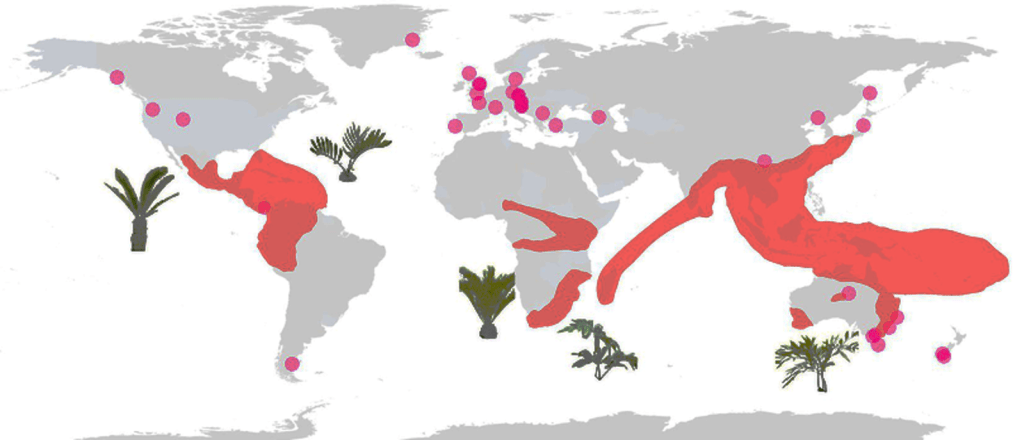
Modern cycads are distributed mainly in the tropics and subtropics, and many genera are restricted to one continent.
Cycads are often considered “ancient” plants, thanks in part to their abundance in the fossil record. The oldest members of the cycad lineage are known from the Late Paleozoic, but they achieved their greatest diversity during the Jurassic Period, shortly before the rise of flowering plants.
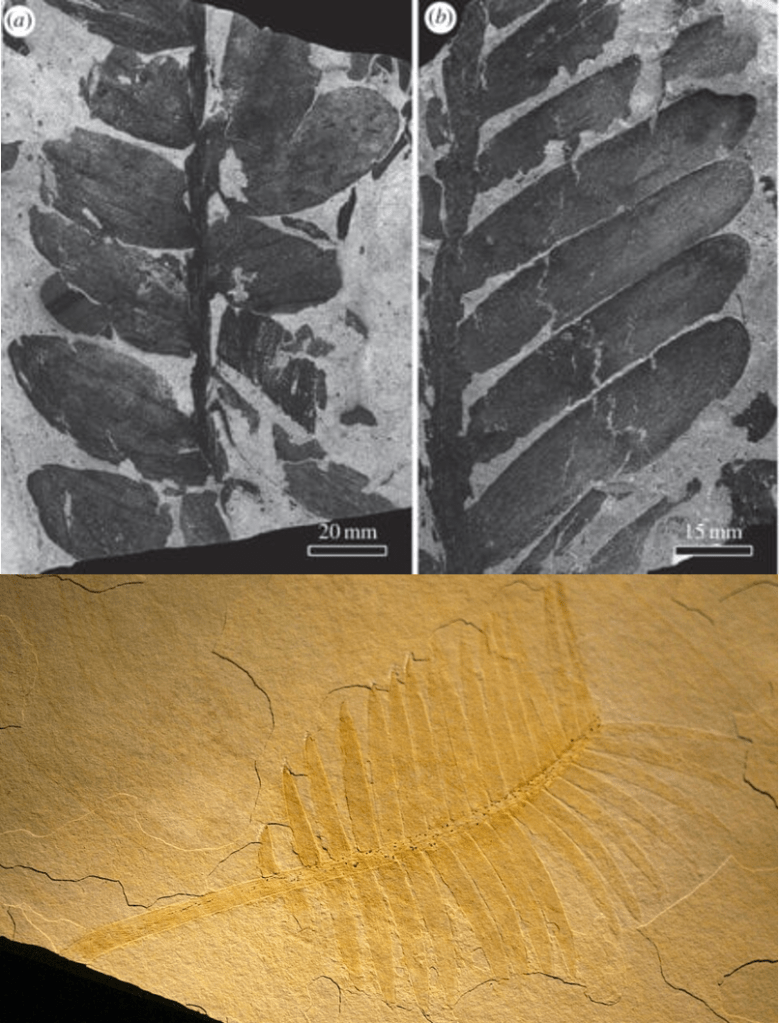
Bottom: Fossil Zamites from Jurassic Germany. Image by Heiko Sonntag, CC BY 3.0
However, the Jurassic was not only an age of cycads, but of cycad-like plants. Extinct groups like bennettitales were also abundant at the time and with similar anatomy, potentially making this time period seem more cycad-ful than it actually was.
Learn More
Insect pollination of cycads (technical, paywall)
The origin and macroevolutionary processes explaining the global cycad biodiversity (technical, open access)
__
If you enjoyed this topic and want more like it, check out these related episodes:
We also invite you to follow us on Facebook or Instagram, buy merch at our Zazzle store, join our Discord server, or consider supporting us with a one-time PayPal donation or on Patreon to get bonus recordings and other goodies!
Please feel free to contact us with comments, questions, or topic suggestions, and to rate and review us on Spotify or Apple Podcasts!


Leave a comment