
Listen to Episode 249 on Podbean, YouTube, Spotify, or wherever you listen to your favorite podcasts!
In many animal species, females and males are vastly different. This episode, we explore the variety, the extremes, and the mysterious deep history of Sexual Dimorphism.
In the news
Check out Steve Brusatte’s new book: The Story of Birds
A new well-preserved early snake from Brazil
A new early archosaur from Brazil
Female, Male, and More
Dimorphism means “two forms.” Sexual dimorphism refers to the differences between adult male and female anatomy, typically in animals. Most animal species, and some plants, exhibit some amount of sexual dimorphism.

Right: A large female and small male banana spider. Like many arthropods species, female spiders are often significantly larger than males. Image by Sanba38, CC BY 2.5
Many famous examples of sexual dimorphism are differences in size, shape, and appearance. In many species, one sex is significantly larger than the other, or one sex is more dramatically colored or ornamented. But sexual dimorphism can also include differences in behavior, diet, aging, immunity, and much more.
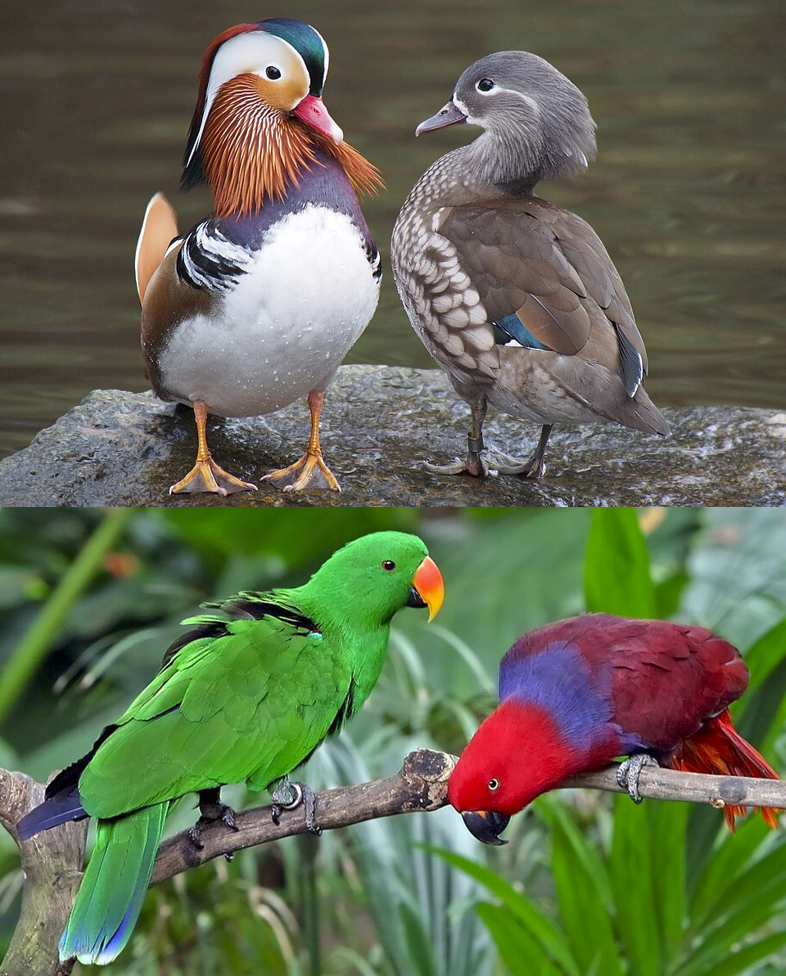
Top: A male (left) and female (right) Mandarin duck. Image by Francis C. Franklin, CC BY-SA 3.0
Bottom: A male (left) and female (right) Eclectus parrot. Image by Doug Janson, CC BY-SA 3.0
Most of these differences relate to the distinct roles of male and female individuals. In many species of birds, males are brightly colored to assist in attracting mates, while females are more drab colors to help them camouflage while guarding their nest. In the most extreme cases of sexual dimorphism, one sex lives an entirely different lifestyle than the other. Because these differences typically relate to reproduction, sexual dimorphism usually doesn’t become apparent until these animals reach maturity.
On the other hand, species with less distinct sexual roles tend to have less pronounced sexual dimorphism. In many primates, including humans, male and female anatomy is overall very similar, and there is a great deal of variation and overlap in features like body size. Some species have essentially no sexual dimorphism: adult snails and slugs typically have both male and female genitalia, and therefore no consistent distinction between the sexes.
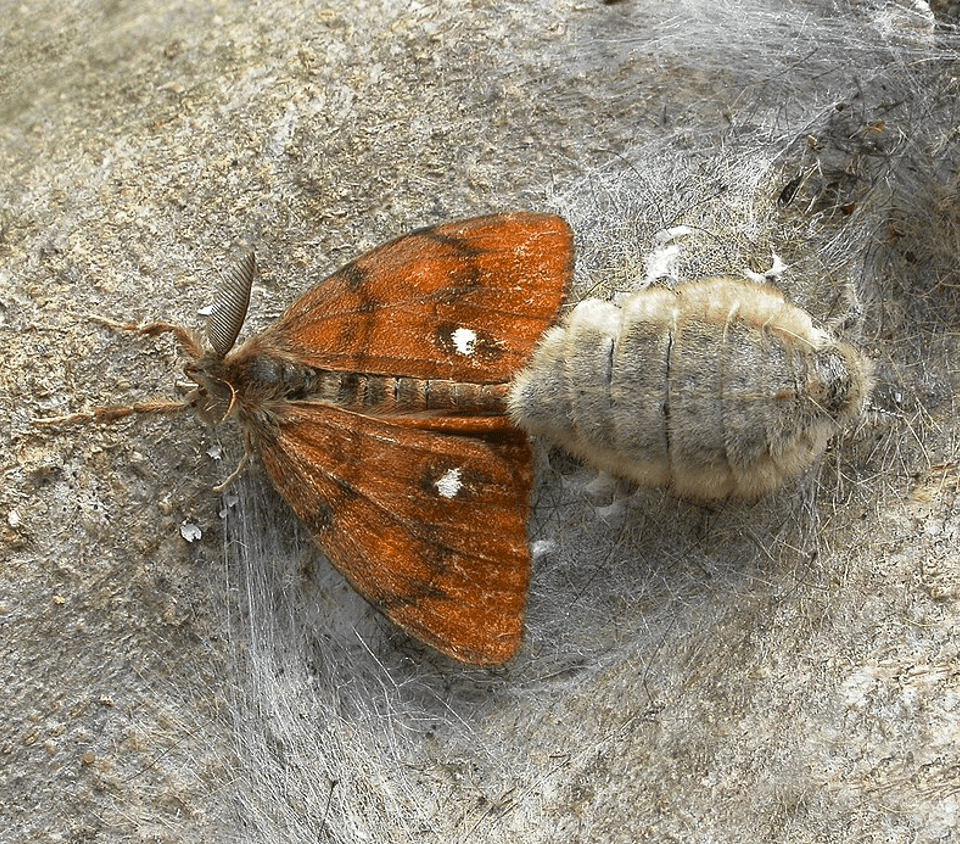
Sexual dimorphism is often a consequence of the importance of reproductive success for evolution. If a trait helps an individual find a mate or protect offspring or avoid competing with the other sex for food, that trait is likely to be passed on. This phenomenon is called sexual selection, and it can result in the “runaway” evolution of extremely exaggerated features like moose antlers or elephant tusks, which are physically cumbersome but crucially important for attracting mates or defending territory.
Identifying sexual dimorphism in the fossil record is extremely difficult, mostly due to two factors: one, it is usually impossible to confirm the sex of a fossil skeleton; and two, in order to confidently demonstrate two “morphs” of an ancient species, we require a large sample of skeletons, which is typically not available for fossils.

Many studies have proposed evidence for sexual dimorphism in fossil species, especially dinosaurs, but most are heavily debated, especially since it’s difficult to rule out other potential explanations for the apparent differences: what appears to be a “female” and “male” individual might actually be a young and adult, or might have lived in very different habitats, or might even be two different species.

The most convincing cases of fossil sexual dimorphism tend to be species with very close living relatives which show the same features, or cases where reproductive structures themselves are fossilized.
Learn More
Sexual Selection (technical, open access)
Sexual dimorphism in flowering plants (technical, open access)
The Evolution of Sexual Dimorphism (technical, open access)
Sexual dimorphism in dinosaurs: a review of the evidence and approaches (technical, open access)
Separating sexual dimorphism from other morphological variation in fossil marine reptiles (technical, open access)
Claspers in the mid-Cambrian Olenoides serratus indicate horseshoe crab–like mating in trilobites (technical, open access)
__
If you enjoyed this topic and want more like it, check out these related episodes:
We also invite you to follow us on Facebook or Instagram, buy merch at our Zazzle store, join our Discord server, or consider supporting us with a one-time PayPal donation or on Patreon to get bonus recordings and other goodies!
Please feel free to contact us with comments, questions, or topic suggestions, and to rate and review us on Spotify or Apple Podcasts!


.jpg)
Leave a Reply