
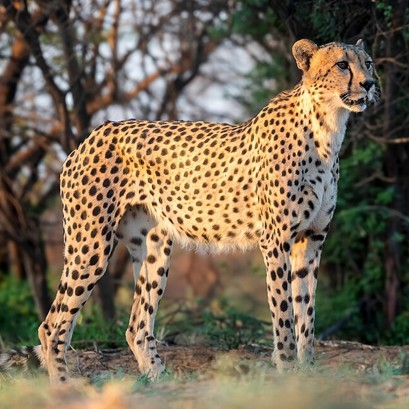
Listen to Episode 248 on Podbean, YouTube, Spotify, or wherever you listen to your favorite podcasts!
Most of the world’s felines are pretty small, but the largest ones are famously important to ecosystems and human culture alike. This episode, we explore the various faces of the official (and unofficial) Big Cats.
In the news
Re-discovery of a giant megalodon vertebra
Movement and “handedness” in strange Ediacaran critters
Early fruits possibly dispersed by dinosaurs
Variation in Australian snake venoms are meaningful for ecology and medicine
Cats of Unusual Size
Our modern world is full of big cats and also large cats.
“Big cats” is a term that generally applies to cats in the genus Panthera: lions, tigers, leopards, snow leopards, and jaguars. True to their title, these species tend to be quite large (some over 250kg/500lbs) and are typically among the most influential carnivores in their ecosystems.
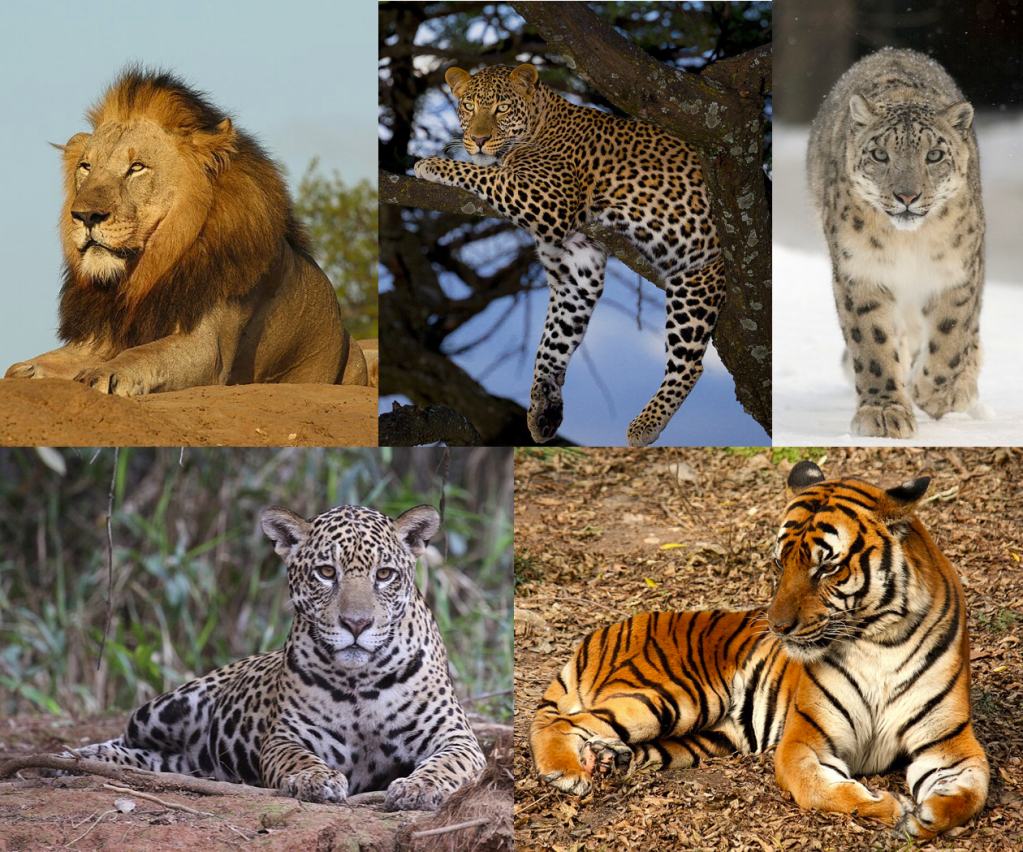
Top left: Lion (Panthera leo). Image by Charles J Sharp, CC BY-SA 4.0
Top middle: Leopard (Panthera pardus). Image by Sumeet Moghe, CC BY-SA 4.0
Top right: Snow leopard (Panthera uncia). Image by Bernard Landgraf, CC BY-SA 3.0
Bottom left: Jaguar (Panthera onca). Image by Charles J Sharp, CC BY-SA 4.0
Bottom right: Tiger (Panthera tigris). Image by J. Patrick Fischer CC BY-SA 3.0
But the “big cats” aren’t the only big cats. Elsewhere on the felid family tree, another lineage has given rise to two more species that regularly reach sizes over 50kg: pumas (aka cougars, mountain lions) in the Americas and cheetahs in Africa.
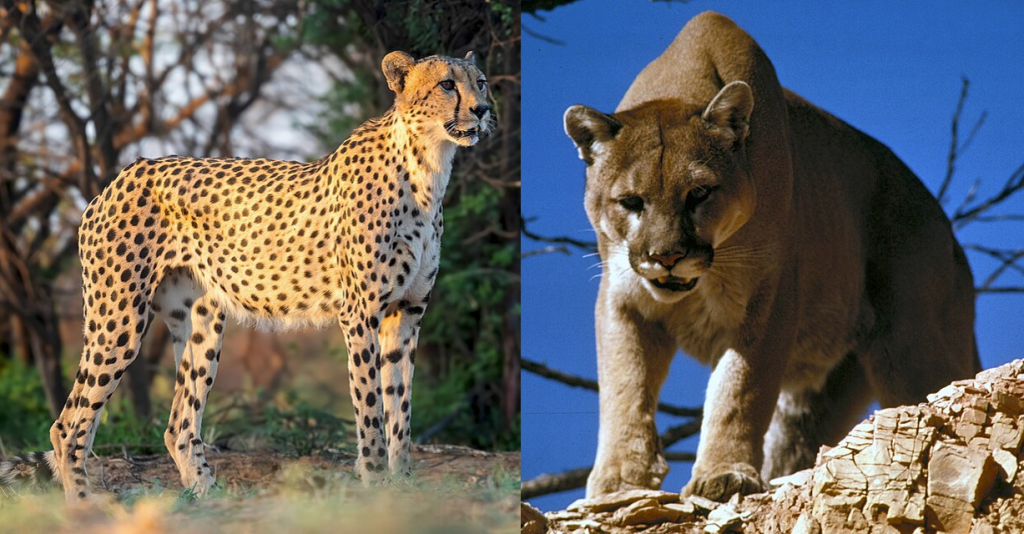
Right: Cougar (Puma concolor). Image by National Park Service
Despite their overall similarities, each of these species have evolved very distinct lifestyles and behaviors. For example; leopards are highly skilled tree-climbers; snow leopards are excellent at navigating mountain cliffs; lions are the most social of cats; and cheetahs are famously able to run faster than any other animal on Earth.
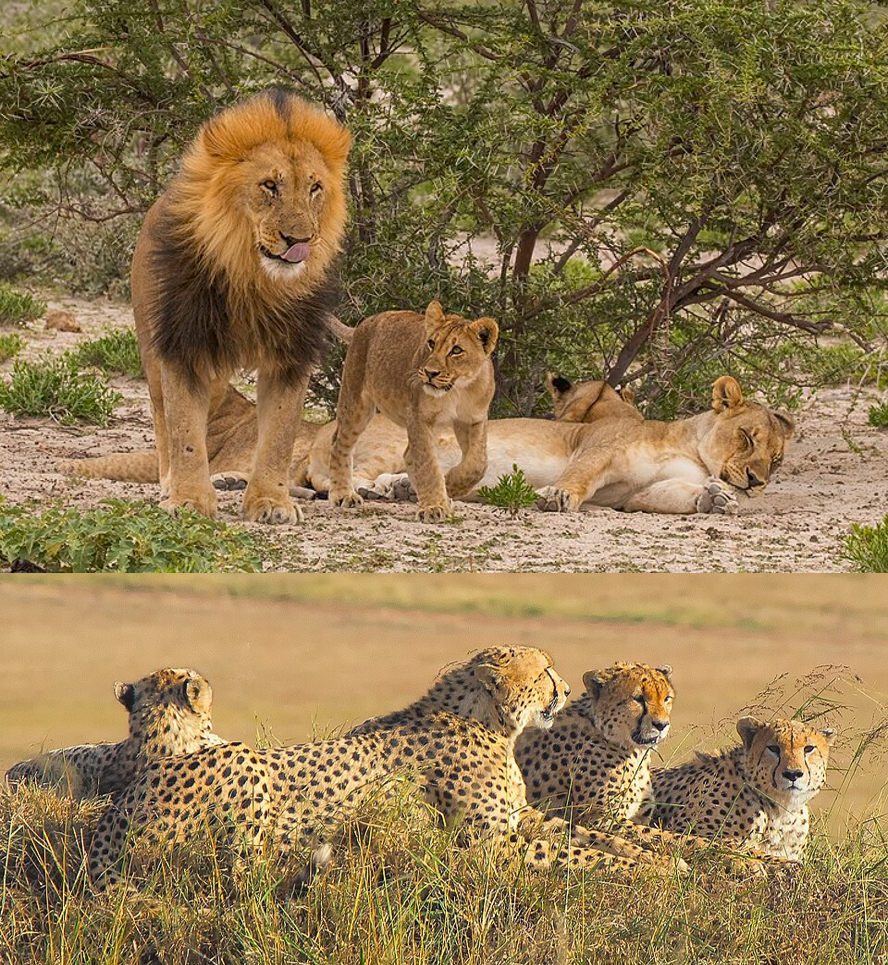
Top: A pride of lions. Image by Charles J Sharp, CC BY-SA 4.0
Bottom: A group of male cheetahs. Image by Ray in Manila, CC BY 2.0
All three of these large cat genera appear in the fossil record at least three million years ago, which means these big cats have been around for as long as our own genus, Homo. During that time, they lived alongside the more distantly-related (but no less large) saber-toothed cats.
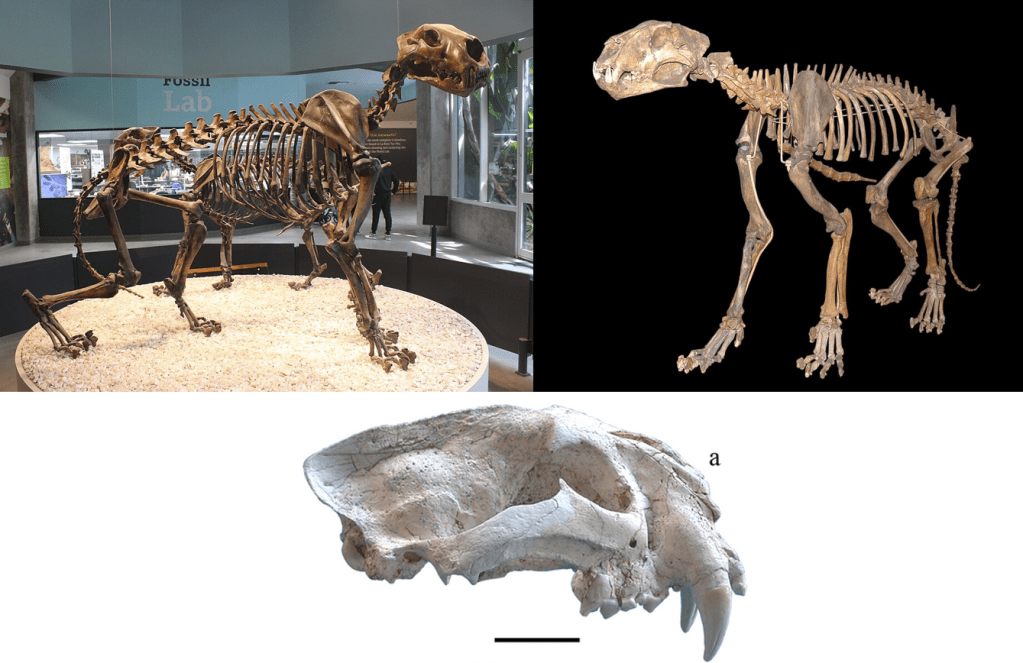
Top right: Skeleton of a European cave lion (Panthera spelaea). Image by Tommy, CC BY 2.0
Bottom: Skull of Panthera zdanskyi, one of the earliest known members of the genus. Image from Mazák et al 2011
The fossil record also reveals that big cats used to more widespread. During the Pleistocene Ice Age, Europe was home to cave lions (Panthera spelaea, so named because well-preserved remains are often found in caves), while the Americas were home to so-called “American cheetahs” (Miracinonyx, relatives of modern cheetahs and cougars) and to perhaps the largest cats of all time: American lions (Panthera atrox), some of which might have weighed more than half a ton.
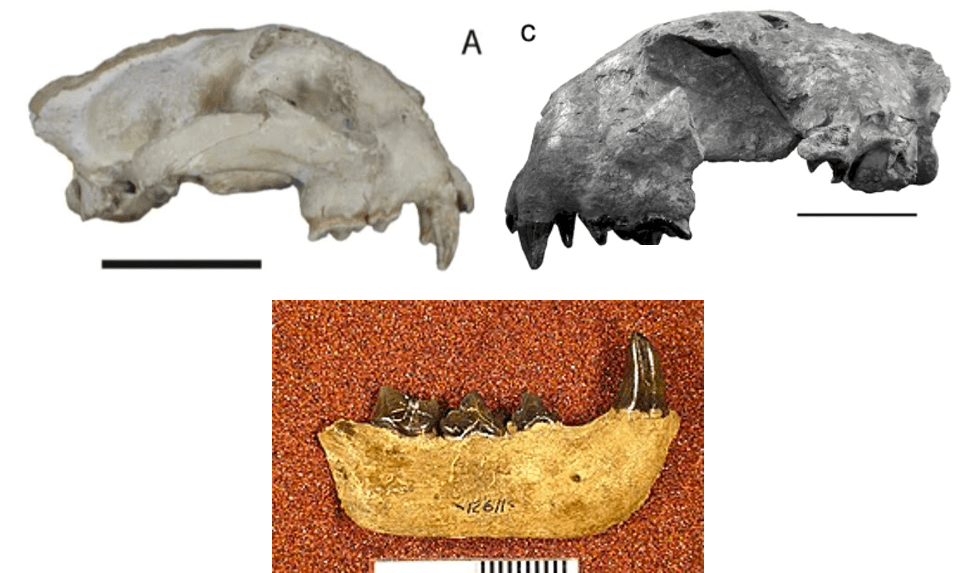
Top right: Skull of the American cheetah (Miracinonyx). Image from Witt et al 2023
Bottom: Lower jaw of Puma lacustris, the “lake cat,” one of the oldest known members of this lineage. Image by Michael Brett-Surman
Sadly, all of our modern large cats are threatened to various degrees, which is why we admire and appreciate the work of organizations like the Cheetah Conservation Fund and those who work with them, like this episode’s guest, Lindsay!
__
If you enjoyed this topic and want more like it, check out these related episodes:
We also invite you to follow us on Facebook or Instagram, buy merch at our Zazzle store, join our Discord server, or consider supporting us with a one-time PayPal donation or on Patreon to get bonus recordings and other goodies!
Please feel free to contact us with comments, questions, or topic suggestions, and to rate and review us on Spotify or Apple Podcasts!


_male_6y.jpg)
.jpg)

_female_Piquiri_River.JPG)


_male_and_cub_Etosha.jpg)
.jpg)


Leave a Reply