
Listen to Episode 251 on Podbean, YouTube, Spotify, or wherever you listen to your favorite podcasts!
In the center of our Solar System is the enormous nuclear reactor that is responsible for the very existence of our planet. This episode, we explore the activity and life cycle of The Sun.
In the news
A new species of mountain-dwelling carnivorous plant
Quantifying how burrowers disrupt the fossil record
Evidence for live birth in mammal ancestors
Early evolution of high metabolism in archosaurs
A Gigantic Nuclear Furnace
The Sun is the center of our solar system, and it also contains about 99.8% of all the mass in our solar system. Its gravitational influence is responsible for keeping the Earth – and everything else in our solar system – in orbit, and its heat and light are responsible for making Earth habitable for life as we know it.
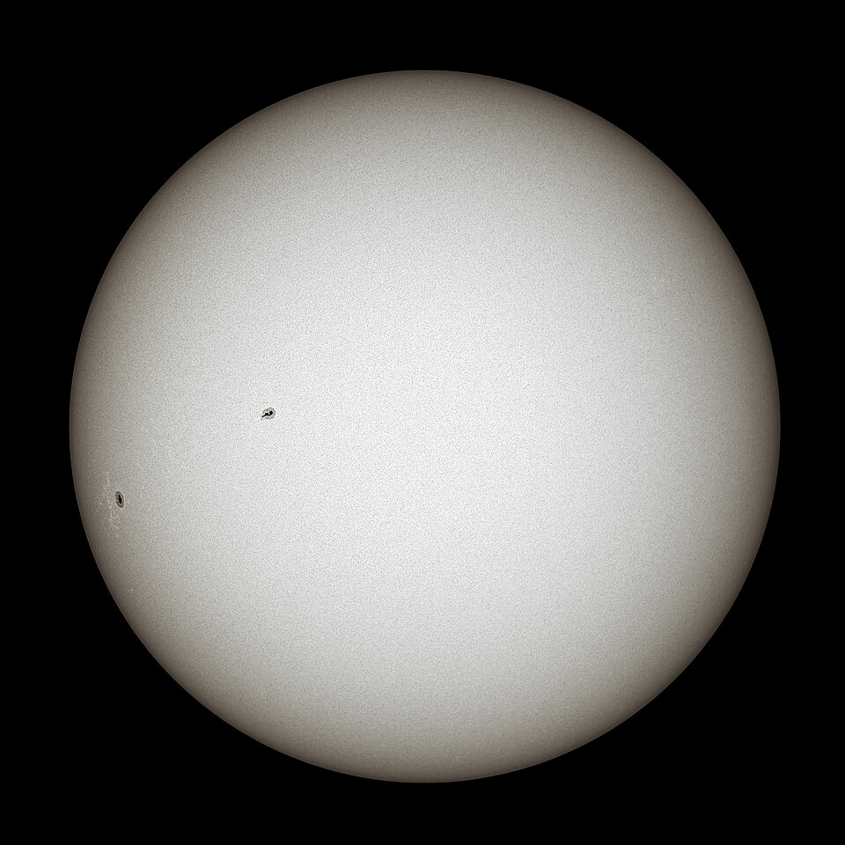
Like other stars, the Sun is a massive ball of super-heated gas fueled by the constant nuclear fusion at its core, where intense heat and pressure force hydrogen atoms to combine and form helium. The ever-changing activity of the Sun’s gaseous layers and magnetic field can lead to occasional solar storms – intense bursts of energy and radiation – which can change the “weather” throughout the solar system and affect the behavior of our own atmosphere.
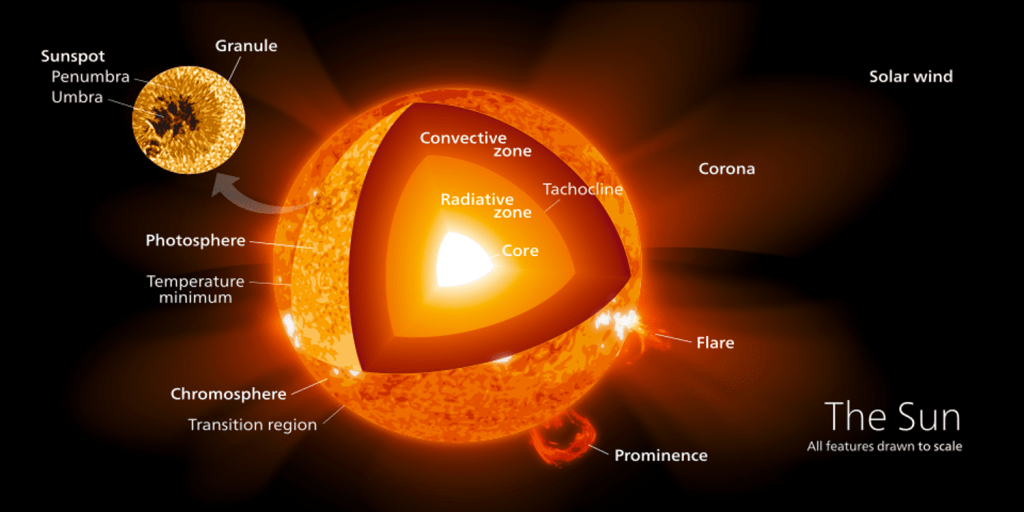
Scientists can infer the origins and life cycle of our Sun by studying it directly and comparing it with other stars throughout the galaxy. Our Sun formed around 4.6 billion years ago with the collapse of a mass of space dust called a solar nebula. Most of that dust joined the immense mass of the Sun, while what remained would form the planets, moons, asteroids, and other objects of our solar system.
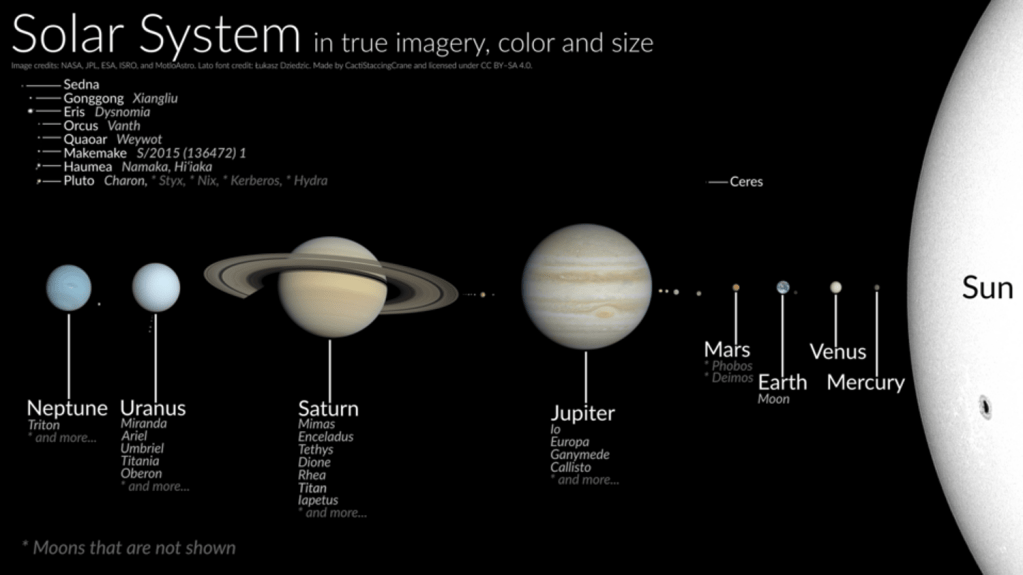
The Sun has changed throughout its lifetime as it has slowly burned through its hydrogen reserves, and these changes impact life on Earth. In the short-term, solar storms are thought to interfere with the behaviors of migratory animals; in the long term, the Sun is thought to have grown gradually brighter over time, leading to a famous scientific conundrum known as the Faint Young Sun Problem.
It’s estimated that the Sun was between 20-30% dimmer when life originated on Earth. Under those conditions, we would expect our planet to be frozen and uninhabitable, but there is plenty of evidence for abundant water and habitable space in the rock record. Exactly how the Earth remained warm back then isn’t fully understood – hence the Faint Young Sun “Problem” – but scientists suspect some combination of differences in the Earth’s atmosphere and the Sun’s activity led to a scenario where the Earth could retain more heat than traditional models have estimated.
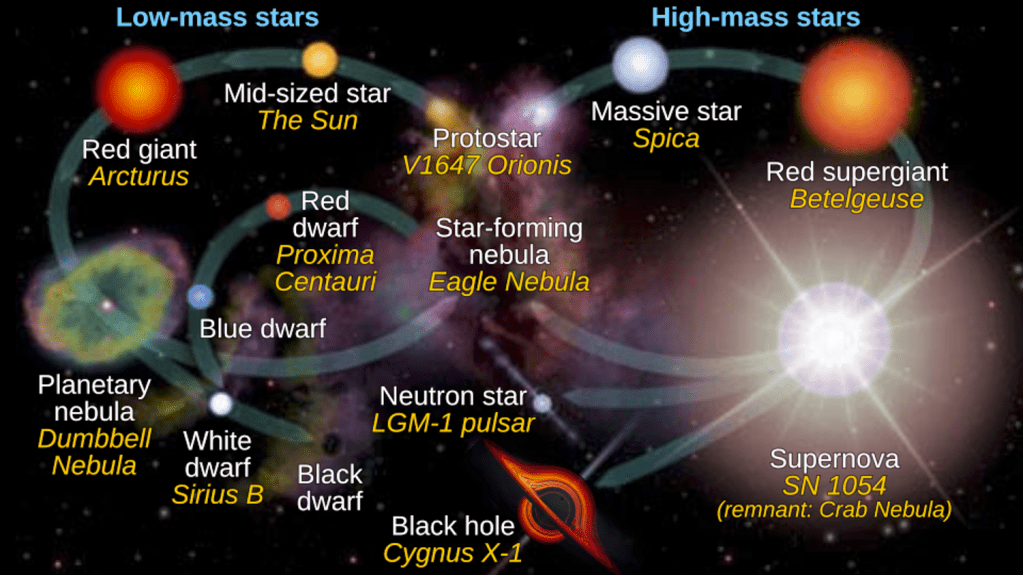
Eventually, in about 5.5 billion years, the Sun will run out of hydrogen to burn, by which point it will have expanded into a larger and hotter Red Giant star capable of burning helium at its core. But our Sun will never be large enough to fuse other elements or to collapse into a supernova or a black hole. Instead, it will ultimately burn itself out, losing most of its outer layers until all that’s left is an Earth-sized mass called a White Dwarf, which will slowly – very, very slowly – cool down until none of the Sun’s heat or light remains.
Learn More
The Sun – NASA
Life Cycle of the Sun – Universe Today
Types of Stars – Universe Today
Space weather disrupts nocturnal bird migration (technical, open access)
The Faint Young Sun Problem (technical, open access)
__
If you enjoyed this topic and want more like it, check out these related episodes:
We also invite you to follow us on Facebook or Instagram, buy merch at our Zazzle store, join our Discord server, or consider supporting us with a one-time PayPal donation or on Patreon to get bonus recordings and other goodies!
Please feel free to contact us with comments, questions, or topic suggestions, and to rate and review us on Spotify or Apple Podcasts!


Leave a comment